How to Cut a Bell Pepper 4 Ways for Stuffed Peppers, Rings, Diced, and Julienne
Ingredients
Method
- Place the bell pepper on its side on a cutting board. Use a sharp chef's knife to slice off the top (stem end) and the bottom. Discard the stem if it's still attached to the top piece. Stand the pepper upright and cut a slit down one side. Slide your knife along the inner walls to release the core, yielding one long, flat strip of pepper.
- Lay the pepper strip skin-side down on the cutting board. Trim away any white pith to ensure even thickness. Slice the pepper into thin strips about 1/8 inch wide and 1 1/2 to 2 inches long.
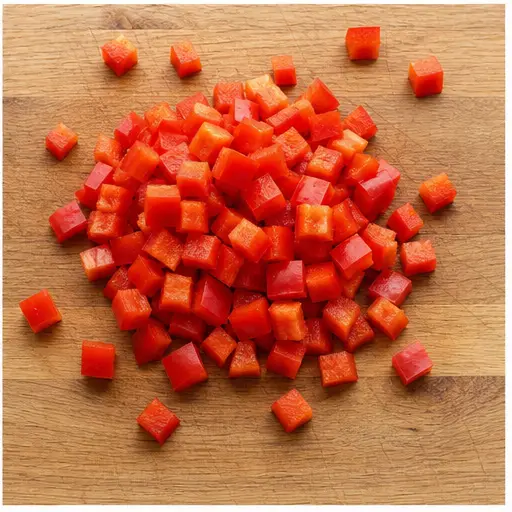
- After removing the core, lay the pepper flat and cut it into thick strips about 1/2 inch wide. Gather a few strips together and slice crosswise into even 1/2-inch squares.
- With the core removed, lay the pepper on its side. Using a very sharp knife, slice thin cross-sections to create perfect rings.
- Slice off only the top (stem end) of the pepper. Run your knife around the inside walls to remove the core while keeping the sides intact. Trim the bottom slightly so the pepper stands upright. Fill the hollowed pepper as desired.
Nutrition
Notes
Tried this recipe?
Let us know how it was!Why We All Need This Skill
Raise your hand if you’ve ever ended up with a mangled bell pepper. I know I have. Those beautiful, glossy peppers from the farmers market or Ralphs they look so perfect. Then you get them home, grab a knife, and suddenly you’re fighting a round, slippery object that refuses to cooperate. Seeds everywhere, uneven chunks, and half the pepper ends up in the compost.
I’ve been there more times than I’d like to admit. But here’s the thing learning how to cut a bell pepper properly changed my whole cooking game. It’s one of those skills that makes you feel like you actually know what you’re doing in the kitchen. And the best part? It takes about five minutes to master.
Whether you’re prepping for a stir-fry, a salad, or just want to snack on some crunchy strips, knowing how to cut a bell pepper into different shapes opens up so many possibilities. Let me walk you through it.
What You Need
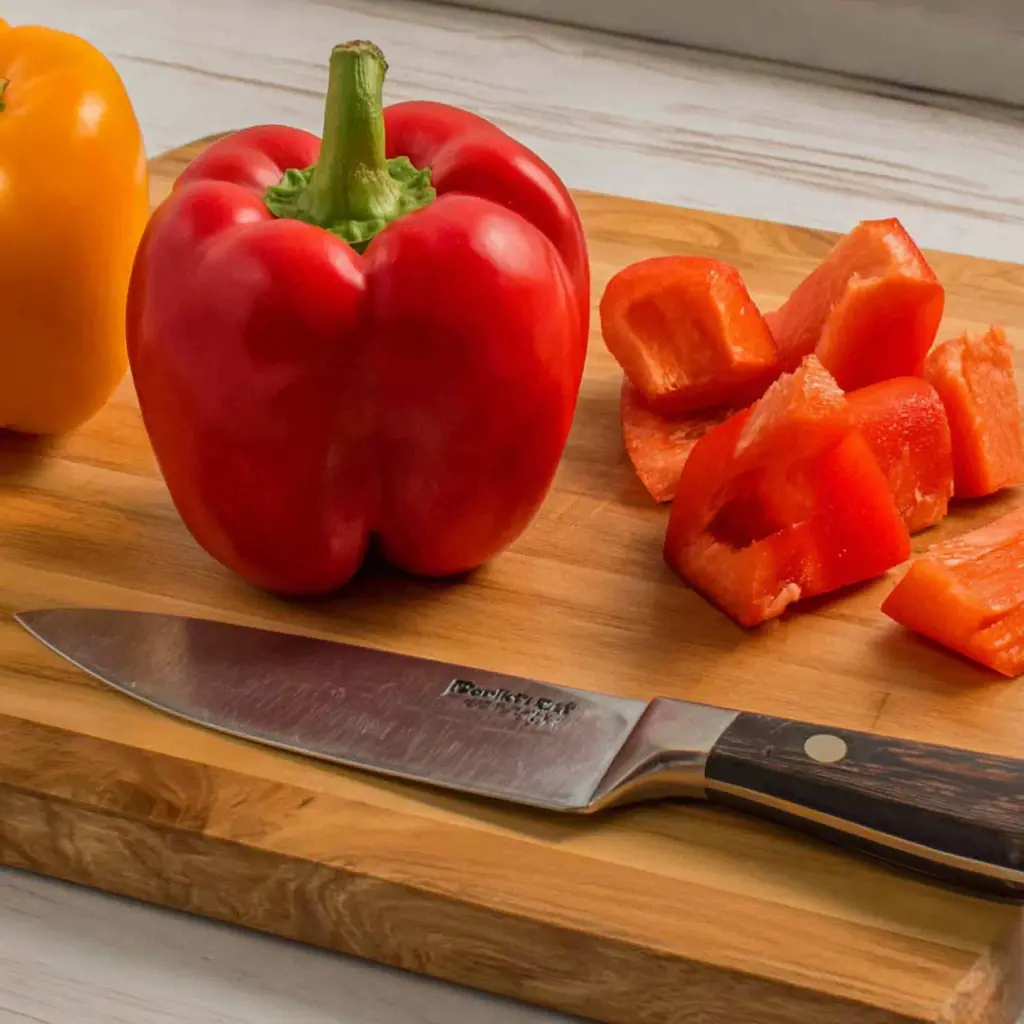
Before we get into the techniques, let’s talk tools. You don’t need a fancy knife collection or a professional kitchen. Just a few basics will get you perfect results every time.
- A sharp chef’s knife. This is non-negotiable. A dull knife is more dangerous than a sharp one it slips. I use an 8-inch chef’s knife from my local kitchen supply store. Nothing fancy, but I keep it sharp with a honing steel.
- A stable cutting board. Wood or plastic, doesn’t matter. Just make sure it doesn’t slide around. Put a damp paper towel under it if needed.
- Your bell pepper. Any color works red, yellow, orange, green. They all cut the same way. Just wash and dry it first.
That’s it. Seriously. One pepper, one knife, one board. You’re ready.
How to Cut Bell Pepper Rings
Let’s start with rings. These are perfect for sandwiches, burgers, or just snacking with hummus. And honestly, they look impressive.
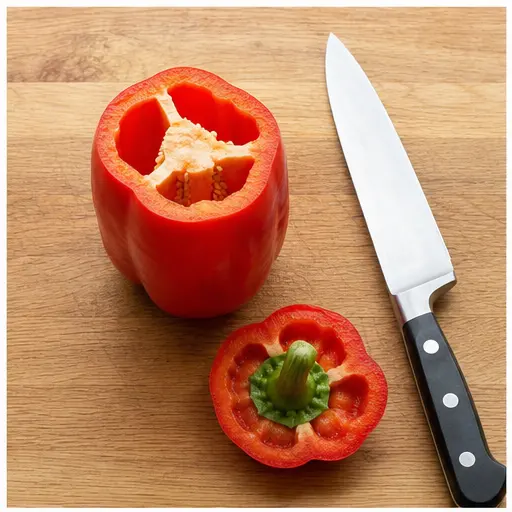
First, lay the bell pepper on its side on your cutting board. Take your sharp knife and slice off the top that’s the stem end. Then slice off the bottom. Discard the stem if it’s still attached to the top piece. Now you’ve got a hollow tube of pepper.
Stand the pepper upright. Cut a slit down one side. Slide your knife along the inner walls to release the core. You’ll end up with one long, flat strip of pepper that’s the core piece. Set it aside (you can dice that later for salads or stir-fries).
Now lay the pepper on its side again. Using a very sharp knife, slice thin cross-sections. Each cut gives you a perfect ring. The key here is a steady hand and a sharp blade. If your knife is dull, you’ll squish the pepper instead of slicing cleanly.
One thing I learned the hard way chill the pepper for about 15 minutes before slicing rings. It firms up the flesh and gives you cleaner cuts. Works like a charm.
How to Slice Bell Peppers (Julienne Strips)
Thin strips or julienne, if you want to sound fancy are my go-to for stir-fries, fajitas, and salads. They cook quickly and look beautiful.
Start the same way as for rings. Remove the top and bottom of the pepper. Cut a slit down one side and remove the core. But this time, instead of slicing cross-sections, you’re working with those flat pieces.
Lay one of the pepper pieces skin-side down on your cutting board. Trim away any white pith you see. That white stuff is bitter and tough, so getting rid of it makes a big difference in your final dish.
Now slice the pepper into thin strips. Aim for about 1/8 inch wide and 1 1/2 to 2 inches long. Don’t stress if they’re not perfectly even at first. Practice makes perfect. And honestly, even professional chefs have slightly uneven strips sometimes.
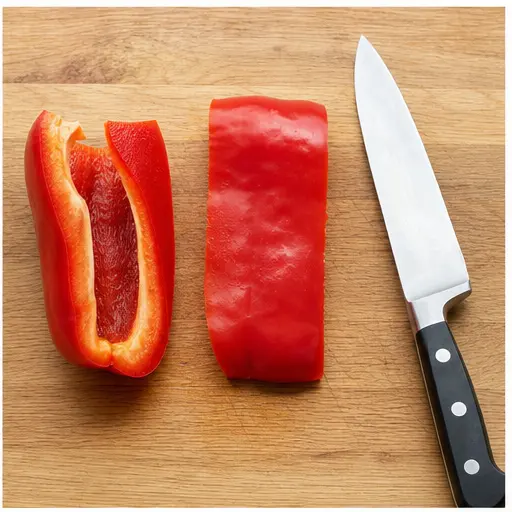
For stir-fries, I like my strips a little thicker about 1/4 inch. They hold up better to high heat and don’t turn mushy. For salads, thinner is better. They blend in nicely without overpowering the other ingredients.
How to Dice Bell Peppers
Diced bell pepper is a kitchen staple. It goes into everything chili, pasta sauce, omelets, rice dishes. And once you know how to cut a bell pepper into uniform cubes, you’ll wonder why you ever struggled.
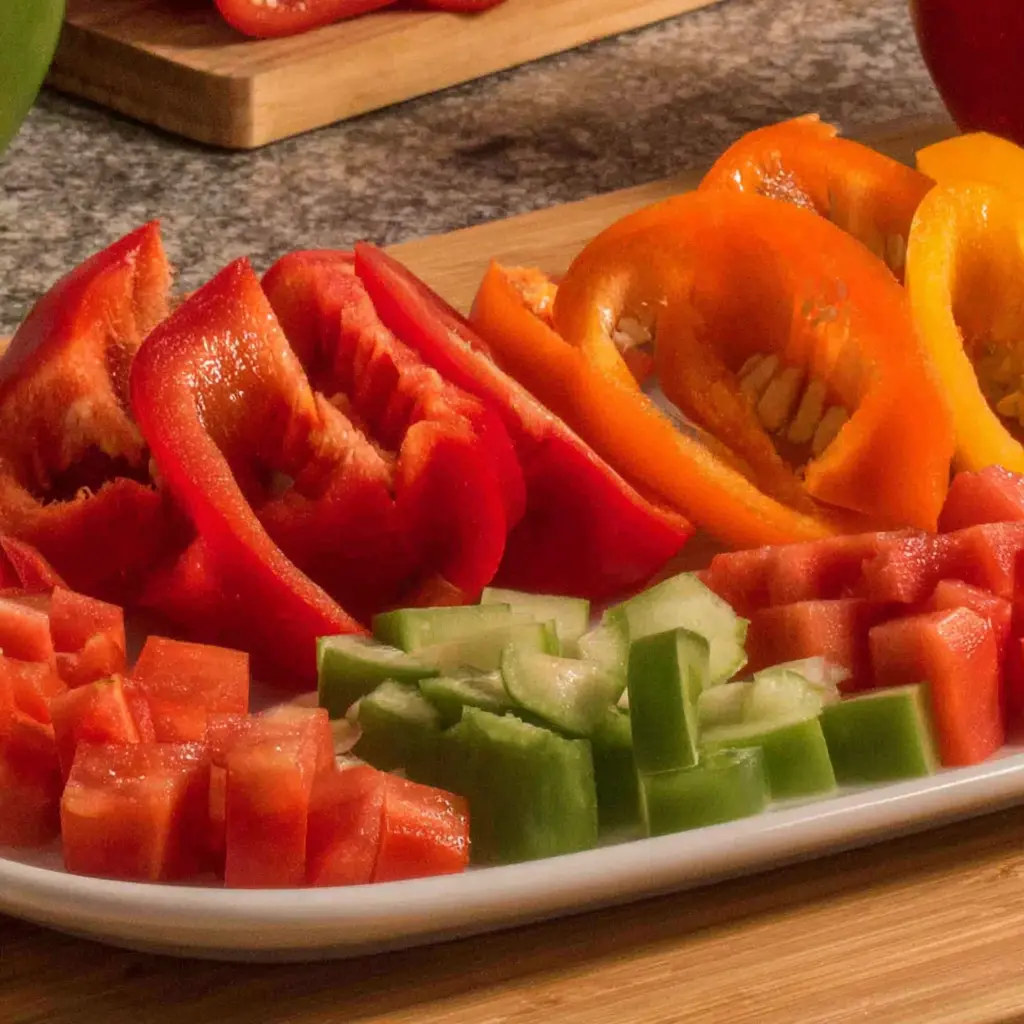
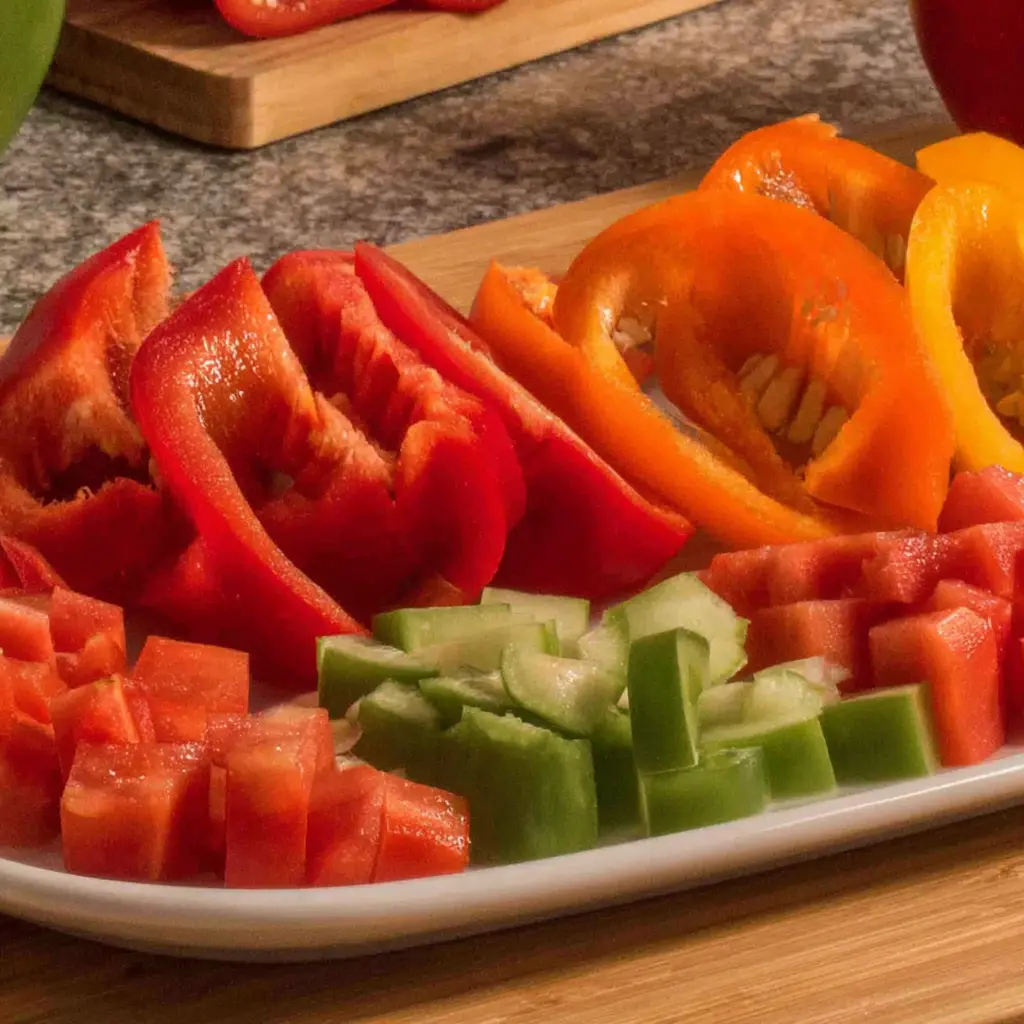
After removing the core, lay your pepper pieces flat on the cutting board. Cut them into thick strips about 1/2 inch wide. Don’t worry about perfection here. Just aim for consistent width.
Now here’s the trick gather a few of those strips together. Stack them neatly. Then slice crosswise into even 1/2-inch squares. The stacking method gives you uniform cubes without having to measure each one individually.
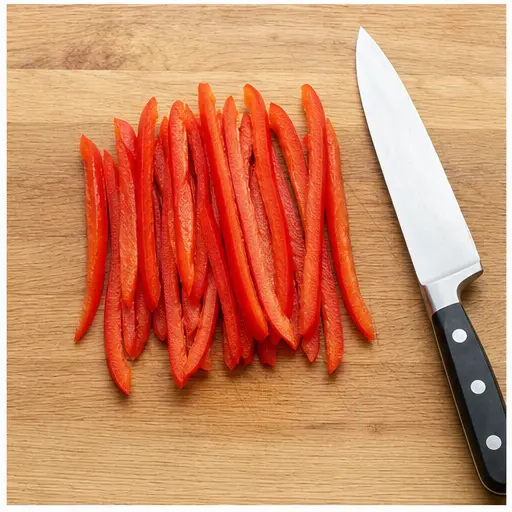
For smaller dice like for salsa or minced pepper just cut your strips thinner before stacking. I do 1/4-inch strips for a fine dice. Works perfectly for recipes where you want the pepper flavor without big chunks.
One thing I love about dicing is how versatile it is. You can prep a bunch of peppers on Sunday and use them all week. They keep well in the fridge for 3-4 days.
How to Prep Bell Peppers for Stuffed Peppers
Stuffed peppers are a classic comfort food. But the prep can be tricky if you don’t know the right technique. You want a hollow pepper that stands upright and holds its shape.
Start by slicing off only the top of the pepper the stem end. Don’t cut too much. Just enough to remove the stem and create an opening. You want the pepper to stay as tall as possible.
Now run your knife around the inside walls of the pepper. Gently cut to release the core and seeds. You want to remove the core while keeping the sides intact. It takes a little practice, but you’ll get the hang of it.
Trim the bottom slightly so the pepper stands upright. Just a thin slice off the bottom not enough to create a hole, just enough for stability. Now you have a perfect hollow vessel for stuffing.
For stuffed peppers, I recommend par-cooking your rice or grains before filling. It ensures even cooking and prevents the pepper from getting soggy while the filling finishes. Also, choose peppers with flat bottoms they’re much easier to work with.
FAQs
How to Store Cut Bell Peppers
You’ve mastered how to cut a bell pepper. Now let’s talk about keeping those beautiful cuts fresh. Nothing worse than prepping a bunch of peppers only to find them wilted two days later.
For whole peppers, store them in the crisper drawer of your fridge. They’ll last about 2 weeks. Don’t wash them until you’re ready to use them moisture promotes spoilage.
For cut peppers, here’s my method. Place them in an airtight container. Add a paper towel to absorb excess moisture. Seal it up and store in the fridge. They’ll stay crisp for 3-4 days. If the paper towel gets damp, just replace it.
For longer storage, freezing is your friend. Spread your cut peppers on a baking sheet in a single layer. Pop them in the freezer for about an hour. Once they’re frozen solid, transfer to a freezer bag or airtight container. They’ll keep for 6-8 months. No need to thaw before adding to soups, stews, or stir-fries.
One pro tip save the cores and stems for making vegetable stock. Just toss them in a freezer bag with other veggie scraps. When you have enough, simmer them with water and aromatics for a flavorful homemade stock. Zero waste, maximum flavor.
Final Thoughts
Learning how to cut a bell pepper really is a game-changer. It’s one of those skills that makes cooking feel less like a chore and more like something you actually enjoy. And the best part? You can practice with any color pepper red, yellow, orange, green. They all work the same way.
I still remember the first time I made perfectly uniform dice. I was making chili for a potluck, and someone actually complimented the pepper size. Sounds silly, but it felt amazing. That’s the kind of confidence this skill gives you.
So grab a pepper, a sharp knife, and a cutting board. Give it a try. Mess up a few times. That’s totally normal. But pretty soon, you’ll be cutting bell peppers like a pro. And you’ll wonder why you ever struggled.
If you want to save this guide for later, pin it to your cooking board on Pinterest. It’s a handy reference to come back to whenever you need a refresher.
Source: Health & Nutrition Research