


How to Cook Spaghetti Squash
Ingredients
Method
- Preheat your oven to 400 degrees Fahrenheit. Line a half-sheet pan with parchment paper or foil lightly coated with nonstick spray, and set aside.
- Using a sharp chef's knife, carefully pierce the spaghetti squash 4 to 5 times around its center. Microwave the squash for 2 minutes, flipping it halfway through. Let it cool for 5 minutes before handling.
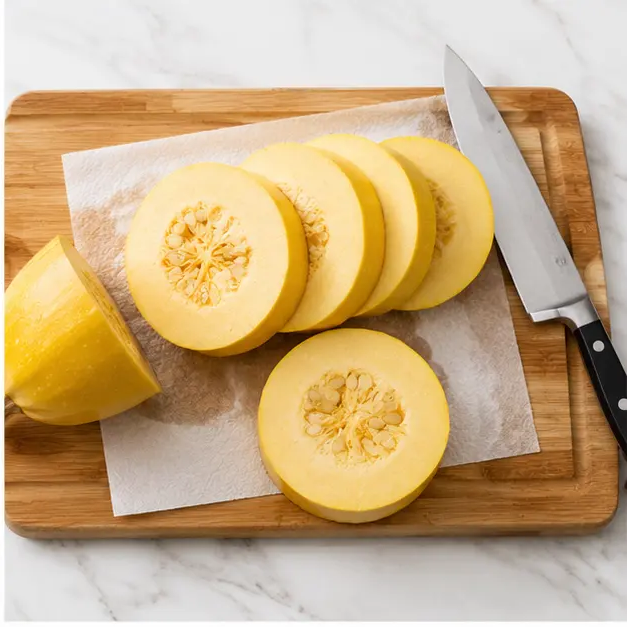
- Place a damp paper towel under a large cutting board to keep it steady. Set the squash on the board and slice off both ends, discarding them.
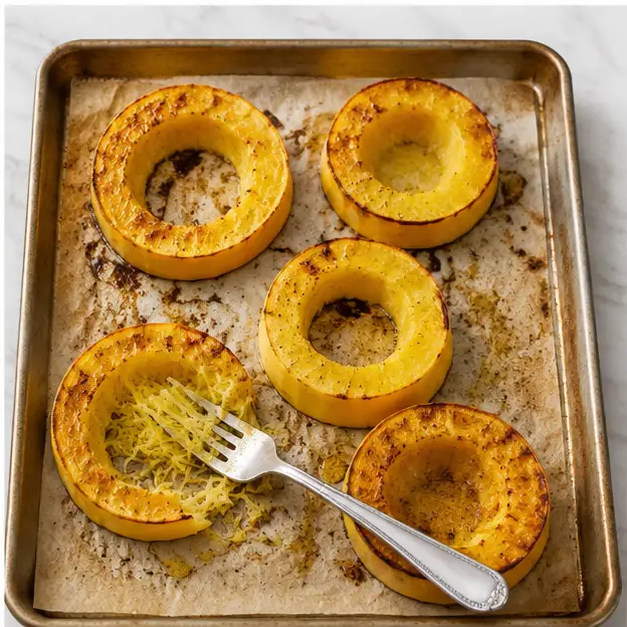
- Cut the squash into 1.5-inch thick rings. Rock the knife while rotating the squash to make clean cuts instead of sawing. Use a spoon or knife to scoop out the seeds from each ring, then arrange the rings on the prepared baking sheet.
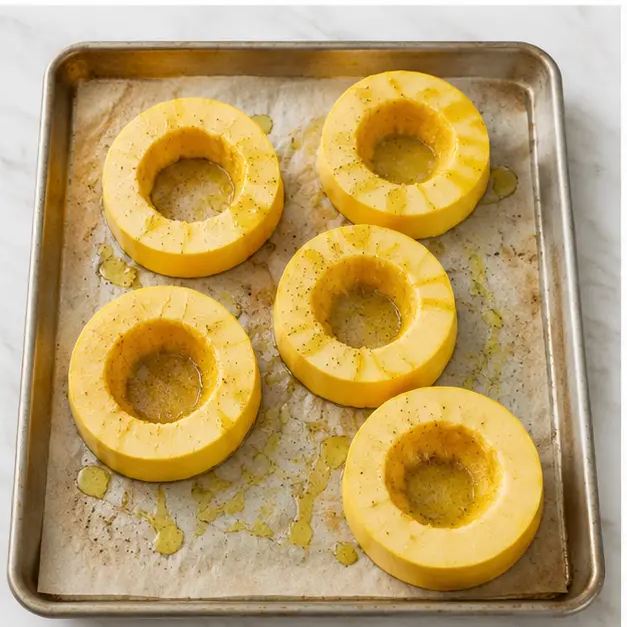
- Drizzle the rings with olive oil and sprinkle with salt, pepper, and garlic powder. Rub the seasoning over both sides of each ring, including the inner edges. Roast for 25 to 35 minutes, flipping the rings and rotating the pan halfway through, until the squash shreds easily with a fork.
- Shred the roasted squash with a fork and use immediately, or let it cool to room temperature and store in a covered container in the fridge for up to 5 days. Reheat in the microwave before serving.
Nutrition
Notes
Tried this recipe?
Let us know how it was!What Is Spaghetti Squash?
I remember the first time I tried to cut a spaghetti squash. It was a Sunday afternoon, I was feeling ambitious, and I thought I’d whip up a healthy pasta substitute for dinner. I grabbed my biggest chef’s knife, squared up to this oblong yellow gourd, and… nothing. The knife just bounced off the skin. I tried again, harder, and the squash rolled right off the cutting board. It was a comedy of errors, honestly. I almost called for takeout.
But here’s the thing about spaghetti squash once you know the trick, it’s one of the most rewarding vegetables to cook. It’s a winter squash that, when cooked, separates into long, tender strands that look just like angel hair pasta. It’s naturally gluten free, low in carbs, and packed with fiber and vitamins. Plus, it has a mild, slightly sweet flavor that takes on whatever seasoning you throw at it. So if you’re looking for a low carb dinner or a gluten free pasta alternative, learning how to cook spaghetti squash is a total game-changer.
And don’t worry, it’s not as tough as it seems. I’ve got a foolproof method that makes cutting safe and cooking a breeze.
Ingredients You’ll Need
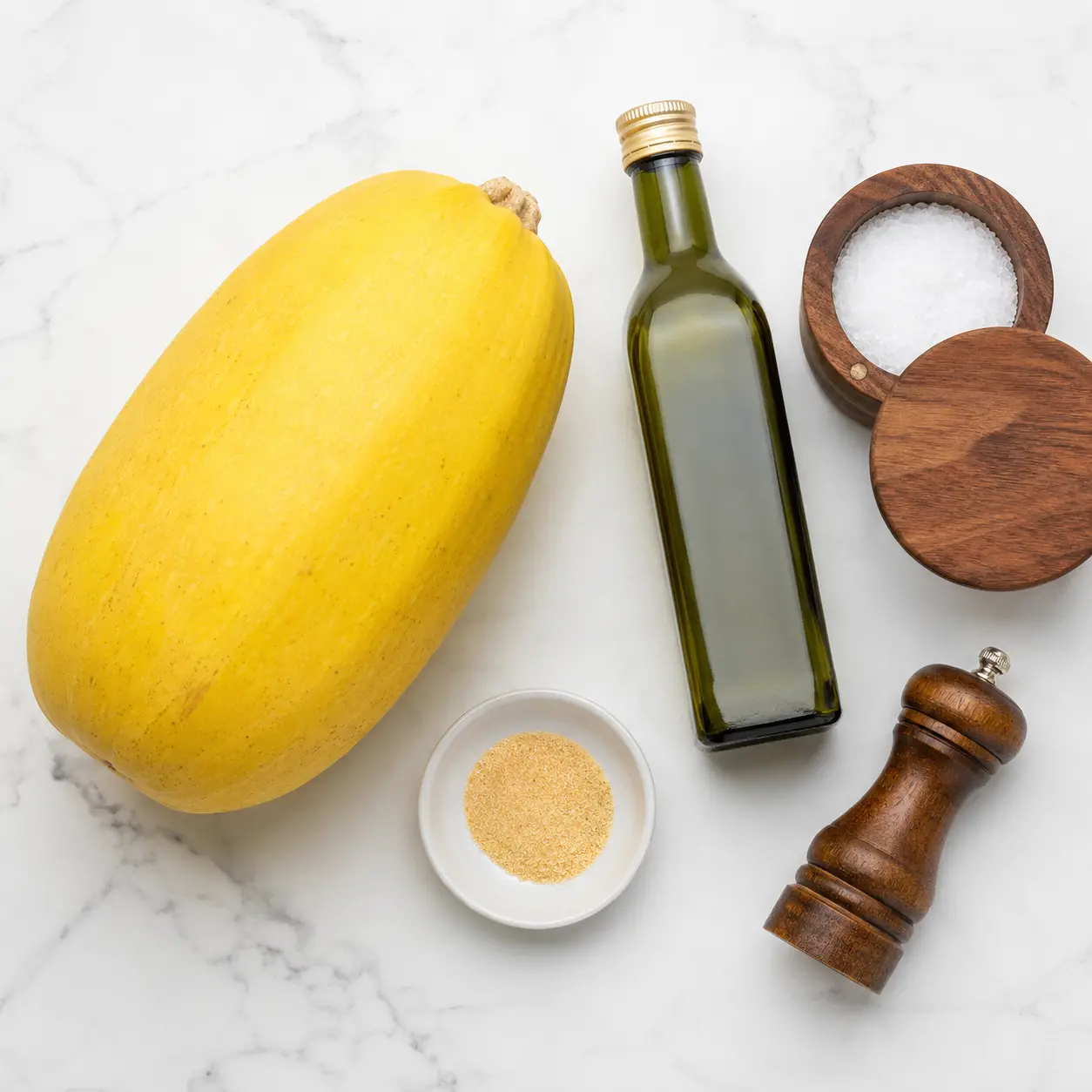
You don’t need much to make this work. The beauty of this recipe is its simplicity. Here’s what you’ll need:
- 1 large spaghetti squash Look for one that’s firm, heavy for its size, and has a uniform yellow color. No soft spots or cracks.
- 2 tablespoons California extra virgin olive oil The good stuff matters here. It adds a fruity, peppery flavor that really shines.
- 1/2 teaspoon sea salt Enhances the natural sweetness of the squash.
- 1/4 teaspoon black pepper Just a little warmth.
- 1/4 teaspoon garlic powder My secret weapon. It adds a savory depth without being overpowering.
That’s it. Five ingredients. You probably have most of them in your pantry right now. And if you want to get fancy, you can swap the garlic powder for Italian seasoning or smoked paprika, but the base recipe is perfect as is.
How to Cut Spaghetti Squash Safely
Okay, this is the part that scares most people. And I get it. That squash is hard. But I’m going to share a trick that makes it almost effortless.
First, soften the skin. Using a sharp chef’s knife, carefully pierce the spaghetti squash 4 to 5 times around its center. Then microwave the whole squash for 2 minutes, flipping it halfway through. Let it cool for 5 minutes before handling. This step is a lifesaver it softens the tough outer skin just enough that your knife can glide through.
Next, set up your cutting board. Place a damp paper towel under your cutting board to keep it from sliding around. Trust me, this makes a huge difference. Then slice off both ends of the squash and discard them.
Now for the rings. Instead of cutting the squash in half lengthwise (which gives you shorter strands), cut it into 1.5-inch thick rings. Rock the knife while rotating the squash to make clean cuts instead of sawing. It takes a little patience, but it’s so much easier than wrestling with a whole half. Use a spoon or knife to scoop out the seeds from each ring, and you’re ready to go.
How to Cook Spaghetti Squash in the Oven
This is my go-to method. The oven gives you the best texture tender but not mushy, with slightly caramelized edges. Here’s how to cook spaghetti squash in the oven like a pro.
Preheat and prep. Set your oven to 400 degrees Fahrenheit. Line a half-sheet pan with parchment paper or foil lightly coated with nonstick spray. This prevents sticking and makes cleanup a breeze.
Season the rings. Arrange your squash rings on the baking sheet. Drizzle them with the olive oil and sprinkle with salt, pepper, and garlic powder. Rub the seasoning over both sides of each ring, including the inner edges. Don’t be shy the seasoning is what makes it delicious.
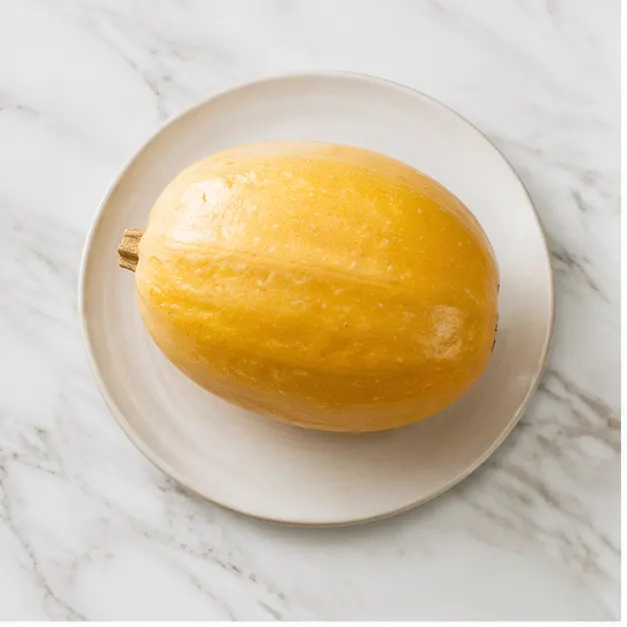
Roast to perfection. Bake for 25 to 35 minutes, flipping the rings and rotating the pan halfway through. The exact time depends on the size of your squash. You’ll know it’s done when you can easily pierce the skin with a fork and the strands separate with a gentle scrape. That’s the spaghetti squash doneness test it should look golden and slightly caramelized around the edges.
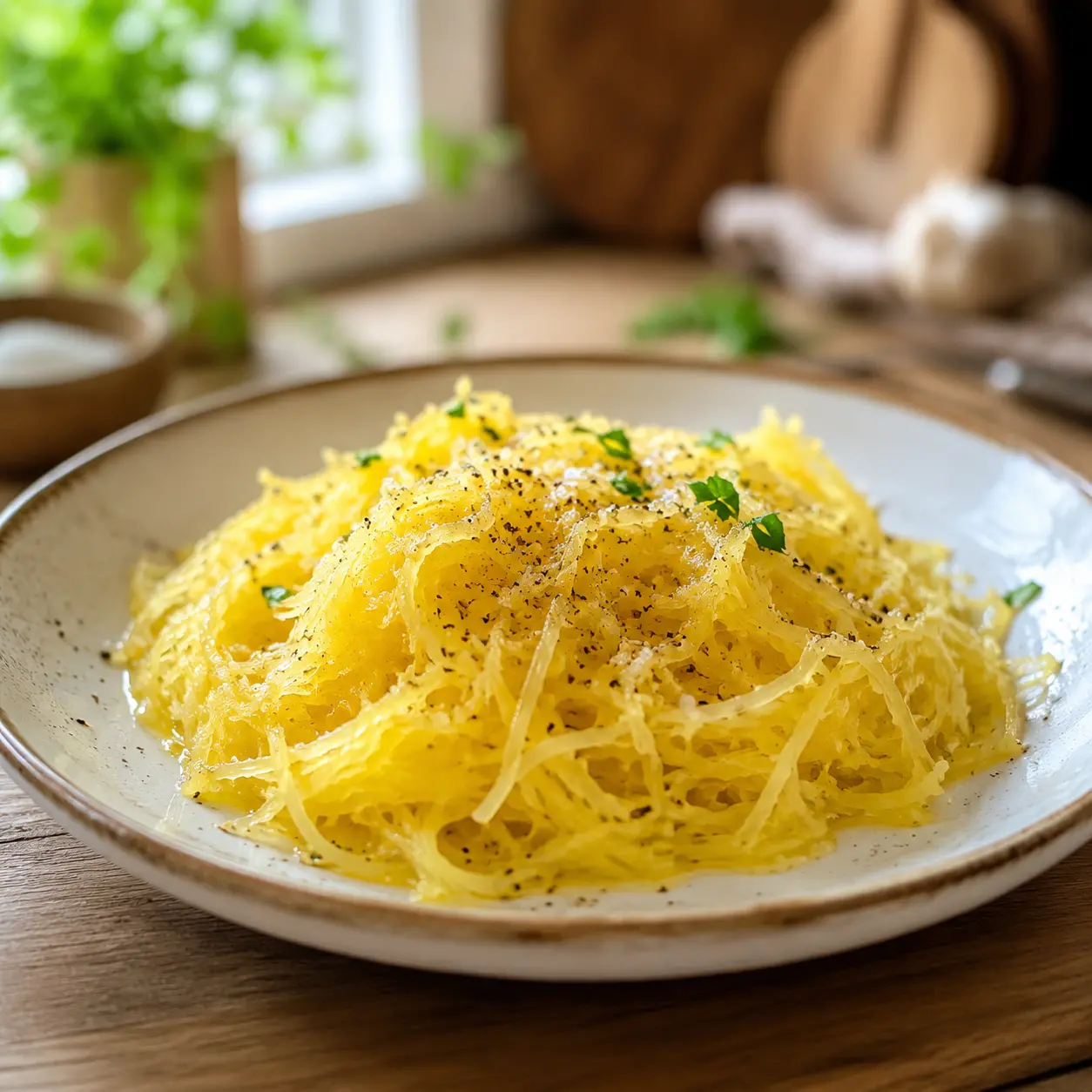
The magic moment. Let the rings cool for a couple of minutes, then use a fork to scrape the strands. They’ll come out in long, beautiful ribbons. It’s honestly so satisfying. I still get a little thrill every time I do it.
Serve or store. Use the strands immediately, or let them cool to room temperature and store in a covered container in the fridge for up to 5 days. Reheat in the microwave before serving.
Other Cooking Methods
If you’re short on time or don’t want to heat up the kitchen (especially during summer), you’ve got options. Here’s a quick comparison:
| Method | Time | Pros | Cons |
|---|---|---|---|
| Oven | 25-35 min | Best texture, caramelized edges | Heats up the kitchen |
| Microwave | 10-12 min | Fast, no oven needed | Can be watery, less caramelization |
| Instant Pot | 7-8 min (plus pressure release) | Fast, hands-off | Can be mushy if overcooked |
For microwave spaghetti squash, cut it in half, scoop out the seeds, and place cut-side down in a microwave-safe dish with a little water. Microwave on high for 10-12 minutes. For Instant Pot spaghetti squash, add 1 cup of water to the pot, place the halved squash on the trivet, and cook on high pressure for 7 minutes. Quick release and shred.
Ways to Use Spaghetti Squash
Once you’ve mastered how to cook spaghetti squash, the possibilities are endless. Here are some of my favorite ways to use it:
- Pasta substitute Toss with marinara sauce and a sprinkle of Parmesan (or vegan Parmesan) for a classic spaghetti dinner.
- Garlic spaghetti squash Sauté the strands in a little olive oil with minced garlic and fresh herbs. Simple and incredible.
- Low carb bowl Use as a base for meatballs, grilled chicken, or roasted vegetables.
- Casserole base Mix with your favorite casserole ingredients and bake until bubbly.
- Stir-fry addition Add to a stir-fry for extra texture and nutrition.
- Soup Stir into broth-based soups for a noodle-like addition.
It’s such a versatile ingredient. I love using it for meal prep I’ll roast a batch on Sunday and use it throughout the week for quick lunches and dinners.
How to Store Leftovers
If you have leftover spaghetti squash (which happens less often than you’d think), here’s how to store it properly:
- Refrigerate: Store the cooked strands in an airtight container in the fridge for up to 5 days.
- Freeze: Place the cooled strands in freezer-safe bags, squeeze out as much air as possible, and freeze for up to 6 months. Thaw in the fridge overnight before reheating.
- Reheat: Microwave the strands for 1-2 minutes, or reheat in a skillet over medium heat for a crispier texture. I actually prefer the skillet method it gives the strands a nice, slightly chewy edge.
Common Mistakes to Avoid
Even seasoned cooks can run into trouble with spaghetti squash. Here are the most common mistakes and how to fix them:
- ❌ Over-roasting leading to mushy strands → ✅ Check for doneness at 25 minutes. The squash should be tender but still hold its shape.
- ❌ Adding too much oil or salt before roasting → ✅ Use just 2 tablespoons of oil and 1/2 teaspoon of salt. Too much liquid makes the squash watery.
- ❌ Cutting lengthwise yields shorter strands → ✅ Cut into rings instead. You’ll get longer, more pasta-like strands.
- ❌ Not using parchment paper → ✅ Line your baking sheet to prevent sticking and make cleanup easy.
- ❌ Baking with water in the pan → ✅ Roast the rings directly on the baking sheet without added water. This keeps the texture firm.
Frequently Asked Questions
Final Thoughts
So there you have it everything you need to know about how to cook spaghetti squash. It’s not as intimidating as it looks, I promise. Once you’ve done it a couple of times, it’ll become second nature. And the payoff is so worth it: a healthy, delicious, versatile ingredient that fits into almost any meal.
Don’t be afraid to experiment this squash is forgiving! Try different seasonings, pair it with your favorite sauces, or use it as a base for casseroles. And if you come up with a killer combination, I’d love to hear about it. Happy cooking!
For more recipe inspiration, check out my Pinterest board for creative ways to use spaghetti squash.
Source: Health & Nutrition Research



4 responses to “How to Cook Spaghetti Squash: The Best Method?”
I’ve been intimidated by spaghetti squash for years after a failed attempt. Your story about struggling to cut it made me laugh because that was totally me! The microwaving tip changed everything. I paired it with a simple marinara and meatballs, and my kids actually asked for seconds. Thank you!
Great recipe overall, but I wish you had included exact cooking times for different sizes of squash. Mine was about 5 lbs and I had to add an extra 15 minutes. Still turned out great though! Also, do you think I could add some Parmesan cheese before roasting?
Thanks for the feedback, Mike! Great point about squash sizes – I’ll add a note about adjusting times. And yes, adding Parmesan before roasting is a fantastic idea! Just sprinkle it on during the last 10 minutes so it doesn’t burn.
I tried this method last night and it worked perfectly! The trick about microwaving the squash for a few minutes before cutting made it so much easier. I used your seasoned salt blend and it was delicious. Will definitely be making this again!