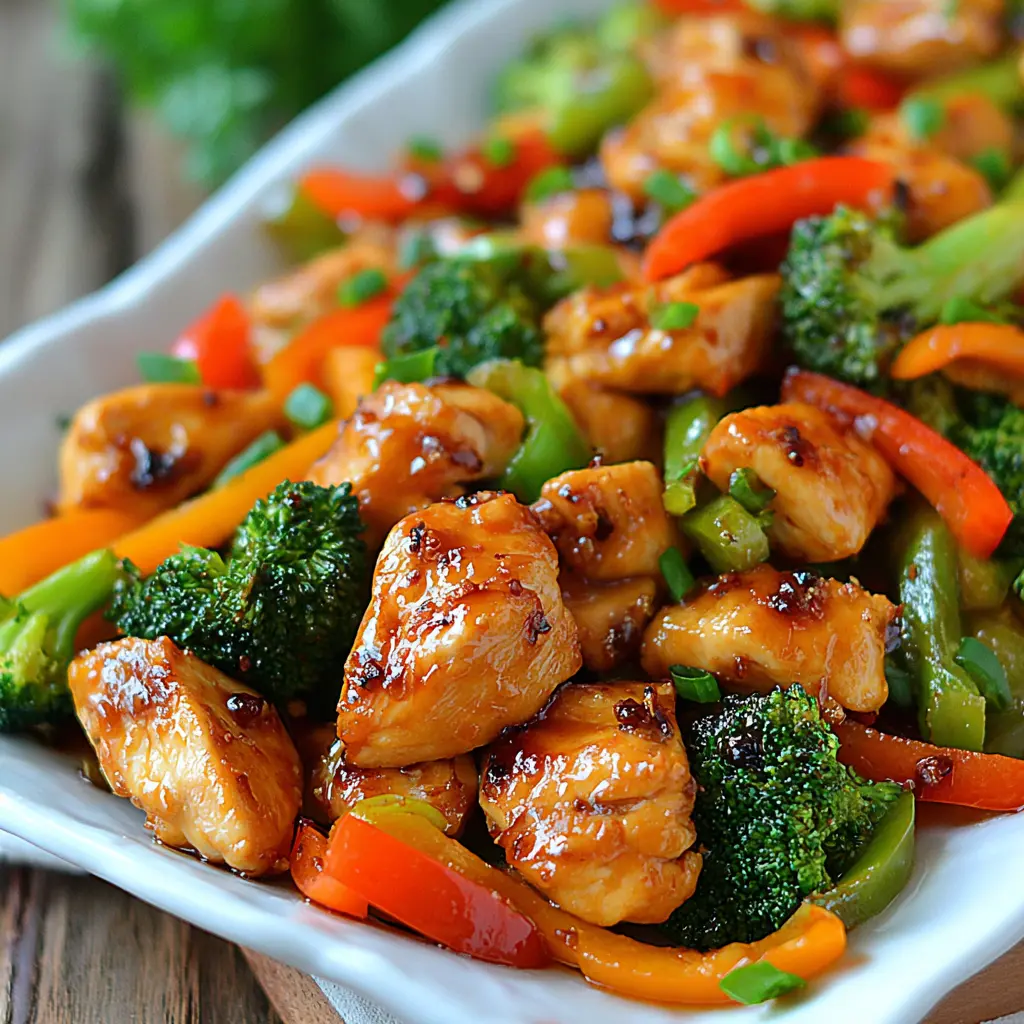
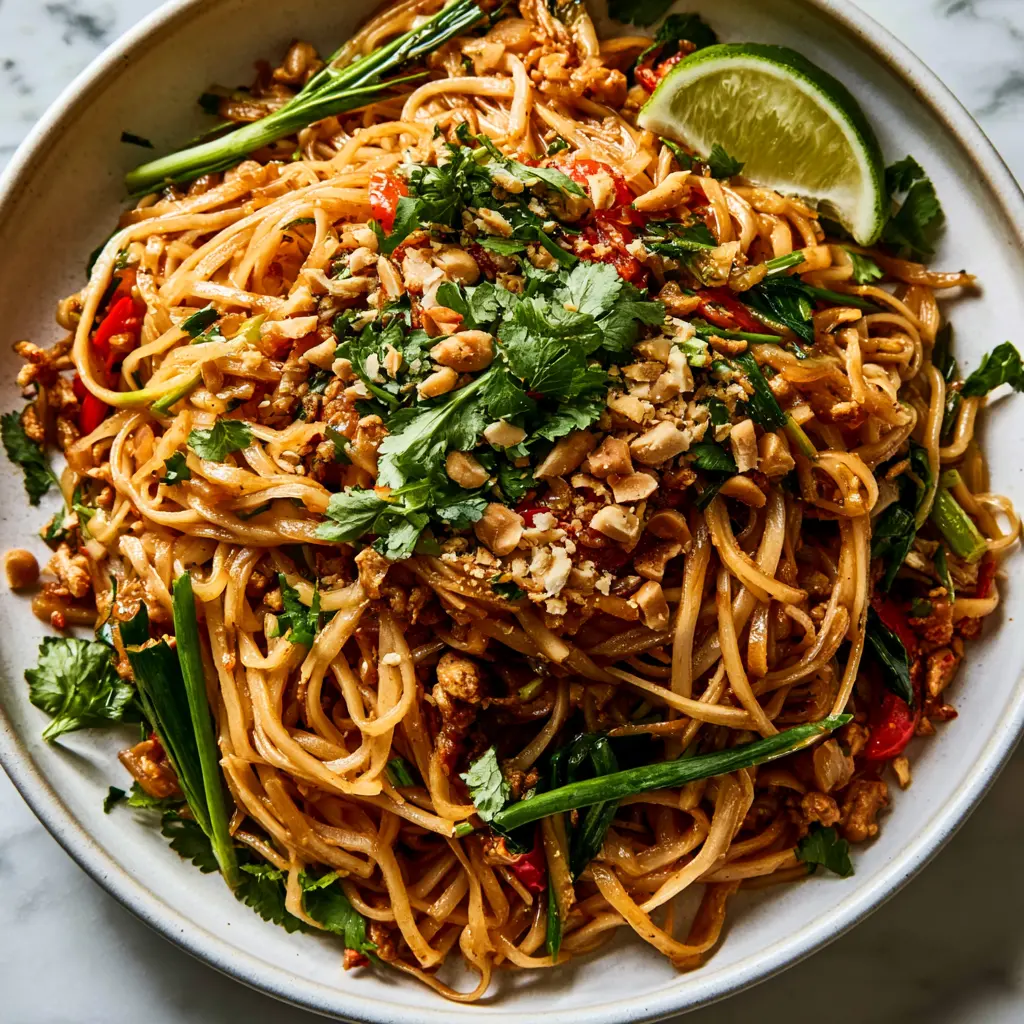
Why You’ll Love This Chicken Pad Thai
It’s 6 p.m. You’re exhausted. The kids are hungry. And you’re doing the mental math on how much that $18 delivery order is going to cost tonight, again. I’ve been there more times than I can count.
Here’s the thing about this easy chicken pad thai: it takes 30 minutes from start to finish. That’s faster than the delivery driver can even get to your door. And honestly? It tastes better. That glossy, sweet-tangy sauce, the tender noodles, the pop of fresh lime… it’s the kind of dinner that makes everyone at the table go quiet (in a good way).
You don’t need a wok. You don’t need a special pantry full of exotic ingredients. You just need a big skillet, some rice noodles, and about half an hour. This is easier than takeout, I promise.
What Is Chicken Pad Thai?
Pad Thai is basically the rock star of Thai street food. It’s a stir-fried noodle dish that balances four flavors perfectly: sweet, sour, salty, and umami. Traditionally, it’s made with shrimp or chicken, rice noodles, eggs, and crunchy bean sprouts, all tossed in a sauce that clings to every strand.
My version here leans into a garlic butter twist that makes it extra rich and irresistible. It’s not 100% traditional Thai street food, and that’s okay. It’s the version that works on a busy Tuesday night in a regular American kitchen. Think of it as the best of both worlds: that authentic flavor profile you crave, with ingredients you can actually find at your local Ralphs or Trader Joe’s.
In fact, if you want to dig into the real history of this iconic dish, there’s a whole story behind it involving mid-20th century Thailand and a national campaign to create a signature noodle dish. It stuck. And now it’s loved all over the world.
Key Ingredients for Easy Chicken Pad Thai
I know what you’re thinking. “This looks like a lot of stuff.” Don’t panic. Half of it is pantry stuff, and I’ll give you easy swaps for the rest.
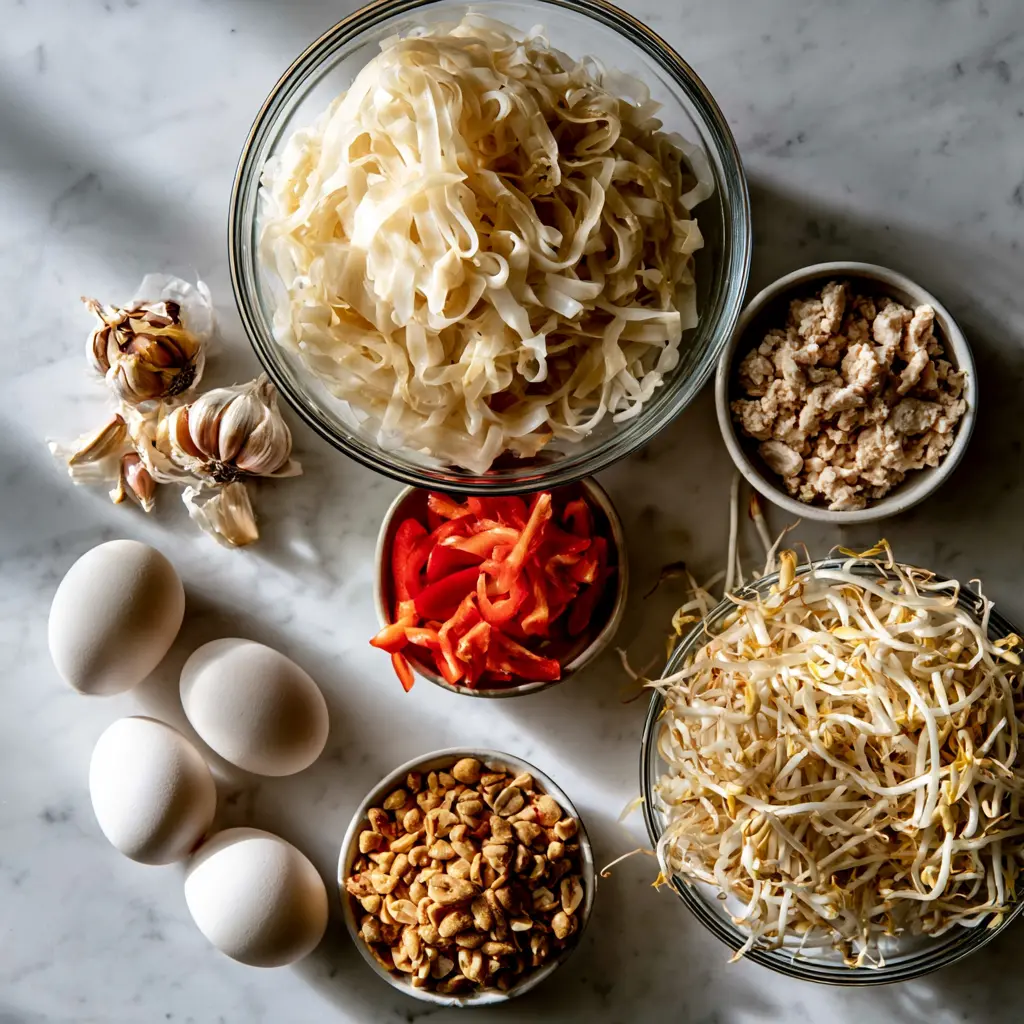
Here’s what you’ll need to get that authentic pad thai sauce flavor:
- Wide pad thai rice noodles: The flat, wide ones. Look for the “pad thai” labeled noodles in the Asian food aisle at Whole Foods or Vons.
- Tamari or soy sauce: The salty backbone. Tamari is gluten-free, so it’s my go-to.
- Pure maple syrup: This is my shortcut for palm sugar. It adds that subtle sweetness with a tiny bit of complexity.
- Fish sauce: This is the secret weapon. It smells funky in the bottle, but it adds that deep, savory umami that makes pad thai taste like pad thai. Don’t skip it.
- Rice vinegar: The sour note that balances all the sweetness.
- Ground chicken: Cooks in minutes, picks up flavor beautifully, and is way more forgiving than chicken breast strips.
- Salted butter and garlic: The garlic butter twist that makes this version extra special.
You’ll also grab a red bell pepper, shallot, eggs, mung bean sprouts, green onions, cilantro or Thai basil, and roasted peanuts for that essential crunch on top.
The Pad Thai Sauce
The sauce is where the magic happens. It’s a simple whisk-together situation in a small bowl, which means you can actually prep it the night before if you’re feeling organized.
You’re balancing tamarind paste vibes (or rice vinegar here), sweetness from maple syrup, saltiness from that fish sauce, and a little heat from chili flakes. The garlic butter gets sautéed into the chicken, infusing the whole dish with that savory, aromatic richness.
Pro tip: taste the sauce before you add it. It should be a punchy combination of sweet and tangy. The noodles will mellow it out as they absorb it.
The best part? Most of these ingredients are already in your fridge or pantry. No need for a specialty run.
How to Make Chicken Pad Thai
Alright, let’s get to the fun part. The whole process is basically four phases. I’ll walk you through each one, and you’ll see why this is the best 30-minute dinner in your rotation.
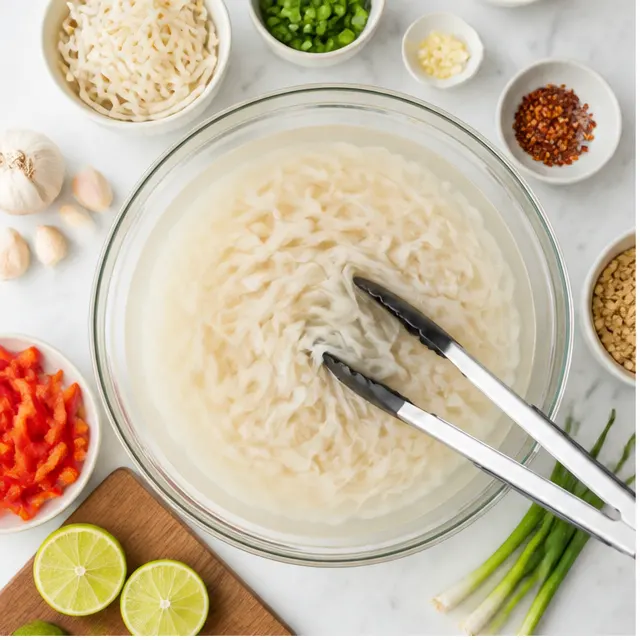
Phase 1: Soak the Noodles
This is the most important step, and the one people mess up. You soak the rice noodles in warm water, not boiling water. The goal is to get them pliable but not fully soft, because they finish cooking in the skillet. Think al dente. If you over-soak them, you get mushy, clumpy noodles that fall apart. If you under-soak them, they’ll be chewy and stiff.
Phase 2: Brown the Chicken
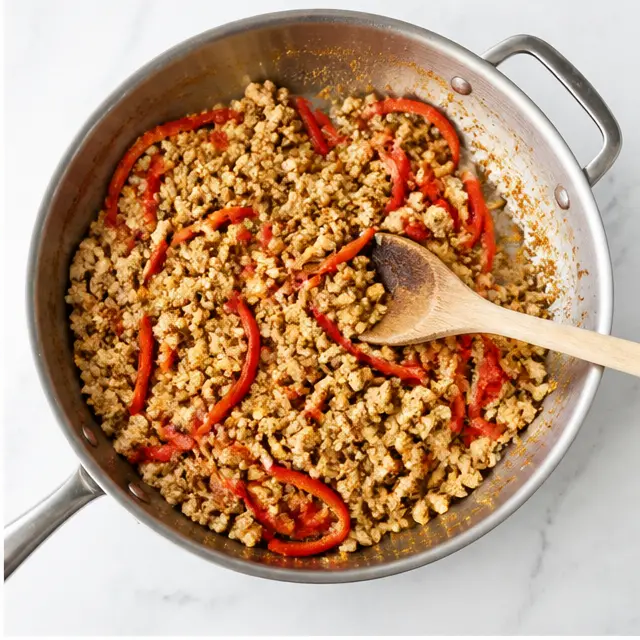
Get your skillet hot (high heat is your friend here) and add the sesame oil. Then in goes the ground chicken and sliced red bell pepper. You’re looking for some nice golden-brown color on the chicken. That’s flavor. While that’s happening, the smell of sesame oil and chicken is going to make everyone in the house ask what’s for dinner.
Once the chicken is browned, you stir in the butter, shallot, and garlic. Oh, that smell. The garlic gets fragrant and golden in about a minute. This is the garlic butter magic moment.
Phase 3: Add Noodles and Sauce
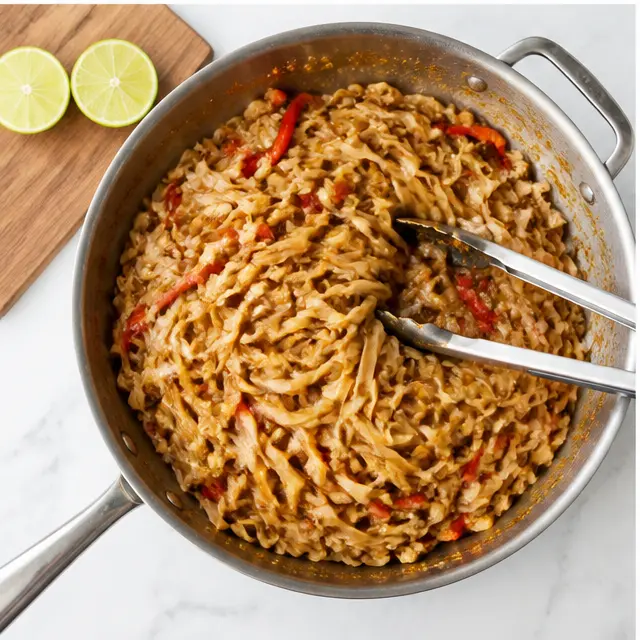
Here comes the satisfying part. In go the drained noodles and the prepared sauce. Toss everything to coat. You’ll hear a satisfying sizzle as the hot pan meets the sauce. Cook for about a minute, letting the noodles drink up all that glossy goodness.
Then, push the noodle mixture to one side of the skillet. Pour the beaten eggs into the empty space and let them set for a minute. Scramble them gently, then toss them through the noodles. You’ll see beautiful yellow ribbons of egg weaving through the dish.
Phase 4: Final Toss and Serve
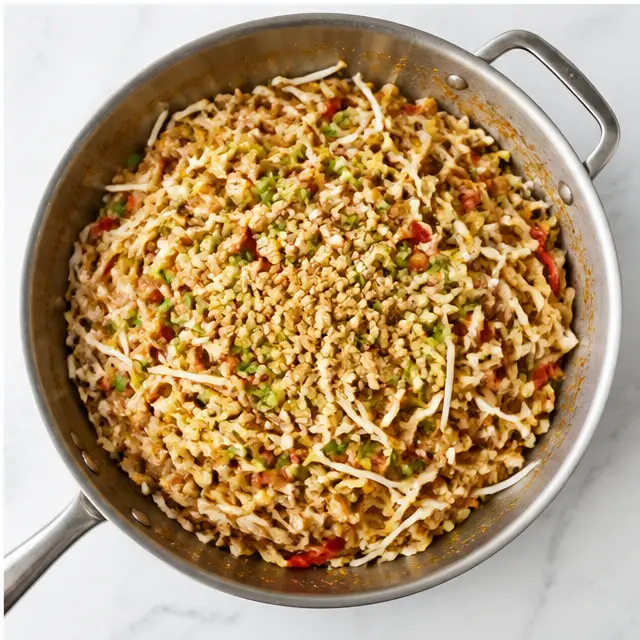
Remove the skillet from the heat. Fold in the mung bean sprouts (they’ll stay nice and crunchy), most of the cilantro or Thai basil, and most of the green onions. The residual heat will wilt them slightly while keeping their freshness.
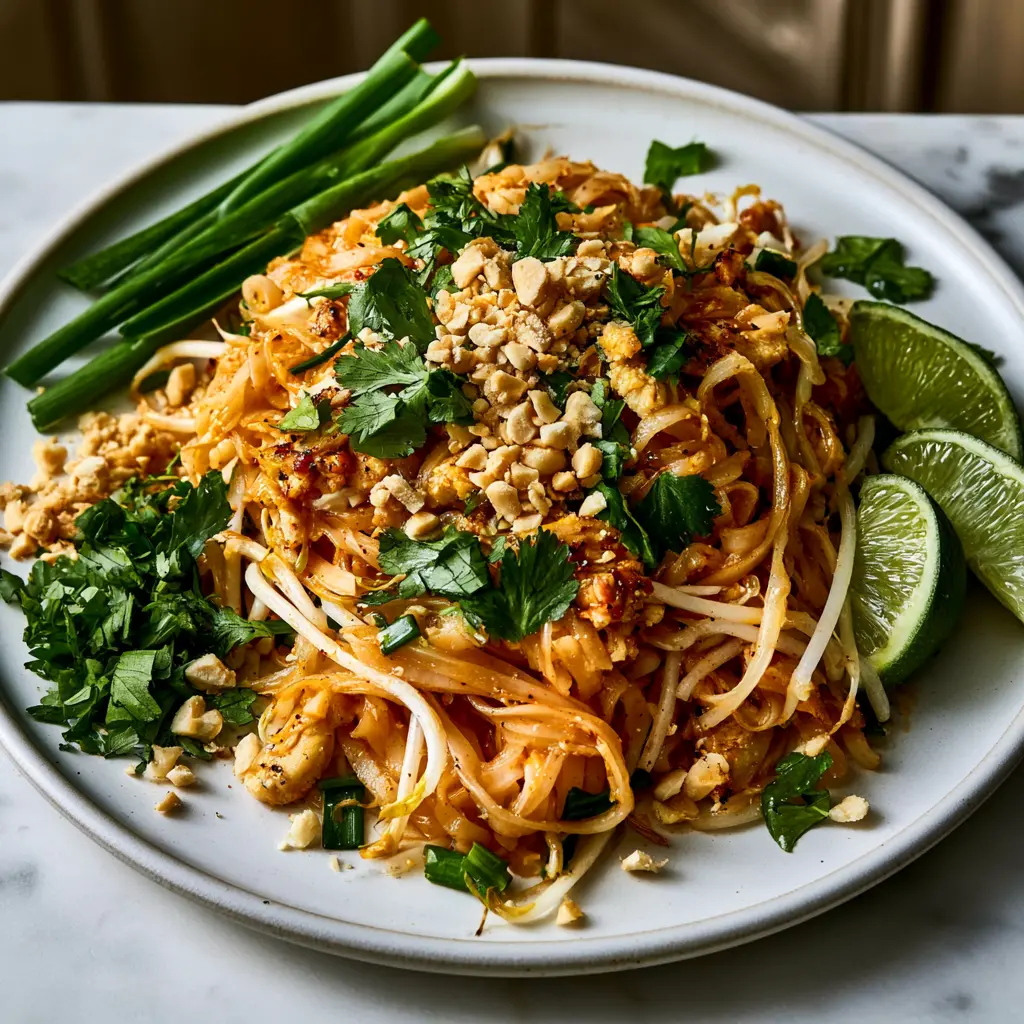
Serve it right away, piled high on plates. Top with the remaining herbs, a shower of crushed peanuts, a pinch more chili flakes, and a generous squeeze of fresh lime juice. The lime is non-negotiable. It brightens everything up.
Pro Tips for the Best Chicken Pad Thai
I’ve made this recipe a hundred times. I’ve also made it a hundred mistakes. Here’s how to skip the learning curve:
- Don’t boil the noodles. Soaking them in warm water is the whole secret to getting that perfect, springy texture. Overcooked noodles = broken, pasty mess.
- Prep everything before you start. The stir-fry moves fast once the pan is hot. Have your sauce whisked, your garlic chopped, your eggs beaten. You’ll thank me.
- Use a large skillet or wok. You need room to toss. A crowded pan steams instead of stir-fries, and you lose that char flavor.
- Season as you go. I know recipes say “season to taste.” But here, it matters. A few extra grinds of pepper and a pinch of chili flakes during cooking build layers of flavor.
- Keep stirring after the sauce goes in. This is the trick to preventing clumpy noodles. The starch from the noodles and the sugar in the sauce want to stick together. Keep everything moving.
Here’s the thing I wish I knew earlier: don’t crowd the pan. If your skillet is too small, the noodles will steam and get mushy instead of getting that nice glossy coating.
Common Mistakes to Avoid
Let me save you from the kitchen disasters I’ve personally experienced:
- ❌ Mistake: Boiling the rice noodles until they’re fully soft, then frying them. They become a sticky, clumpy mass. ✅ Solution: Soak them until just pliable, then let the hot pan and sauce finish the job.
- ❌ Mistake: Burning the garlic because the heat is too high. ✅ Solution: Add the garlic with the shallot and butter, and keep stirring for just 1 to 2 minutes until golden and fragrant, not brown.
- ❌ Mistake: Adding all the sauce at once and ending up with soggy noodles that swim in liquid. ✅ Solution: Follow the recipe’s method, toss the noodles to coat, and let them absorb for a minute. They shouldn’t be soupy.
- ❌ Mistake: Skipping the fish sauce because it smells funny. ✅ Solution: Trust the process! Once it’s cooked into the dish, it transforms into that fantastic savory umami depth.
- ❌ Mistake: Using a low-sided pan and flipping ingredients everywhere. ✅ Solution: Use a wok or a deep, high-sided skillet. Your stovetop will thank you.
Easy Variations and Substitutions
This is the recipe that keeps on giving. Once you master the base, you can make it your own. Here are some of my favorite ways to switch it up:
- Swap the protein: Use shrimp, sliced chicken breast strips, tofu, or even steak. The sauce works with everything.
- Make it gluten-free: This is naturally gluten-free pad thai at home as long as you use tamari and check that your fish sauce is gluten-free. Most are, but it’s worth a quick look at the label.
- Make it vegetarian: Leave out the egg, use tofu, and substitute the fish sauce with more soy sauce or tamari. It won’t be exactly the same, but it’ll still be delicious.
- Blend some creaminess: Stir a scoop of peanut butter into the sauce for a peanut sauce twist. It’s not traditional, but wow, is it good.
- Swap the tamarind: Pad thai traditionally uses tamarind paste. If you have it, use about 2 tablespoons in place of the rice vinegar for a more authentic floral sourness. If not, the rice vinegar works perfectly.
- Boost the umami: Add a tablespoon or two of dried shrimp along with the garlic. It sounds weird, it’s amazing.
The beauty of this dish is its flexibility. It’s a “clean out the fridge” type of meal that still manages to feel like a special treat.
Storage and Reheating Instructions
One of the big questions I get about any noodle dish is about leftovers. Store this chicken pad thai in an airtight container in the fridge for up to 2 days. That’s right, this is a great meal-prep recipe.
However, don’t freeze the finished dish. The noodles will turn mushy and the texture will be off. The sauce, on the other hand, can be kept in the fridge for a couple of weeks.
When you’re ready to eat the leftovers, here’s the best way to revive them:
- Add a splash of water or a little extra sauce to a skillet.
- Heat over medium heat, stirring gently, until the noodles have loosened up and are warmed through.
- Hit it with a fresh squeeze of lime and some crushed peanuts. It’ll be 90% as good as the first night.
Microwaving works in a pinch, but the skillet brings back some of that stir-fry magic.
Chicken Pad Thai FAQ
Garlic Butter Chicken Pad Thai in 30 Minutes
Ingredients
Method
- Soak the rice noodles in warm water as directed on the package, then drain them well.
- In a small bowl, whisk together the tamari or soy sauce, maple syrup, fish sauce, rice vinegar, a few grinds of black pepper, and chili flakes until combined.
- Heat the sesame oil in a large skillet over medium heat. Add the ground chicken and sliced bell pepper, and cook, breaking up the chicken with a spoon, until the chicken is browned, about 5 minutes. Stir in the butter, shallot, garlic, and a pinch more chili flakes and black pepper; continue cooking until the garlic is fragrant and golden, 1 to 2 minutes.
- Add the drained noodles and the prepared sauce to the skillet, tossing everything to coat. Cook for about 1 minute until the noodles are hot and have absorbed some of the sauce. Push the noodle mixture to one side of the skillet, pour the beaten eggs into the empty side, and let them set for about 1 minute. Gently scramble the eggs, then toss them into the noodles. Remove the skillet from the heat.
- Add the bean sprouts, most of the cilantro or Thai basil, and most of the green onions; toss everything together.
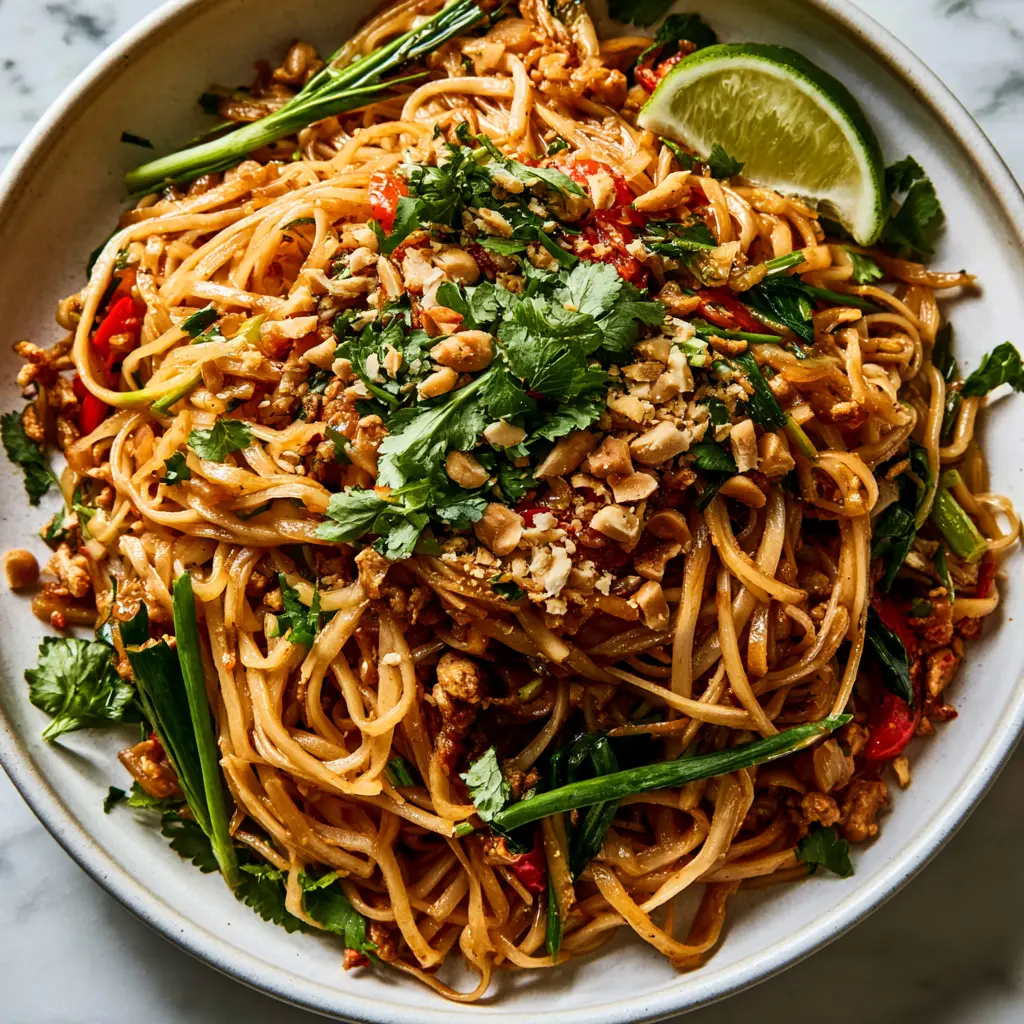
- Serve the chicken pad thai right away, topped with the remaining cilantro or Thai basil, green onions, chopped peanuts, chili flakes, and a squeeze of fresh lime juice.
Nutrition
Notes
Tried this recipe?
Let us know how it was!Make This Your New Weeknight Habit
Next Tuesday, when you’re staring at the delivery apps and feeling that familiar dread, remember this. This chicken pad thai is your move. In the time it would take for the food to arrive cold, you can have a warm, fragrant, restaurant-quality dinner on the table that cost a fraction of the price.
It’s the kind of meal that makes you feel like you’ve got it all figured out, even on the chaos days. The kids will be quiet, the kitchen will smell amazing, and you’ll wonder why you ever ordered takeout in the first place.
If you’re feeling inspired, I’d love to see your creation! Sharing your culinary wins is the best part. Let’s be friends over on Pinterest. Save this easy chicken pad thai recipe for your dinner rotation and never scramble for a weeknight meal idea again.
This is easier than takeout, I promise. Go make it.
Source: Learn More About This Dish