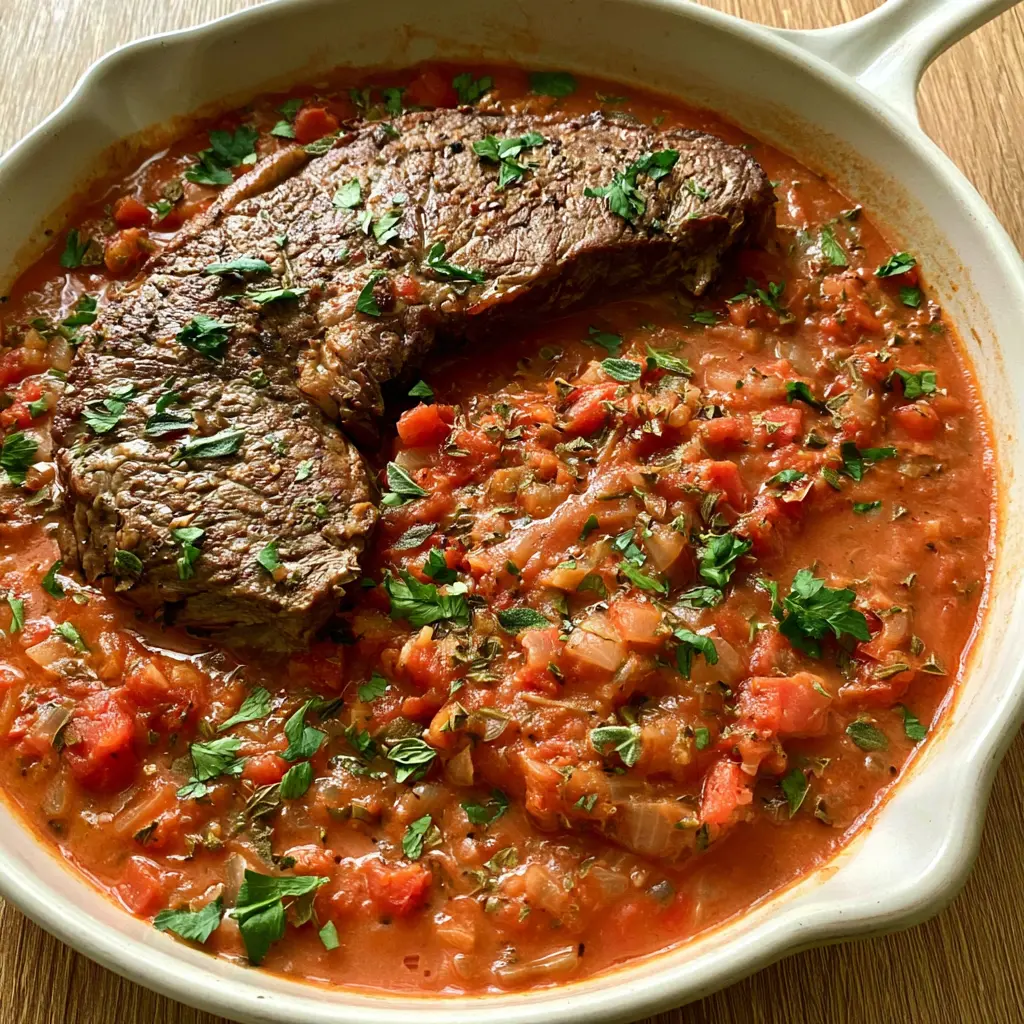
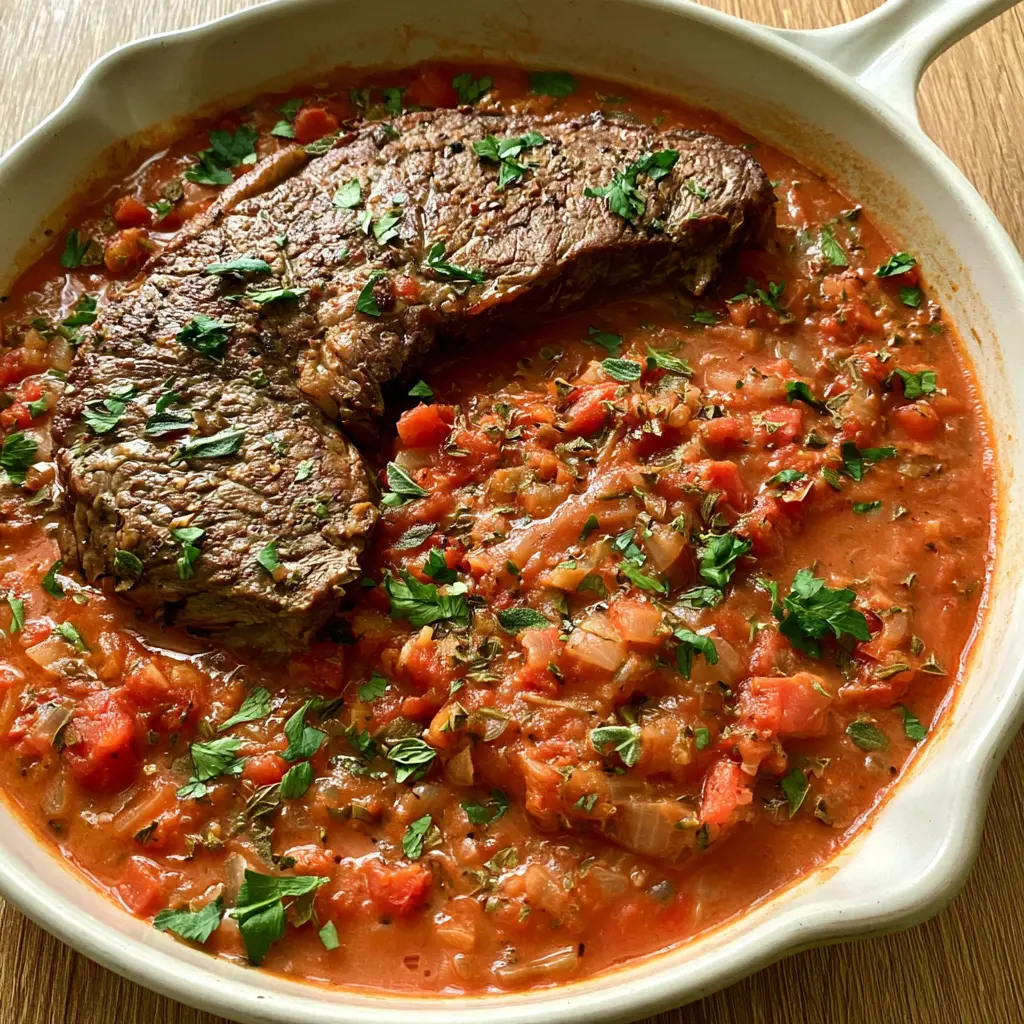
Steak Pizzaiola: Tender Sirloin in Garlicky Tomato Sauce
Ingredients
Method
- Dry the steaks with paper towels, then sprinkle 1 teaspoon of the salt and all the black pepper over both sides.
- Heat 1 tablespoon of the olive oil in a large skillet over medium-high heat, tilting the pan to coat the bottom.
- When the oil starts to shimmer, lay in the steaks and sear them until a golden-brown crust forms, about 2 minutes on the first side and 1 minute on the second. Move the steaks to a plate and lower the heat to medium.
- Pour the remaining 1 tablespoon olive oil into the skillet and swirl it around. Add the onion and crushed red pepper flakes. Cook, stirring now and then, until the onion softens, about 3 minutes.
- Stir in the garlic and cook for 1 minute. Pour in the broth and vinegar mixture, scraping up any browned bits from the skillet bottom. Add the diced tomatoes, the remaining 1/2 teaspoon salt, and the oregano. Stir everything together.
- Let the sauce come to a gentle simmer and cook for 10 minutes. Return the steaks and any juices on the plate to the skillet. Cook just until the steaks are heated through, about 3 minutes more.
- Divide the steaks and sauce evenly among plates. Scatter the parsley over the top and serve with toasted crusty baguette or focaccia for dipping.
Nutrition
Notes
Tried this recipe?
Let us know how it was!Why You’ll Love This Steak Pizzaiola
A cool October evening in Curtis Park has a way of deciding dinner for you. The Delta breeze pushes through the screen door, the light goes soft and amber, and the only thing that sounds right is something bubbling in a skillet.
That’s where steak pizzaiola comes in. It’s Italian-American comfort food at its most generous, and it goes from cold pan to full table in about 35 minutes. (The pan juices are the whole point, by the way. Don’t lose them.)
I’ll be honest with you. Steak used to intimidate me. I grew up watching my grandmother Oksana roast chickens, not sear beef, and the idea of spending good money on sirloin only to wreck it made me nervous.
Then I learned what a gentle simmer actually does to meat. That’s the thing nobody tells you. A good steak pizzaiola recipe isn’t a grilled steak with sauce spooned over the top. The steak finishes cooking in the sauce, and that sauce does the heavy lifting.
- Ready in 35 minutes, prep included
- Forgiving, even if you’ve never cooked beef confidently
- Built from pantry basics you probably own right now
Salt, heat, and time. That’s the whole formula.
Steak Pizzaiola: A Quick and Easy Classic
Here’s the part that surprises people. Pizzaiola means “pizza-maker’s style,” and it comes from Naples.
So, what is pizzaiola? In plain language, it’s a cooking method, not a pizza. Neapolitan cooks simmered meat in the same tomato, garlic, and oregano sauce they used on their pies. Same flavors, different vehicle. Some old-country cooks still call it Neapolitan steak.
That’s why pizzaiola sauce tastes the way it does. It isn’t a long-simmered Sunday gravy. It’s brighter and quicker, built on garlic, oregano, and good tomatoes, the kind that announces itself from the next room.
If you’ve ever watched Everybody Loves Raymond, you might know steak pizzaiola from the episode where Ray’s competitive streak gets the better of him over this exact dish. Pop culture aside, it’s been a weeknight staple in Italian-American kitchens for generations.
The recipe I make is a sirloin steak pizzaiola, quick and unfussy. Sear, simmer, done.
Key Ingredients
You need eleven things, and most of them are already in your kitchen. Nothing here is precious.
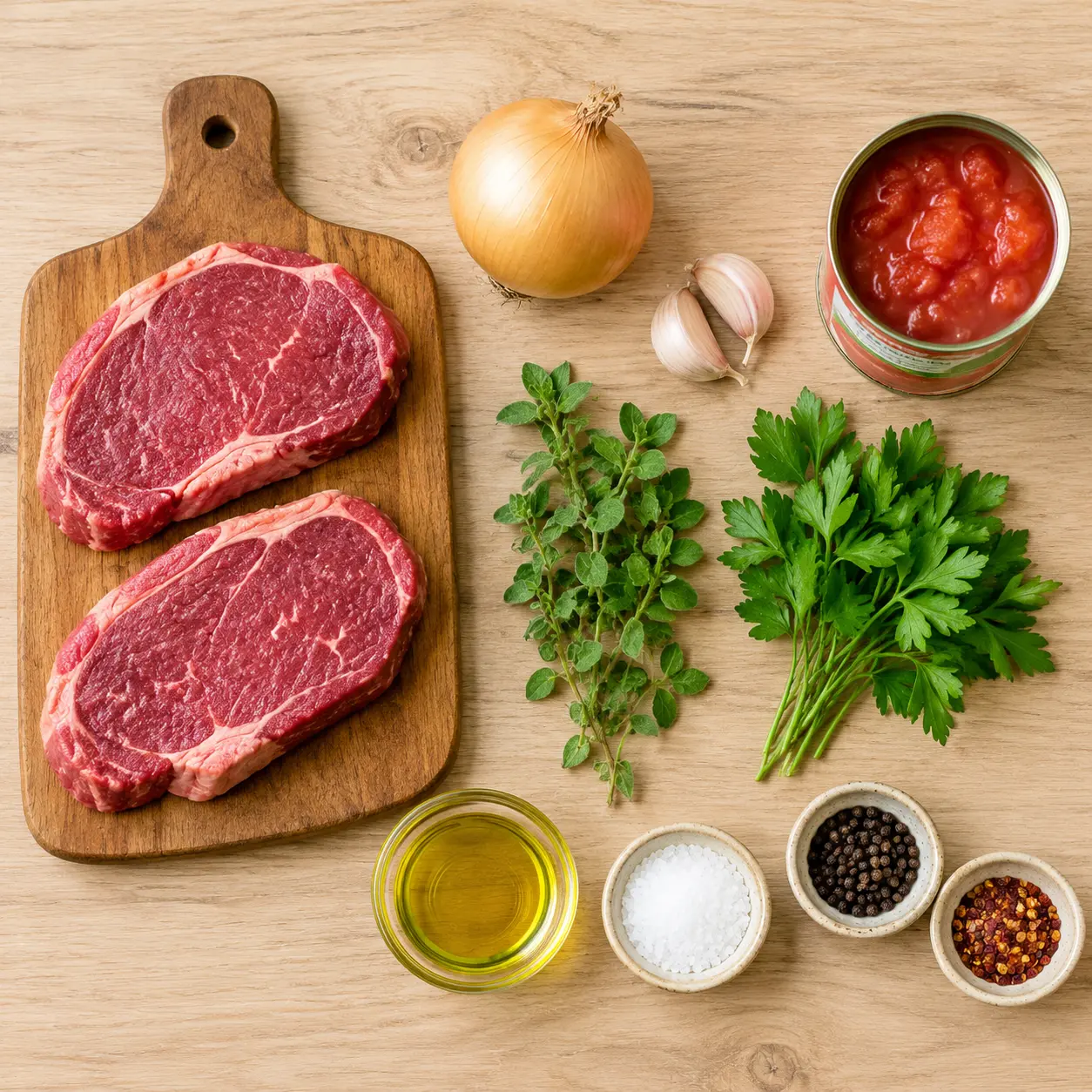
- Boneless sirloin steaks, about 1 inch (2.5 cm) thick, roughly 1 1/4 pounds total
- Coarse salt and freshly ground black pepper
- Olive oil, split between searing and sautéing
- Diced yellow onion, about half a cup, one small onion
- Crushed red pepper flakes, just a pinch
- Garlic, two large cloves, minced
- Dry chicken broth, the backbone of the sauce
- One 28-ounce can diced tomatoes
- Fresh oregano, chopped
- Fresh parsley, roughly chopped, for the finish
Two of these matter more than you’d expect, so let’s talk about them.
Oregano is the signature. It’s the herb that makes the whole pan smell like a pizzeria in Naples. Fresh is lovely in October if you can find it, but dried works fine, so use what you have and don’t apologize for it.
The broth plus a splash of vinegar does something quiet and important. Acid cuts the richness of the beef and wakes up the tomatoes. The recipe calls for a tablespoon of white wine vinegar or apple cider vinegar stirred into the broth. It’s marked optional, but I almost never skip it.
One more note on garlic. Some cooks slice it instead of mincing, which gives a sweeter, more diffuse flavor. I mince mine because I want the punch. Either works.
How to Make Steak Pizzaiola, Step by Step
Four stages. That’s it. And the whole thing fits in one skillet, which means one pan to wash and no casserole dish to scrub.
Stage 1: Dry the Steaks and Season Them Well
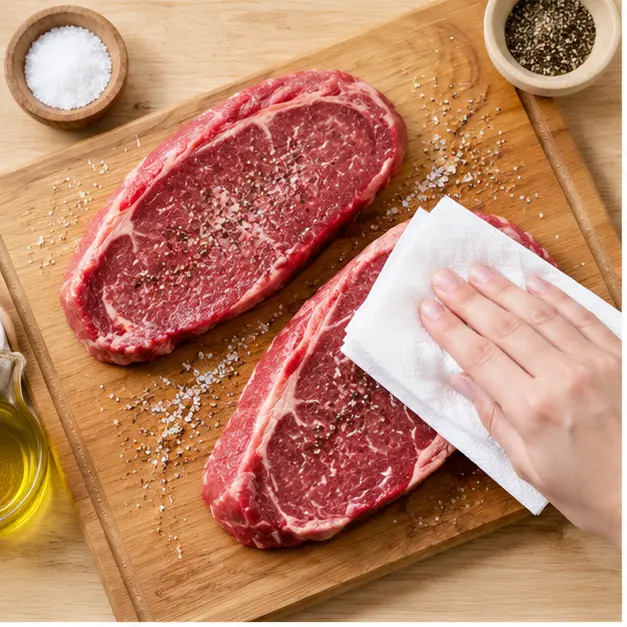
Pat the steaks dry with paper towels. This isn’t optional, and here’s why. A wet surface steams instead of sears, and steam is the enemy of a crust.
Then salt and pepper both sides. One teaspoon of coarse salt across the four steaks, plus all the black pepper. Salt like you’re angry, Baba used to say. She was talking about chicken, but the advice travels.
Stage 2: Sear for the Crust
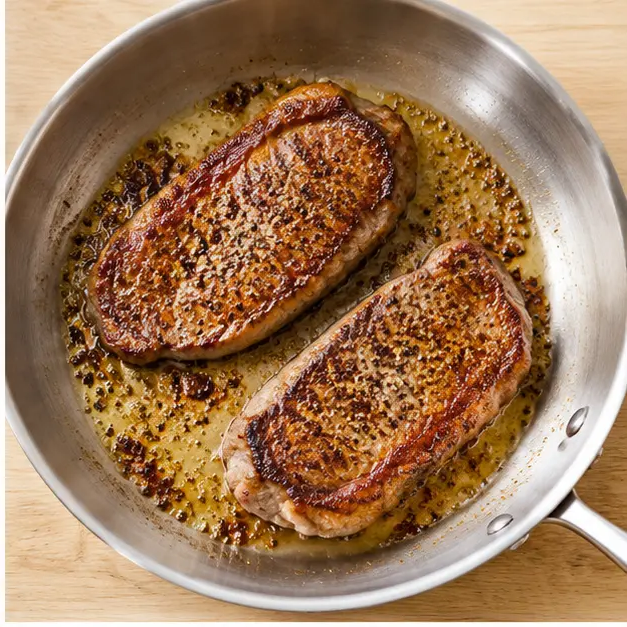
Heat 1 tablespoon of olive oil in a large skillet over medium-high until it shimmers. Lay the steaks in and then leave them alone. About 2 minutes on the first side, 1 minute on the second.
You’re not cooking them through here. You’re building a golden-brown crust that will hold up in the sauce. Move them to a plate when they’re done and drop the heat to medium.
Is the pan smoking? Good. Is the steak sticking? Give it another 30 seconds and it’ll release on its own. That’s the pan telling you the crust is ready.
Stage 3: Build the Pizzaiola Sauce
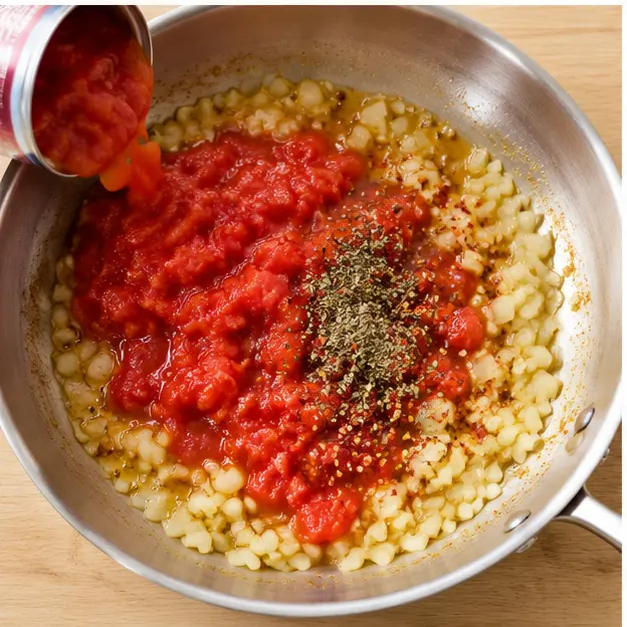
Add the last tablespoon of olive oil, then the onion and a pinch of crushed red pepper flakes. Cook about 3 minutes, until the onion goes soft and translucent. Then the garlic for 1 minute, just until it smells like dinner.
Pour in the broth and vinegar mixture and scrape the browned bits off the bottom of the pan. Those bits are flavor, and they belong to you. Add the diced tomatoes, the remaining 1/2 teaspoon salt, and the oregano. Simmer gently for 10 minutes.
Here’s the science, and it’s simpler than you’d think. That gentle simmer starts breaking down the tough connective tissue in the beef, and the tomatoes’ acid helps it along. Low and slow beats high and fast, even on a Tuesday.
Stage 4: Warm the Steaks Through and Plate
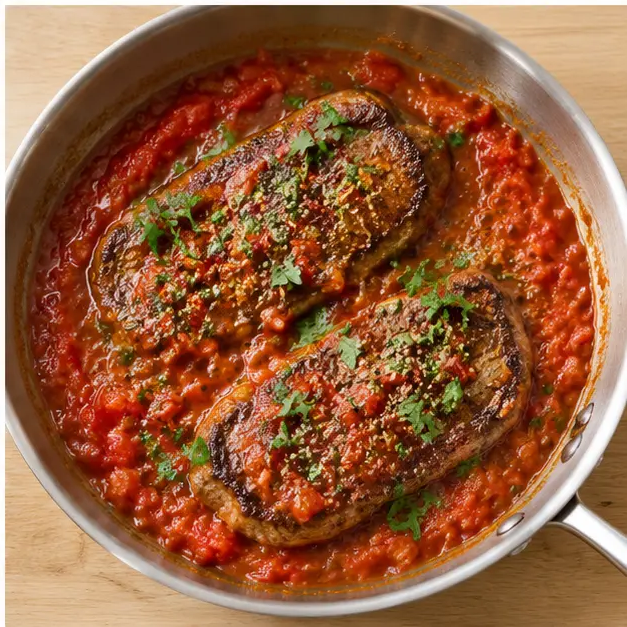
Return the steaks and any juices from the plate to the skillet. Cook just until heated through, about 3 minutes more. Warm it through only. That’s the entire game.
Scatter the parsley over the top and you’re done. The sauce should coat a spoon but still pool around the steak, and the meat should give no resistance when you press it with a fork.
Make It Your Own
Steak pizzaiola is endlessly flexible, and that’s part of its charm. Once you’ve made it twice, you’ll start improvising, and that’s exactly what should happen.
- Try a different cut. Flank, skirt, or round steak all work. A round steak pizzaiola is the budget-friendly classic. If you use a tougher cut, pound it to about 1/2 inch so everything cooks evenly, then slice against the grain.
- No fresh oregano? A pinch of dried is fine, and honestly, that’s the pizza-maker’s move anyway.
- No white wine vinegar? Apple cider vinegar or a squeeze of Meyer lemon juice does the same job.
- Want it spicy? More crushed red pepper flakes, or a spoonful of Calabrian chili paste. Optional, never required.
- Love vegetables on your pizza? Thinly sliced bell peppers and mushrooms are a natural addition. Add them with the onion if you want them. If you don’t, skip them without a second thought.
- Chicken pizzaiola is the same sauce with chicken cutlets. Sear them quickly and simmer just as briefly.
One caution: don’t turn this into a long braise unless you’re using chuck. That’s a different dish with a different timeline. This one is a weeknight Italian dinner, fast and bright.
Expert Tips for Tender Steak
This is where most people go wrong, and it’s almost never the ingredients. It’s the timing. Tender steak pizzaiola comes down to a few habits.
Fix These Five Mistakes
❌ Cooking a cold, wet steak → ✅ Dry it with paper towels and let it sit out 15 minutes before it hits the pan.
❌ Crowding the skillet → ✅ Sear in batches if your pan is small. Crowded steak steams and turns gray.
❌ Simmering too long → ✅ Ten minutes for the sauce, three for the steak. That’s the timeline, and it works.
❌ Slicing with the grain → ✅ Find the lines running through the meat and cut across them. Chewy steak is usually a slicing problem, not a cooking one.
❌ A flat, acidic sauce → ✅ Taste before serving. If it bites back too hard, a small pinch of salt or five more minutes of simmering rounds it out.
A thermometer is a friend, but your fork knows too. Press the steak. If it gives no resistance, it’s tender. If it fights back, give it two more minutes in the sauce.
And if you’re wondering how to tenderize steak without a mallet and a lot of drama, the answer is time in the sauce. That’s the quiet magic of this dish.
Storage & Leftovers
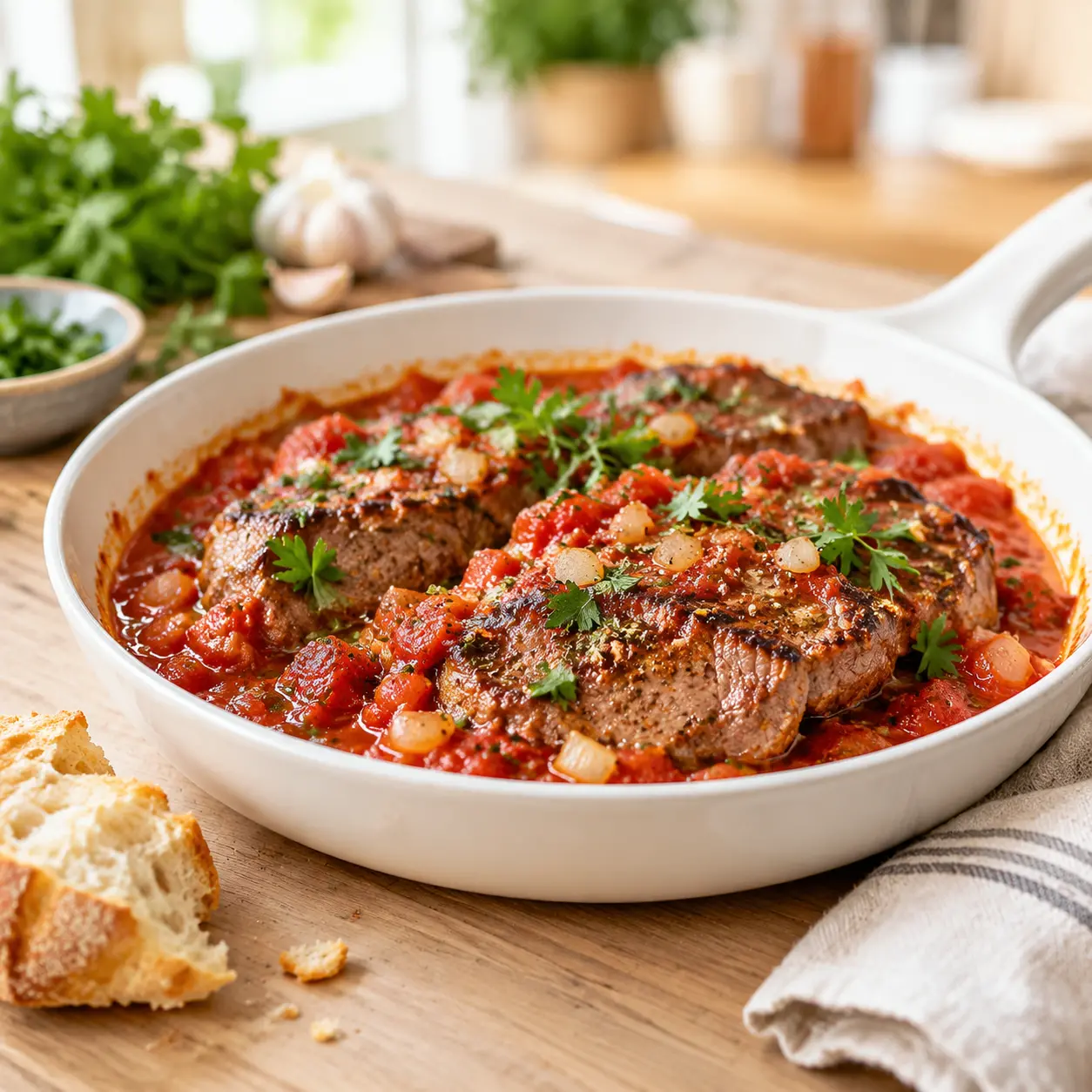
Leftover steak pizzaiola might be even better the next day. The sauce deepens, and the steak soaks up all that garlic and oregano while it waits.
- Fridge: Airtight container, up to 3 days.
- Reheating: Gently on the stovetop with a splash of broth. Low heat, covered, just until warm.
- Microwave: Works in a pinch, but it tightens the meat. Thirty-second bursts if you must.
- Freezing: It freezes reasonably well for up to 2 months. Thaw overnight in the fridge.
- Make ahead: Cook the sauce up to 2 days ahead and refrigerate. Sear the steaks the day you serve and simmer them in the reheated sauce.
The one rule: don’t leave the steak sitting in a hot pan on the stove. It keeps cooking, and that’s how you end up with tough meat. Move it to a container and get it into the fridge within an hour or so.
Perfect Pairings
The question isn’t what goes with steak pizzaiola. It’s what doesn’t. You want something on the plate whose whole job is to catch the sauce. That’s the point of a side dish here.
- Creamy polenta, my favorite. It spreads under the steak and drinks up the tomato.
- Spaghetti or any long pasta, twirled through the pan juices.
- Mashed potatoes, especially if you like your comfort food doubled up.
- Crusty bread, like toasted sourdough or focaccia, for sopping. You’ll need more than you think.
A simple green salad with a sharp vinaigrette cuts the richness nicely. And if you’re making this on a Sunday with football on in the background, pour something cold and don’t overthink it.
If you double the sauce because you’re serving pasta, go right ahead. You won’t regret it.
Frequently Asked Questions
More Steak Recipes to Try
If this skillet dinner earns a permanent spot in your rotation, there’s a whole world of beef waiting behind it. These are the ones I reach for when the weather turns and the oven comes back on:
- Classic pot roast with root vegetables
- Skillet steak with a quick pan sauce
- Braised short ribs over creamy polenta
- Weeknight beef stew with a crusty bread lid
Swap in whatever looks good at the market. And when you plate your steak pizzaiola, I’d love to see it. If you snap a photo, pin it to your cozy fall dinners board, so the next person staring at a cold skillet knows exactly where to start.
So here’s the thing about steak pizzaiola. It’s the kind of meal that makes you look like you knew what you were doing all along.
When you make this on a chilly Tuesday, your kitchen will smell like garlic and oregano and something bubbling away on the back burner. Your family will wander in before you call them. You’ll tear off a piece of bread and drag it through the sauce, and you’ll wonder why you ever feared steak.
Let me know if you add mushrooms, or serve it over polenta instead of pasta. Both are good calls, and honestly, I change my mind about the side dish every single time. That’s the joy of a simple, comforting meal. It doesn’t need to be perfect. It just needs to be made.
Source: Learn More About This Dish