
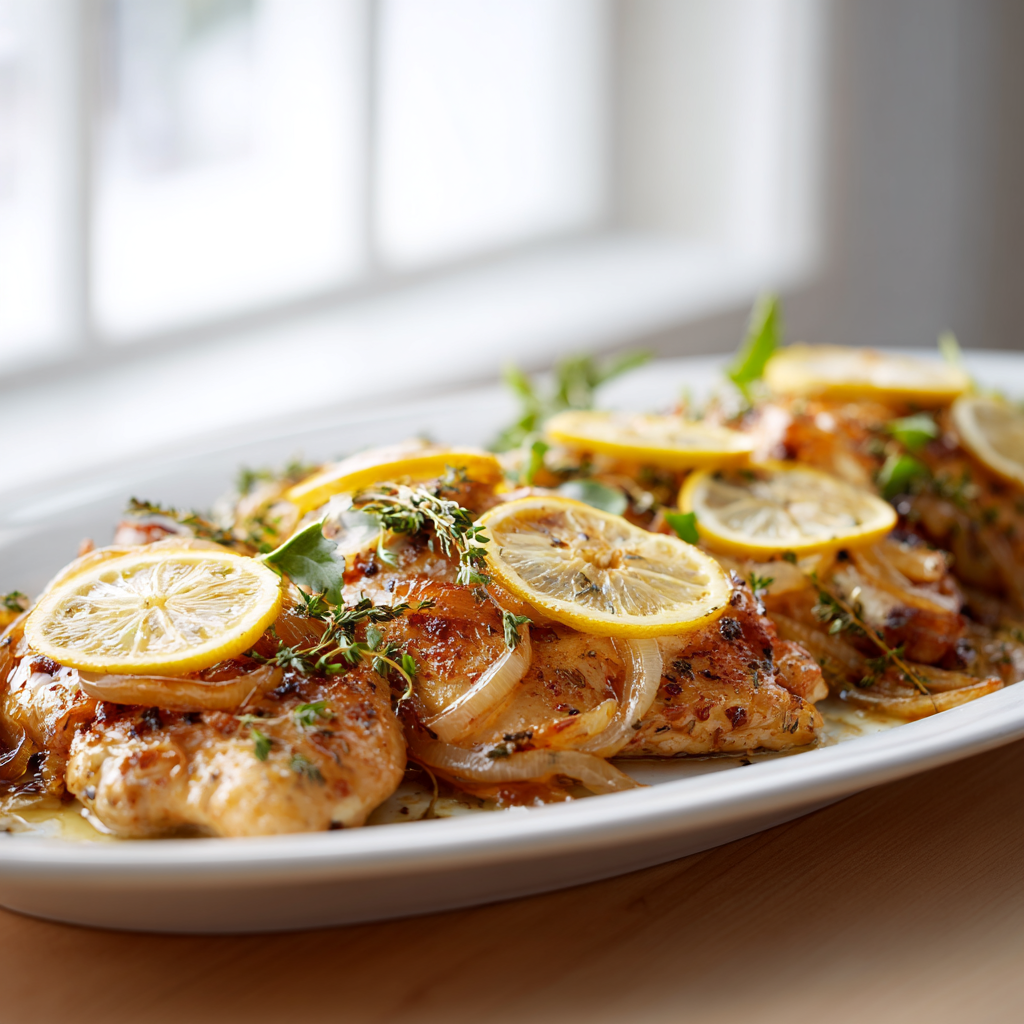
Why This Ina Garten Lemony Chicken Dinner Is a Summer Staple
There are chicken recipes, and then there are those chicken recipes. The ones you make for company when you want to hear, “Wow, where did you learn to cook like this?” The ones that feel special but don’t chain you to the stove all afternoon. This Ina Garten lemony chicken dinner is exactly that kind of recipe.
I first made this skillet-roasted lemon chicken last July, during that stretch of summer when you want something bright and fresh but also hearty enough to feel like a real meal. My friends were coming over for a casual dinner, and I wanted something that looked impressive without requiring a sous chef. I remember pulling that cast-iron skillet out of the oven and watching the lemon halves sizzle in the pan juices. The smell of garlic and thyme filled the whole kitchen. Everyone went quiet for a second when I set it on the table. That’s the moment you know you’ve got a winner.
What I love about this Ina Garten lemony chicken recipe is how straightforward it is. You don’t need a dozen obscure ingredients or special equipment. You need a good chicken, some fresh lemons, a few pantry staples, and a little patience. The technique spatchcocking the chicken and roasting it on a bed of aromatics does most of the heavy lifting. The result is a bird with impossibly crispy skin, tender meat, and a pan sauce so bright and flavorful you’ll want to drink it with a spoon.
If you’ve ever felt intimidated by roasting a whole chicken, I get it. I’ve been there. Dry chicken, bland skin, uneven cooking. But this method eliminates all of that. The spatchcocking ensures everything cooks evenly. The aromatic bed of onion, garlic, and lemon infuses the meat from below. And the high heat gives you that golden, crackly skin we’re all chasing. Trust me, you can do this. I promise it’s easier than it looks.
Why Spatchcock This Chicken?
If you’ve never spatchcocked a chicken before, it sounds like a fancy chef move. Really, it’s just removing the backbone and flattening the bird. And it’s the single best thing you can do for even cooking and crispy skin.
Here’s why it matters for this Ina Garten lemony chicken dinner:
- Even cooking: A whole chicken is thick in the middle and thin at the edges. By flattening it, you create a uniform thickness. No more dry white meat while the dark meat is still underdone.
- Crispy skin everywhere: With the chicken flat, more surface area is exposed to the hot oven air. Every inch of skin gets a chance to crisp up, not just the top.
- Faster roasting: A spatchcocked chicken cooks in about 50 minutes, compared to 75-90 minutes for a traditional roast. On a hot summer evening, that’s a win.
- Easier carving: Once it’s cooked, you can literally cut the chicken into serving pieces along the natural joints. No wrestling with a hot bird.
I know it feels a little aggressive the first time you cut through a chicken backbone. But grab a pair of sharp kitchen shears, and you’ll be done in under a minute. The payoff is huge.
Key Ingredients and Notes
The beauty of this Ina Garten lemony chicken recipe is its simplicity. Each ingredient has a job to do, and there’s no filler. Let me walk you through the important ones.
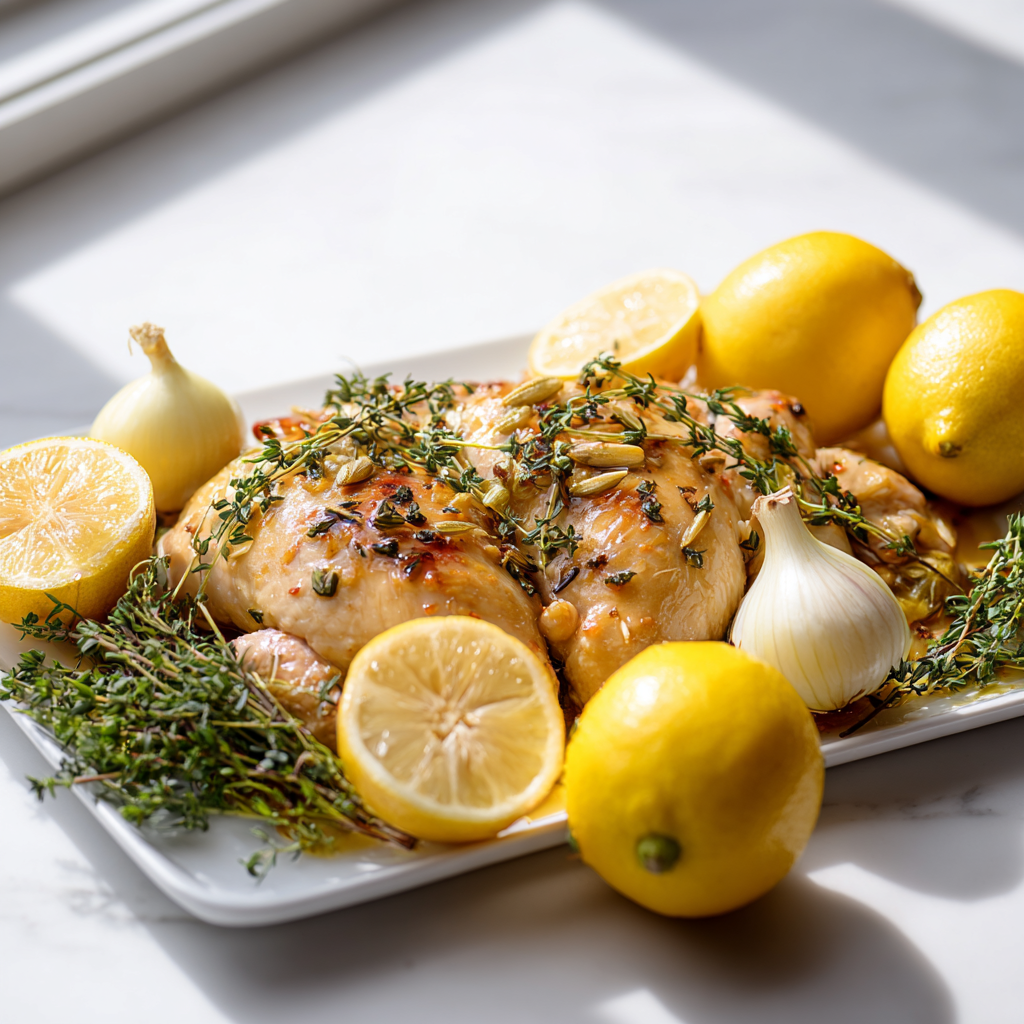
The Chicken: Look for a whole chicken around 4 pounds. That’s the sweet spot for this recipe big enough to feed 4 people, small enough to cook through quickly. If you can, buy an air-chilled bird. They have less retained water, which means crispier skin.
Meyer Lemons: This is Ina’s choice, and for good reason. Meyer lemons are sweeter and less acidic than regular lemons. Their thin skins are also less bitter when roasted. If you can find them at your local market (they’re in season from late fall through spring), use them. If not, regular lemons work fine just be careful with the pith and seeds, which we’ll talk about later.
Fennel Seeds: This is the secret ingredient you didn’t know you needed. They add a subtle, almost licorice-like warmth that pairs beautifully with the lemon and thyme. Toasting them briefly in the food processor releases their oils and mellows the flavor.
California Extra-Virgin Olive Oil: Ina specifies California olive oil, and I think it’s because the flavor is clean and fruity without being overpowering. Use a good-quality oil here it’s a major flavor component.
Dry White Wine: The wine deglazes the pan and creates the most incredible sauce. Use something you’d actually drink. A Napa Valley Sauvignon Blanc is perfect, but any dry white wine will do.
How to Spatchcock a Chicken
Let’s get this out of the way first. If your butcher will do it for you, by all means, ask. But it’s really not hard to do yourself.
Start with a whole chicken, patted dry. Place it breast-side down on a cutting board. Using sharp kitchen shears, cut along both sides of the backbone from tail to neck. Remove the backbone entirely (save it for stock if you’re ambitious).
Flip the chicken over and press down firmly on the breastbone with the heel of your hand until you hear a crack. The chicken should lie flat. That’s it. You’re done.
A few things to watch for. Make sure you’re cutting close to the backbone, not through it. And press firmly enough to flatten the bird, but not so hard that you break the breastbone into pieces. It takes a little practice, but you’ll get the hang of it.
Step-by-Step Cooking Stages
Alright, let’s walk through the cooking process. I’ll break it into four major stages so you can see the progression.
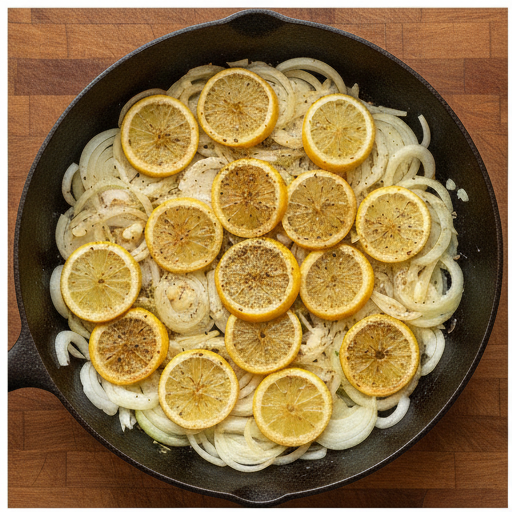
Stage 1: Build the Aromatic Bed
Preheat your oven to 450°F. In a large 12-inch cast-iron skillet, arrange a single layer of sliced yellow onion, thinly sliced garlic cloves, and thinly sliced Meyer lemon halves. This bed does two things: it flavors the chicken from below, and it prevents the meat from sticking to the pan. The onions and lemons will caramelize as they roast, creating a sweet, tangy foundation for the pan sauce.
Don’t crowd the bed. You want the slices in a single layer so they cook evenly. If you pile them up, they’ll steam instead of caramelize.
Stage 2: Make the Herb-Oil Paste
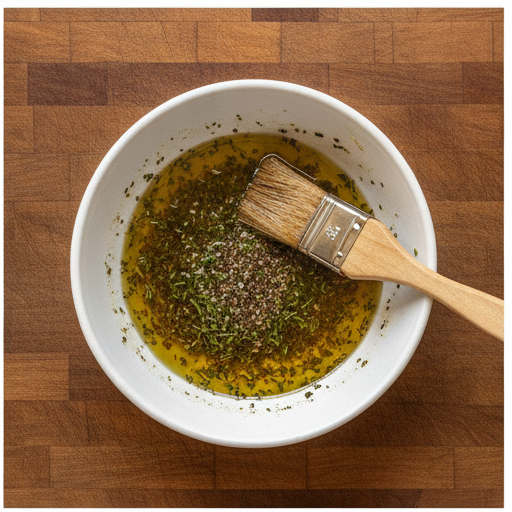
In a small food processor or a spice grinder, combine fresh thyme leaves, whole fennel seeds, kosher salt, and freshly ground black pepper. Pulse until the fennel seeds are coarsely ground. You don’t want a powder just enough to break them open. Transfer to a small bowl and whisk in the olive oil.
This paste is your flavor bomb. The thyme brings an earthiness, the fennel adds warmth, and the salt and pepper season the chicken from the outside in. The oil helps the paste adhere and promotes browning.
Stage 3: Season and Position the Chicken
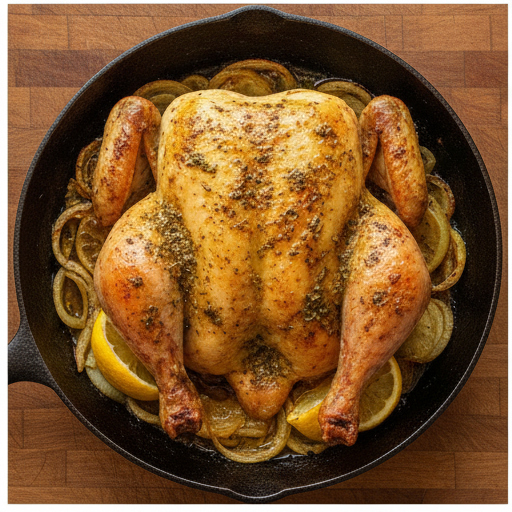
Place your spatchcocked chicken on a cutting board and pat it very dry with paper towels. This is crucial for crispy skin. Brush about one-third of the herb-oil paste onto the underside of the chicken. Set the chicken, breast side up, on top of the onion mixture in the skillet.
Pat the top and sides dry again with paper towels. Then brush the remaining herb-oil paste all over the top and sides, getting into all the nooks and crannies. Don’t forget the wings and the back side. Nestle the lemon halves, cut side up, into the skillet around the chicken.
The lemon halves serve two purposes. They add more lemon flavor to the pan juices, and they look beautiful when you bring the skillet to the table.
Stage 4: Roast and Rest
Roast the chicken for 35 minutes. Remove the skillet from the oven and carefully pour the white wine around the chicken. Avoid pouring it directly on the skin you don’t want to wash off the herb paste. Return the skillet to the oven and continue roasting for another 15 to 20 minutes.
You’re looking for an internal temperature of 160°F to 165°F in the thickest part of the breast, not touching bone. An instant-read thermometer is your best friend here. When it’s done, the skin should be deep golden brown and crackly to the touch.
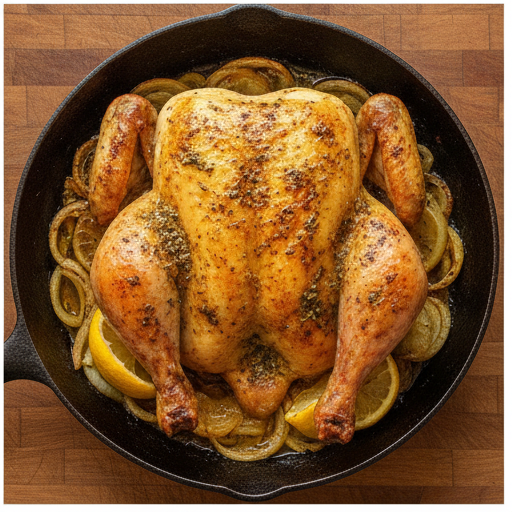
Remove the skillet from the oven. Squeeze the juice from the roasted lemon halves all over the chicken and the pan juices. For the crispiest skin, let the chicken rest uncovered for 10 to 15 minutes. If you prefer a softer skin, tent it loosely with foil.
Carve the chicken into serving pieces. Sprinkle with flaky sea salt if you like, and serve hot with all those pan juices spooned over the top.
To Cover or Not to Cover?
This is one of those questions that comes up every time I share this Ina Garten lemony chicken dinner. The answer depends on what you want.
For crispy skin: Do not cover the chicken while it rests. The steam from covering will soften the skin. Let it sit uncovered on a cutting board or in the skillet. The skin will stay crisp for a good 15 minutes.
For softer skin: Tent the chicken loosely with foil. This traps some steam, which softens the skin but also keeps the meat extra moist. It’s a trade-off.
Personally, I’m team crispy skin all the way. That crackly texture is the whole point of roasting at high heat. But if you’re serving a crowd and want to keep everything warm, a loose foil tent is fine.
How to Prevent a Bitter Sauce
Nothing ruins a beautiful lemony chicken dinner faster than a bitter pan sauce. And it’s such a common problem. Here’s why it happens and how to avoid it.
The bitterness comes from two sources: lemon pith and lemon seeds. The white pith under the lemon zest is intensely bitter, especially when cooked. And the seeds contain compounds that turn bitter when heated.
Here’s what to do:
- Remove the seeds: Before slicing your lemons, remove any visible seeds. It takes 30 seconds and saves you a world of bitterness.
- Use Meyer lemons if possible: Their thinner pith and lower acidity mean less bitterness overall.
- Don’t overdo the lemon slices: The recipe calls for half a Meyer lemon sliced thin. That’s enough. More isn’t better here.
- Squeeze the roasted lemon halves at the end: That bright, fresh juice cuts through the richness without adding bitterness.
If you do end up with a slightly bitter sauce, don’t panic. A pinch of sugar or a splash of chicken stock can balance it out. But if you follow these tips, you won’t need to.
Sandra’s Tips for Success
Over the years, I’ve made this Ina Garten lemony chicken recipe more times than I can count. Here are the things I’ve learned that make a real difference.
Pat the chicken dry. Then pat it dry again. Moisture is the enemy of crispy skin. Use paper towels and really get in there. Let the chicken sit uncovered in the fridge for an hour if you have time.
Bring the chicken to room temperature. Take it out of the fridge 30 minutes before cooking. A cold chicken going into a hot oven will cook unevenly.
Use an instant-read thermometer. Don’t guess. The difference between perfectly cooked chicken and dry chicken is about 5 degrees. 160°F to 165°F in the breast is your target.
Don’t skip the resting time. That 10 to 15 minutes allows the juices to redistribute throughout the meat. Cut into it too soon, and all those beautiful juices end up on the cutting board.
Season generously. The herb-oil paste has a good amount of salt, but don’t be shy. Chicken needs salt to taste like itself.
What to Serve with This Chicken
This Ina Garten lemony chicken dinner is a complete meal on its own, but a few well-chosen sides make it even better. Here’s what I reach for.
- Roasted potatoes: Toss baby potatoes with olive oil, salt, and pepper, and roast them alongside the chicken. They’ll soak up the pan juices.
- A simple green salad: Arugula with a lemon vinaigrette cuts through the richness of the chicken beautifully.
- Crusty bread: You need something to sop up all that pan sauce. A good sourdough or baguette is perfect.
- Roasted vegetables: Broccolini, asparagus, or carrots all work well. Roast them at the same temperature as the chicken.
- Rice or grains: White rice, farro, or quinoa all make a great base for the chicken and sauce.
For a summer dinner, I love serving this with roasted baby potatoes and a bright arugula salad. It feels light but satisfying, and the colors on the plate are gorgeous.
Storage and Reheating
Leftovers of this Ina Garten lemony chicken dinner are a gift. Here’s how to handle them.
Storage: Store leftover chicken and sauce in an airtight container in the refrigerator for up to 4 days. The sauce will thicken as it cools, which is actually great for reheating.
Reheating for crispy skin: This is the tricky part. Microwaving will make the skin soggy. Instead, reheat in a 350°F oven for 10 to 15 minutes. Place the chicken on a wire rack over a baking sheet so air can circulate. The skin will crisp right back up.
For small amounts: Use a toaster oven or a skillet on the stovetop. A few minutes on medium heat will do the trick.
Freezing: You can freeze the cooked chicken for up to 3 months. Wrap it tightly in plastic wrap and foil. Thaw in the refrigerator overnight before reheating.
Frequently Asked Questions
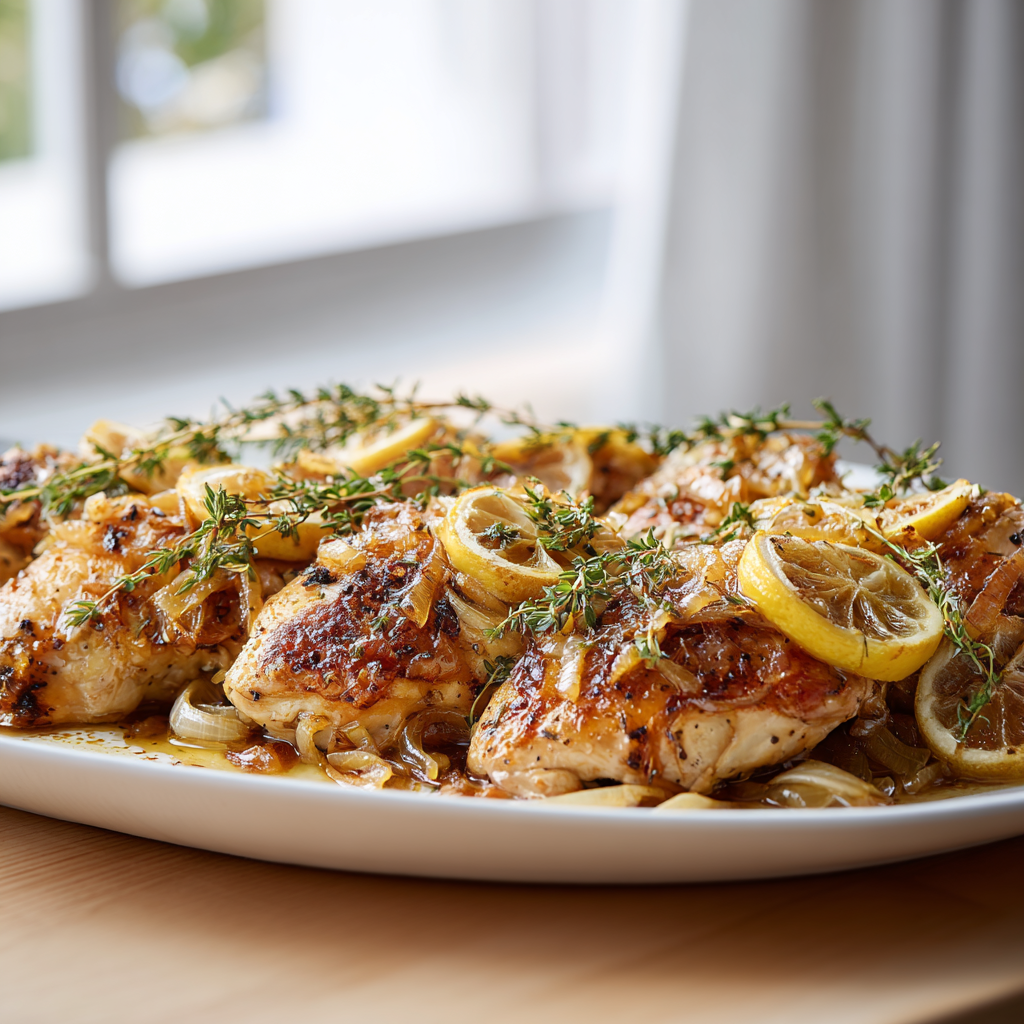
This will be the best chicken you make all summer. I mean that. There’s something about the combination of crispy skin, tender meat, and that bright, lemony pan sauce that just works. It’s the kind of dish that makes you feel like a real cook, even if you’re just following a recipe.
If you make this Ina Garten lemony chicken dinner, I’d love to hear how it goes. Share your results on Pinterest and tag me. Nothing makes my day like seeing your beautiful chicken dinners.
Ina Garten Lemony Chicken Dinner: Skillet-Roasted Lemon Chicken with Aromatic Onions and Fennel
Ingredients
Method
- Preheat your oven to 450°F. Arrange the sliced onion, garlic, and lemon slices in a single layer in a large (12-inch) cast-iron skillet.
- In a small food processor or a spice grinder, combine the thyme leaves, fennel seeds, kosher salt, and black pepper. Pulse until the fennel seeds are coarsely ground. Transfer to a small bowl, add the olive oil, and whisk to combine.
- Place the butterflied chicken on a cutting board and pat it very dry on both sides with paper towels—this is crucial for crispy skin.
- Brush about one-third of the herb-oil paste onto the underside of the chicken. Set the chicken, breast side up, on top of the onion mixture in the skillet. Pat the top and sides dry again with paper towels, then brush the remaining herb-oil paste all over the top and sides, getting into all the nooks and crannies.
- Nestle the lemon halves, cut side up, into the skillet around the chicken.
- Roast the chicken for 35 minutes. Remove the skillet from the oven and carefully pour the white wine around the chicken (avoid pouring it directly on the skin). Return the skillet to the oven and continue roasting for another 15 to 20 minutes, until an instant-read thermometer inserted into the thickest part of the breast (not touching bone) registers 160°F to 165°F.
- Remove the skillet from the oven. Squeeze the juice from the roasted lemon halves all over the chicken and the pan juices. For the crispiest skin, do not cover; let the chicken rest uncovered for 10 to 15 minutes. If you prefer a softer skin, tent loosely with foil.
- Carve the chicken into serving pieces (the spatchcocking makes this easy). Sprinkle with flaky sea salt if desired, and serve hot with all the pan juices spooned over the top.
Nutrition
Notes
Tried this recipe?
Let us know how it was!Source: Nutritional Information


3 responses to “Ina Garten Lemony Chicken Dinner”
Made this for Sunday dinner and it was a huge hit! The skin was perfectly crispy and the lemon flavor really shines through. I did add a bit more garlic because we love garlic, and it turned out amazing. Will definitely be making this again!
Great recipe, but I found the cooking time a bit off for my 4.5-pound chicken—it needed an extra 15 minutes in the oven. Also, the lemon slices on the bottom started to burn a little. Any tips for preventing that while still getting that flavor infusion?
Hi Mike, I’m glad you tried it! For larger chickens, adding those extra minutes is totally fine. To prevent the lemon slices from burning, try tucking them under the onion layer or adding a splash more broth to the pan before roasting. That should keep things moist and flavorful!