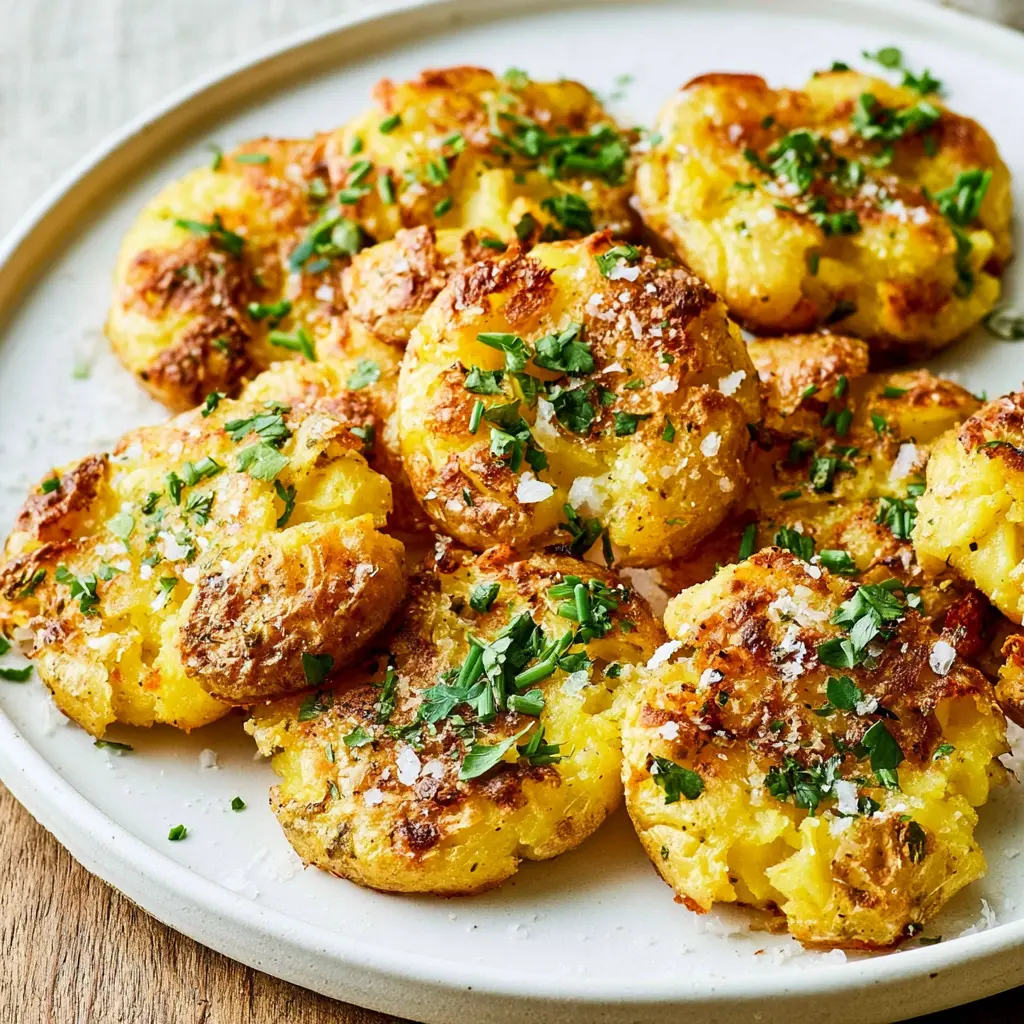
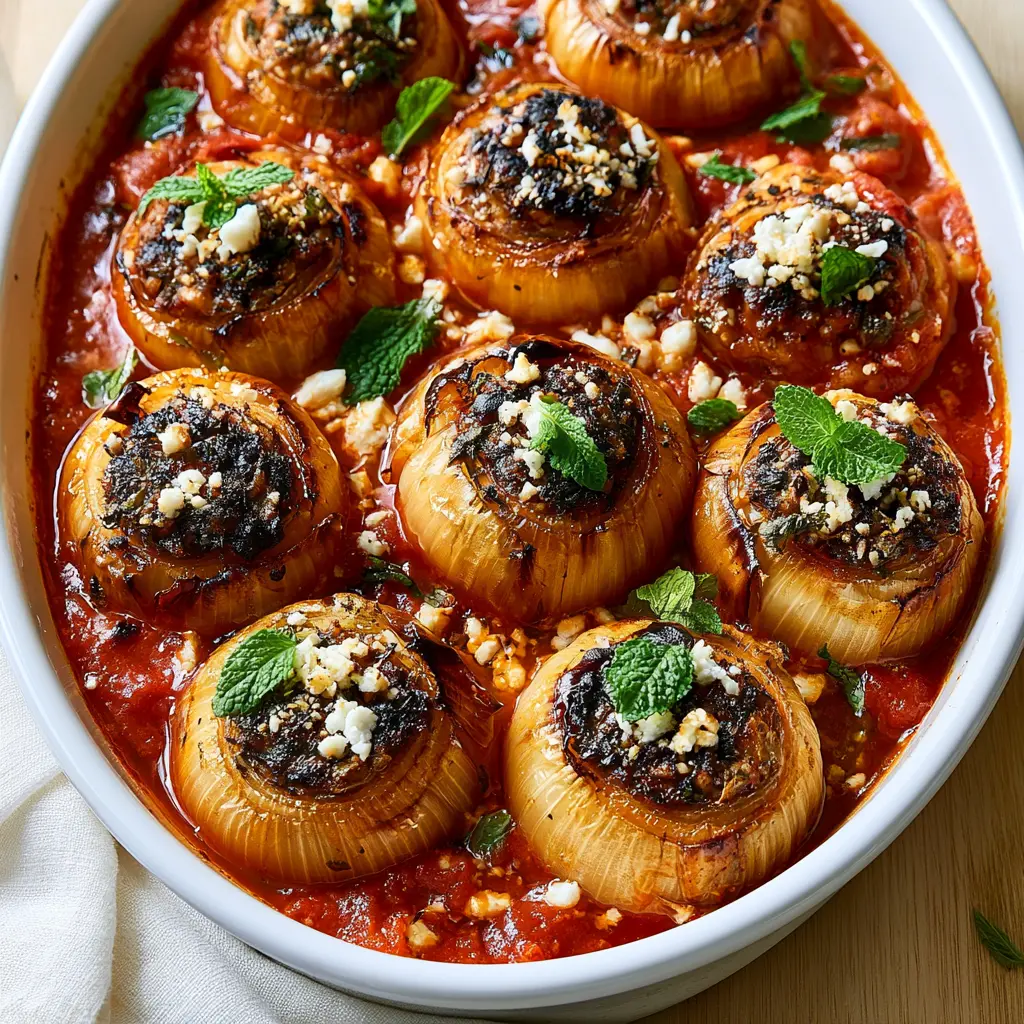
Why You’ll Love These Greek Stuffed Onions
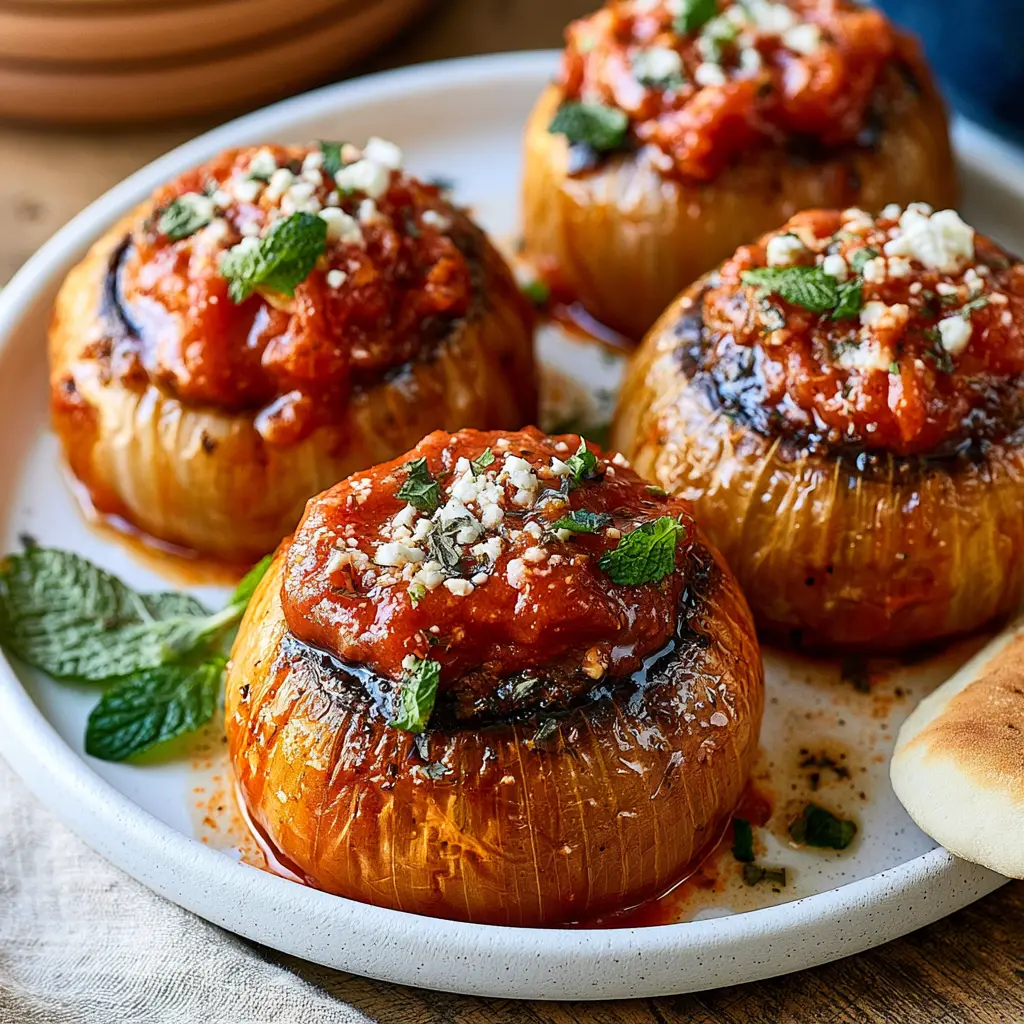
I still remember the first time I ordered Greek stuffed onions. Small taverna on a side street in Athens, checkered tablecloths, a yiayia somewhere in the back. The plate landed in front of me with four glistening onion rolls tucked into a deep red tomato sauce, crumbled feta dusted across the top. One forkful and I was gone. The onion was silky and sweet, the filling savory and bright with herbs. I have been chasing that exact bite ever since.
These Greek stuffed onions go by a few names. In Greek, they’re kremmydia yemista, or salantourmasi in some regions. They belong to the gemista family, the beloved category of Greek stuffed vegetables that includes peppers, tomatoes, and zucchini. They’re not as famous as dolmades, and honestly, that’s part of their charm. When you set them on the table, nobody quite knows what they’re looking at. Then they take a bite and the questions start.
This recipe delivers everything that taverna plate had. Tender, slow-cooked onions with a beef and rice filling scented with fresh mint and oregano, all simmering in a silky tomato sauce built from the onion’s own cooking liquid. It’s a weekend kind of project. The good kind, where your kitchen slowly fills with the smell of olive oil, garlic, and tomatoes for a couple of hours. If you’ve ever wanted to cook like a Greek yiayia without actually being one, this is your dish.
Why This Dish Belongs in Your Rotation
The flavor payoff is unreal. Onions get sweet as they cook down, and two hours in a rich tomato broth turns them into something almost jammy. Plus, the filling stays juicy from the rice, and the feta melts into every crevice. It’s traditional Greek comfort food at its finest.
Key Ingredients for Greek Stuffed Onions
What makes these Greek stuffed onions so special? It’s a short list of honest ingredients, each doing real work. Let’s walk through them.
- Very large yellow onions. You need big ones, because each one gives you 3 or 4 usable outer layers. Yellow onions are the standard here. They’re sweet enough to caramelize beautifully but sturdy enough to hold their shape through boiling and baking.
- Ground chuck. The higher fat content keeps the filling moist. Ground round, sirloin, lamb, or turkey all work, just know that leaner cuts need a little extra olive oil in the pan.
- Arborio rice. Short-grain rice soaks up all the tomato and meat juices as it bakes. Skip jasmine or basmati here, they’re too aromatic and they’ll fight the herbs.
- Fresh mint and Italian parsley. This is where that taverna flavor comes from. Don’t swap in dried mint at half strength, fresh is worth the trip.
- Crumbled feta. Salty, tangy, and it melts into the filling as it bakes. Plus more for serving.
- Crushed plum tomatoes and tomato paste. One for the filling, one for the sauce. Together they give the dish that deep, velvety red color.
- Reserved onion cooking liquid. This is the secret most people throw away. That golden, onion-scented broth becomes the base of your sauce. It’s pure flavor, free.
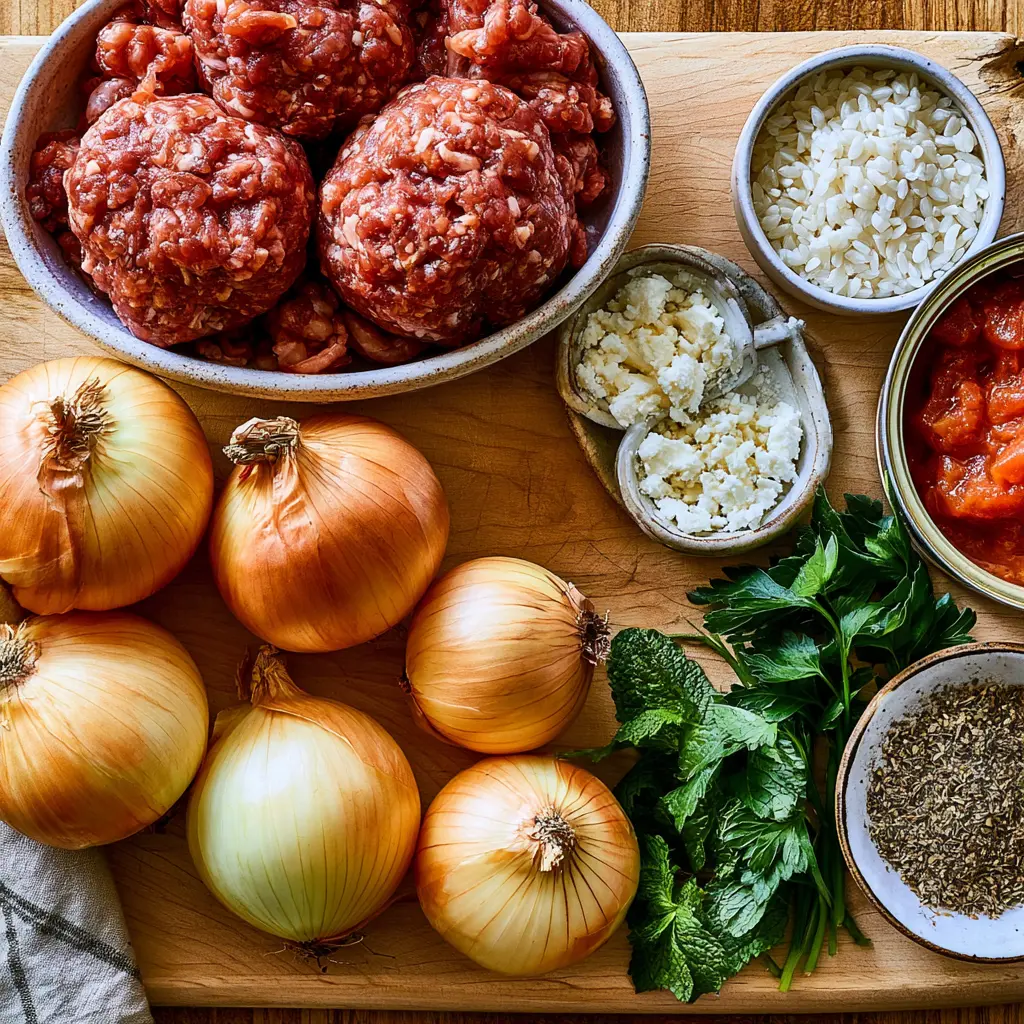
One thing nobody tells you about stuffed onions with rice and meat: the onion centers you scoop out are not scraps. You chop them up and puree them into the sauce. They thicken it, sweeten it, and make it taste like it simmered for six hours. Use everything. Waste nothing.
How to Make Greek Stuffed Onions
There’s no way around it, this recipe has steps. But none of them are hard, and the rhythm of it is honestly satisfying. Let me break it into four stages so it doesn’t feel intimidating. The first time I made Greek stuffed onions, half of my bundles came out looking like cauliflower. The second time, they looked like the photo in a magazine. You’ll get there too.
Stage 1: Boil and Prep the Onions
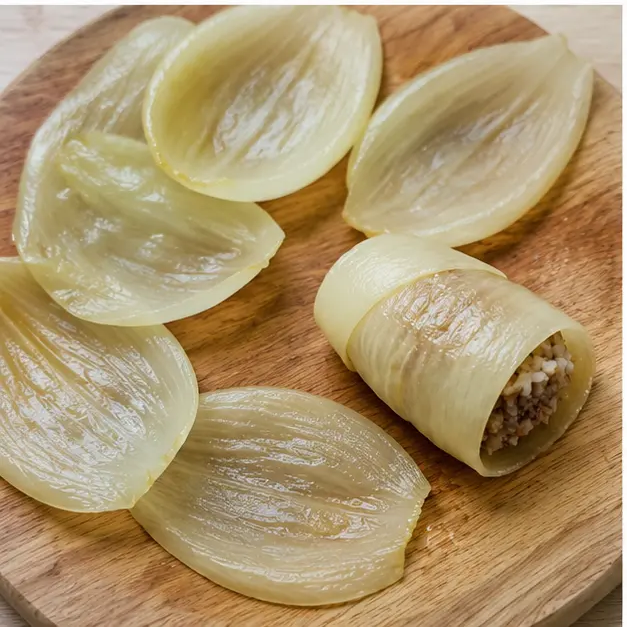
Trim the root and stem ends off each onion, peel them, and cut a single slit down one side. Not in half, just one deep slit. This is the key technique. Drop them into a large pot of generously salted boiling water and cook for 10 to 15 minutes, until tender. You want the outer layers to slip off like a silk glove, but you also want to catch them before they turn to mush. The window between ready and falling apart is about two minutes, so stay close to the pot.
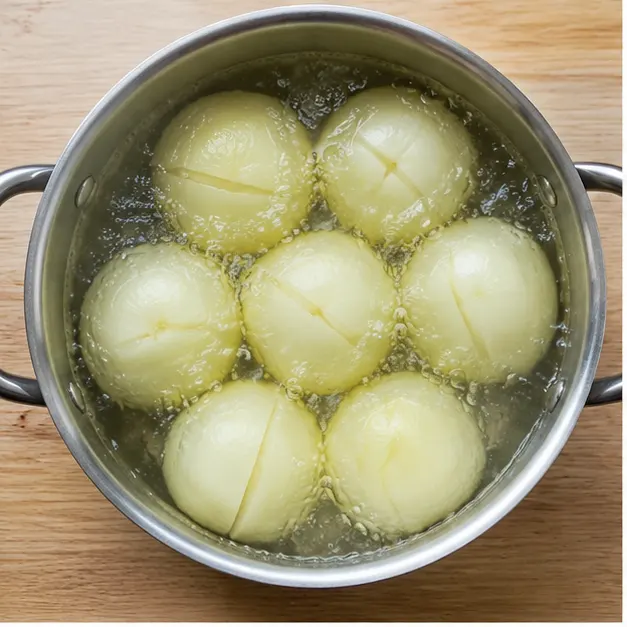
When the onions are cool enough to handle, peel off the 3 or 4 largest outer layers and keep them whole. Reserve the cooking liquid, that’s your sauce base. Chop the centers and set them aside too. If you’ve ever wondered how to hollow onions for stuffing without tears, this is the blanch-first method and it works every time.
Stage 2: Make the Filling
Warm a generous pour of extra-virgin olive oil in a large skillet. Cook a finely chopped onion until translucent, then add the garlic and let it go fragrant. Crank the heat, add the ground beef, and break it up as it browns. Season with salt and pepper, stir in the crushed tomatoes, and let it simmer until it thickens a little. Then fold in the arborio rice and cook for a minute or two, stirring constantly. Take it off the heat and mix in the oregano, parsley, mint, and feta.
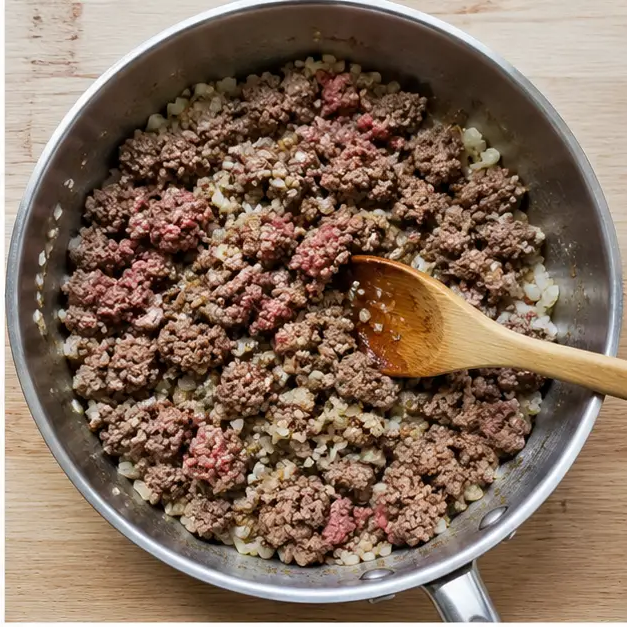
Taste it. This is the moment you’ll know the whole dish is going to work. The herbs should taste bright, the feta salty, the beef rich. Adjust the seasoning now, because once it’s rolled inside the onions, it’s harder to fix.
Stage 3: Roll, Stuff, and Sauce
Spoon 1 to 2 tablespoons of filling into the center of each onion layer. Fold the sides over and roll it into a snug bundle, like you’d roll a burrito. Place the rolls seam side down in a 9×13 baking dish, packing them close together so they hold each other shut. If they’re crowded, good. That’s exactly what you want.
Now the sauce. Combine the tomato paste, about 3 cups of the hot reserved onion broth, and the chopped onion centers in a blender or large measuring cup. Puree with an immersion blender until smooth. Season lightly and pour it over the rolls, adding more hot broth if you need to mostly cover them. This is the most classic tomato sauce for stuffed onions you’ll find, and it’s made almost entirely from parts you used to toss.
Stage 4: Bake and Finish
Cover the dish tightly with foil and bake at 375°F for 1 hour. Then remove the foil and bake for another 30 minutes, until the sauce has thickened and the onions are caramelized around the edges. If you want extra color, hit the broiler for 2 to 3 minutes at the end. But stay right there. Broilers have no mercy, and neither do burnt onions.
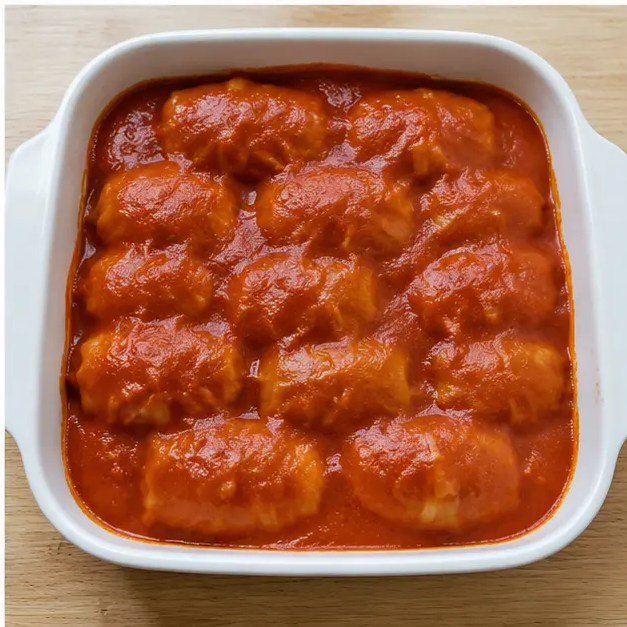
Let the dish rest for a few minutes before serving. The sauce will settle into the crevices, and the onions will look like little golden parcels in a sea of red. That’s the moment the whole kitchen goes quiet.
Pro Tips for Perfect Stuffed Onions
After a few rounds with this recipe, I’ve collected the mistakes so you don’t have to.
❌ Mistake: Cutting the onion in half before boiling.
✅ Fix: A single slit down one side is all you need. It lets the layers separate without breaking the onion’s structure.
❌ Mistake: Throwing away the cooking liquid and onion centers.
✅ Fix: Both go into the sauce. That’s where the deep onion flavor comes from.
❌ Mistake: Buying jasmine or basmati rice.
✅ Fix: Their perfume overpowers the herbs and beef. Stick with arborio or another short-grain rice.
❌ Mistake: Rolling bundles that are too fat.
✅ Fix: Use only the largest layers that wrap fully around the filling. Small, scrappy layers go in the sauce instead.
❌ Mistake: Leaving space between the rolls.
✅ Fix: Pack them tightly. The snug fit keeps them from unrolling while they bake. Use a second dish if you need to.
❌ Mistake: Walking away during the final 30 minutes.
✅ Fix: That’s when the sauce goes from watery to glossy and the edges caramelize. Stay close and check often.
Greek Stuffed Onions Variations
This base recipe is wonderful as written, but it’s also a starting point. Here are the swaps and additions I’ve tested and loved.
- Swap the meat. Ground lamb is incredible here, very traditional. Ground turkey works too, just be a little more generous with the olive oil since it’s leaner.
- Go vegetarian. Skip the beef entirely and use a spiced rice filling with pine nuts and extra herbs. Fold the feta in or omit it for a vegan version. The onions and sauce carry the dish either way.
- Add a sweet note. Some cooks stir in a quarter cup of black currants for a touch of sweetness that plays off the tomatoes.
- Deepen the color. A tablespoon of tomato paste mixed into the filling adds a richer color and a little more umami.
- Use up leftovers. Leftover filling is fantastic stuffed into bell peppers or extra onion layers. I’ve even baked it between onion layers like a savory bread pudding.
Whatever you choose, these Greek stuffed onions forgive a little improvisation. The structure is forgiving, the sauce covers a multitude of sins, and the flavor only gets better.
What to Serve with Greek Stuffed Onions
You could serve these Mediterranean stuffed onions as a main dish with nothing but a fork, and nobody would complain. But if you want to round out the meal, a few simple sides turn it into a spread.
Warm pita is non-negotiable in my house. You’ll want something to drag through the extra sauce. A squeeze of lemon over the top just before serving brightens everything up, and extra feta on the side never hurts.
For something green, a crisp Greek salad with cucumber, tomato, and olives balances the richness beautifully. Or keep it simple: a bowl of tzatziki for spooning over each onion, because cool, garlicky yogurt and sweet caramelized onion are a perfect pair. If you want to go fully taverna, add a side of spanakorizo, the Greek spinach rice, for a meal that stretches the flavors without stretching your energy.
In summer, I’ll serve these room temperature with a simple salad and call it a patio dinner. In winter, straight from the oven with crusty bread. This dish doesn’t care about the season, it just shows up and makes everyone happy.
Storage & Reheating Tips
Here’s a truth about Greek stuffed onions: they’re even better the next day. The flavors meld overnight, the onions absorb more sauce, and the feta settles into the filling. If you can plan ahead, make them a day before you need them.
Refrigerator: Store leftover stuffed onions in an airtight container with plenty of sauce for up to 3 days.
Freezer: They freeze beautifully for up to 3 months. Freeze them in a freezer-safe container with the sauce. Thaw overnight in the fridge before reheating.
Reheating: The best method is a 350°F oven, covered with foil, until hot through. Add a splash of water or extra broth if the sauce looks too thick. The microwave works in a pinch, but the oven keeps the onions from turning mushy.
Here’s the thing nobody tells you: the make-ahead magic means you can prep the whole dish, bake it, and let it sit. The onions hold their shape, the sauce deepens, and all you have to do on serving day is warm it up and look like a hero.
When you pull those glistening onions from the pan and the smell of tomatoes, mint, and slow-cooked onion hits you, that’s the exact moment it all becomes worth it. The patience, the careful rolling, the hour of watching the sauce bubble, all of it. You made Greek stuffed onions, the real kind, the taverna kind. And they’re spectacular.
If you make them, I’d love to hear how they turn out. Save this recipe for your next weekend cooking project, and share the ones you love. You can find me and thousands more comfort-food ideas on my Pinterest boards, where I’m always pinning the dishes worth the effort.
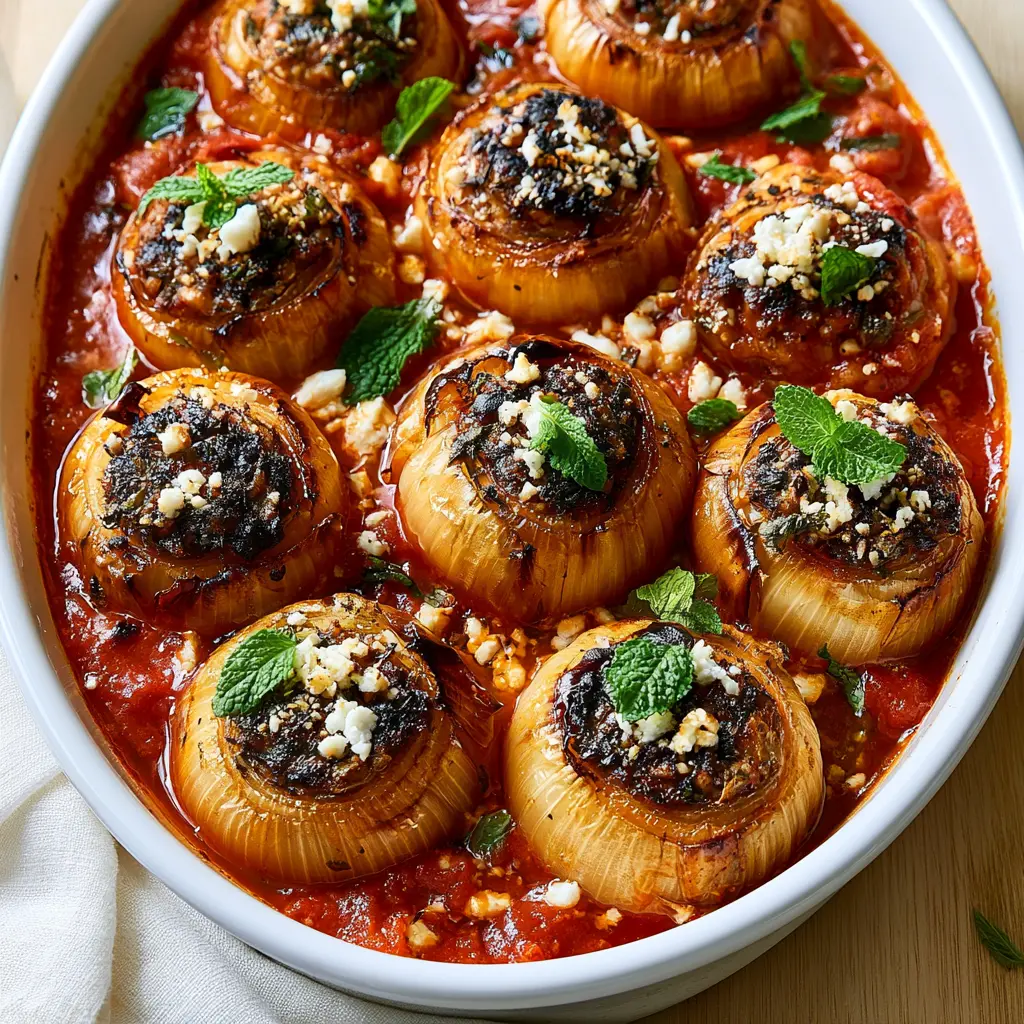
Greek Stuffed Onions with Beef, Rice, and Feta
Ingredients
Method
- Set a rack in the center of the oven and heat to 375°F.
- Fill a large pot with water, salt it generously, and bring to a boil. Trim the root and stem ends from the onions, peel off the skins, and cut a single slit down one side of each onion. Boil until tender, about 10 to 15 minutes. Using tongs, carefully remove the onions and set aside to cool, reserving the cooking liquid as broth. When cool enough to handle, peel off the 3 or 4 largest outer layers from each onion and keep them whole. Chop the remaining onion centers and reserve for the sauce.
- Warm the olive oil in a large skillet over medium heat. Add the chopped onion and cook until translucent, about 5 minutes. Stir in the garlic and cook until fragrant, about 2 minutes more.
- Add the ground beef and increase the heat to medium-high. Cook, breaking up the meat, until it begins to brown. Season with salt and pepper, then stir in the crushed tomatoes. Let the mixture simmer until it thickens slightly. Fold in the rice and cook for 1 to 2 minutes, stirring constantly.
- Take the pan off the heat and mix in the oregano, parsley, mint, and feta. Taste and adjust with more salt and pepper if needed.
- Spoon 1 to 2 tablespoons of the filling into the center of each onion layer. Fold the sides over the filling and roll into a snug bundle. Place the rolls seam side down in a 9x13 baking dish, packing them close together so they stay closed. Use a second dish if needed to fit them all.
- In a blender or large measuring cup, combine the tomato paste, 3 cups of reserved onion broth, and the chopped onion centers. Puree with an immersion blender until smooth. Season lightly with salt and pepper, then pour the sauce over the stuffed onions, adding more hot broth if needed to mostly cover them.
- Cover the dish tightly with foil and bake for 1 hour. Remove the foil and continue baking for another 30 minutes, until the sauce has thickened and the onions are caramelized around the edges. If you want extra color, broil for 2 to 3 minutes, watching carefully.
- Serve warm with pita bread and extra feta on the side.
Nutrition
Notes
Tried this recipe?
Let us know how it was!Greek Stuffed Onions FAQ
Source: Learn More About This Dish