Why You’ll Love This Garlic Soup
The first time I made garlic soup, I burned the garlic. Ruined the whole pot. That sharp, bitter smell hung in my kitchen for days, and honestly, I nearly gave up on the dish.
Then I learned the rule that fixed everything: golden, not brown. In classic spanish garlic soup, sliced garlic sizzles in olive oil until it’s pale gold like honey, then you stop. Not a shade darker. That color cue is the difference between sweet, mellow soup and a bitter mess. This French version takes that idea even further. It skips the frying completely. The garlic gets blanched, mashed, and swirled into a silky broth finished with homemade sage aioli. Burning is basically impossible. You’re welcome.
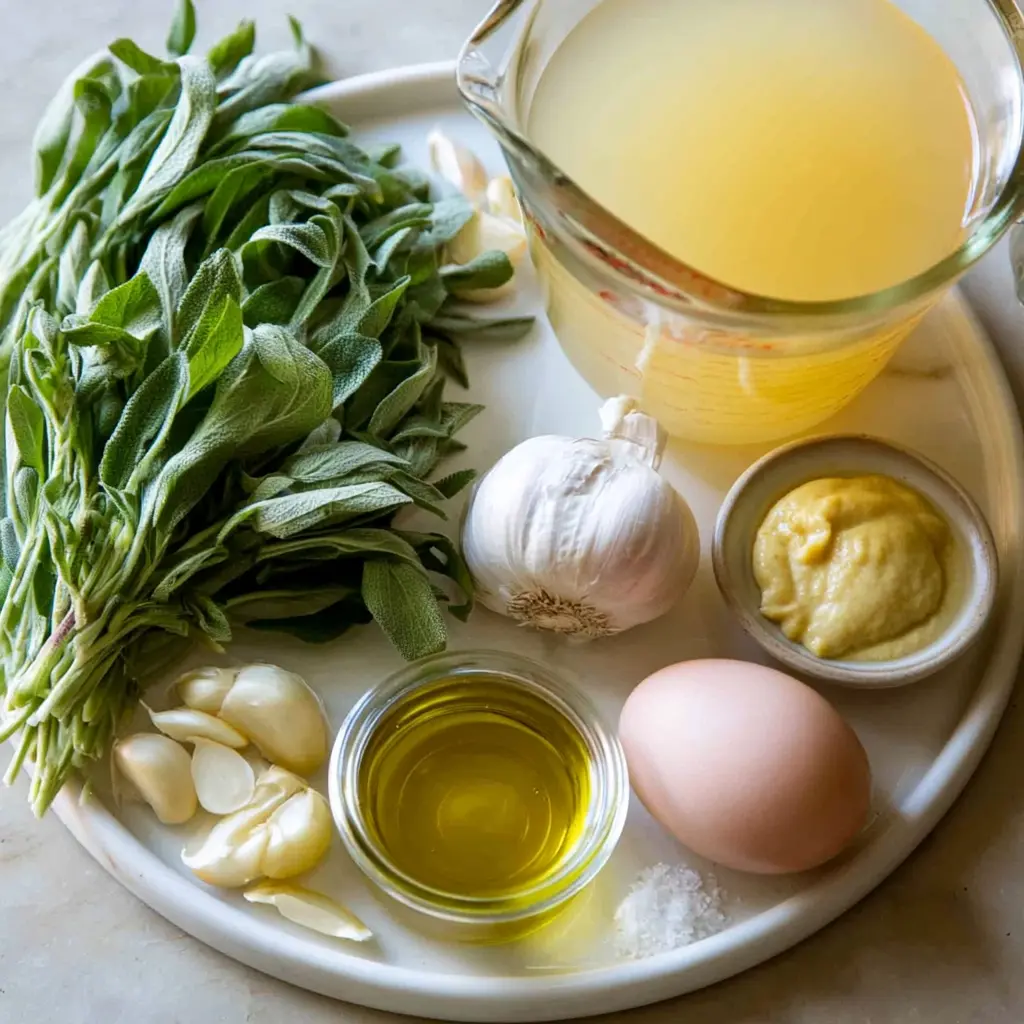
The garlic soup ingredients are almost embarrassingly short: chicken stock, fresh sage, one big head of garlic, an egg, olive oil, Dijon mustard, and salt. That’s the whole list. You can grab it all at Ralphs or Trader Joe’s in a single stop, and the whole batch costs about the same as one sad restaurant bowl.
There’s a health payoff too. Garlic soup health benefits are genuinely real. This is an immune-boosting soup, the kind people have reached for during cold season for generations, a proper garlic soup for colds. But it doesn’t taste like medicine. It tastes like a warm blanket. And right now, fresh garlic is at its summer peak, which makes this the perfect week to try it.
Garlic Soup Recipe Tips
This recipe is forgiving, but three details separate good from unforgettable. Pay attention to these and your how to make garlic soup journey will be smooth from the very first pot.
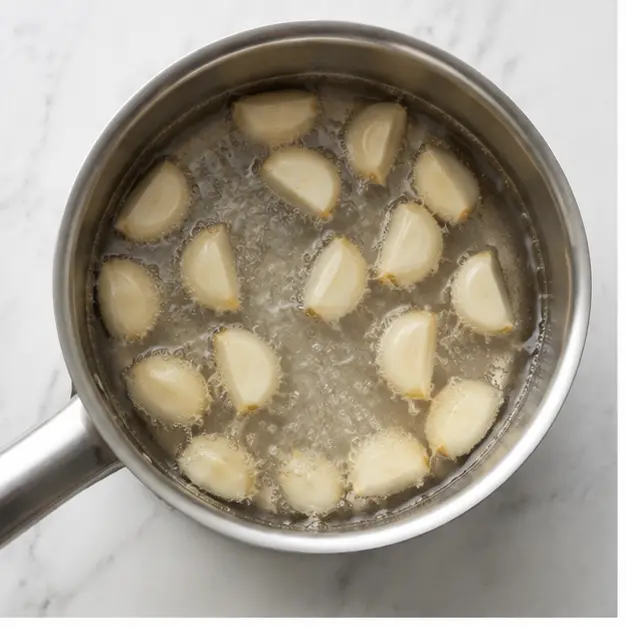
- Blanch the garlic. Drop the halved cloves into boiling water for 3 to 4 minutes. This mellows their bite and softens them for mashing. It’s the secret to a sweet, mellow soup instead of a sharp one.
- Remove the green germ. Slice each clove in half and look for the tiny green shoot in the center. It tastes harsh and bitter. Pop it out with your knife tip. Takes two seconds, pays off in every spoonful.
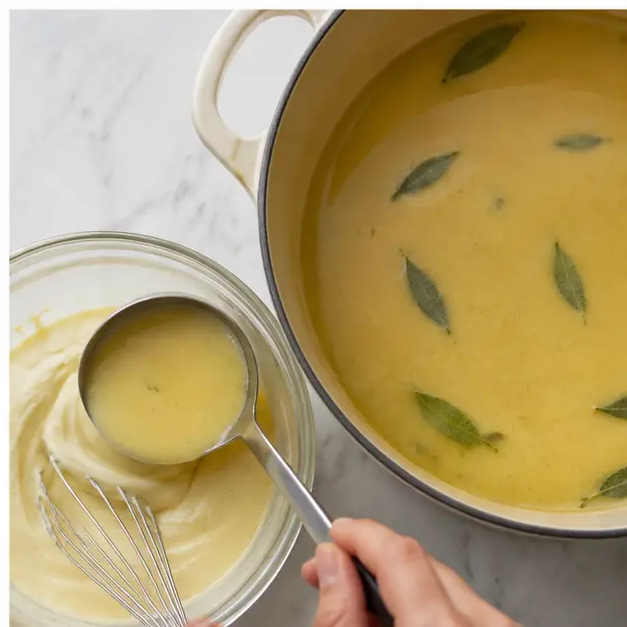
- Temper the aioli. Whisk a ladleful of hot soup into the mayonnaise before adding it to the pot. This raises its temperature slowly so it doesn’t curdle. After the aioli goes in, never let the soup boil again.
Which olive oil should you use? Since it’s the backbone of the aioli, use one you actually enjoy tasting. A fruity California olive oil is lovely here, or a neutral oil like canola if you want the garlic to be the only star. And for the stock? Low-sodium chicken stock, always. The aioli brings its own salt, so taste before you add a single grain.
How to Make Garlic Soup, Stage by Stage
Stage 1: Set up and blanch. Get your chicken stock and fresh sage simmering in a large Dutch oven. Keep it at a gentle bubble while you boil the garlic halves for 3 to 4 minutes until they mash easily with a fork. You’ll hear that soft, steady simmer and smell the sage warming up. That’s the signal that things are moving.
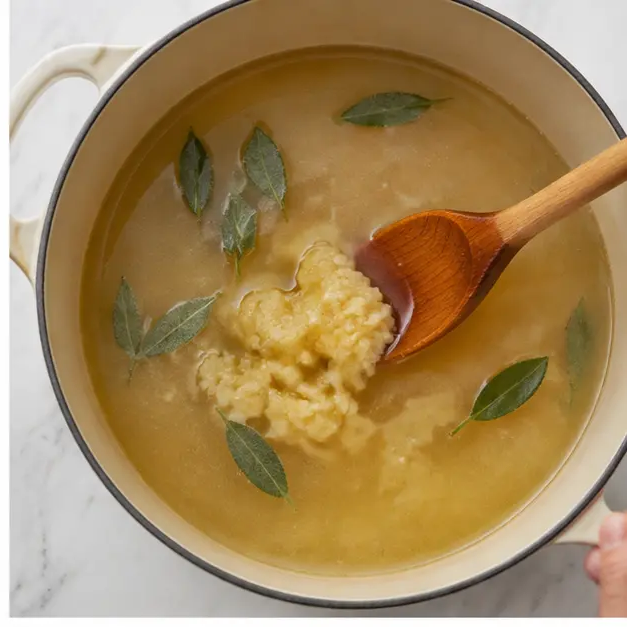
Stage 2: Mash and simmer. Mash the softened garlic with the back of a fork until smooth, then stir it into the simmering stock. Let it cook gently for about 10 minutes. The broth turns a pale gold, and the garlic aroma mellows from pungent to almost sweet. This is where the magic happens.
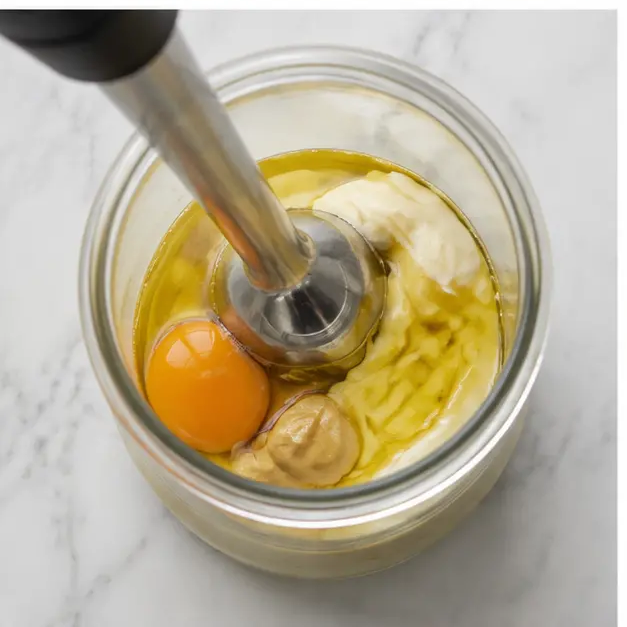
Stage 3: Make the aioli. Combine the egg yolk, Dijon mustard, salt, and olive oil in a small jar. Use an immersion blender and blend until thick and creamy, like proper mayonnaise. If it looks too thin, whisk in the reserved egg white. It sounds strange, but it genuinely works as a thickener. Then strain the soup through a fine mesh sieve for that velvety texture and return it to the pot.
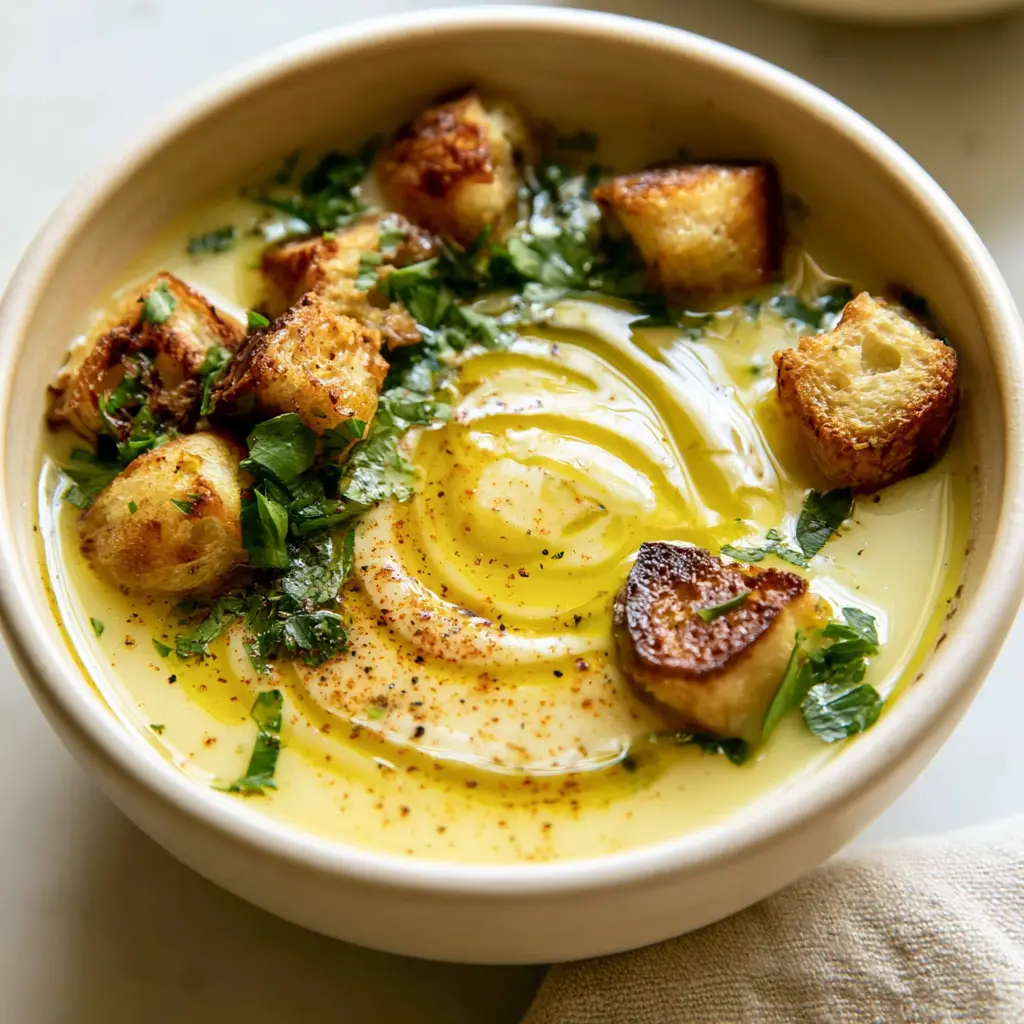
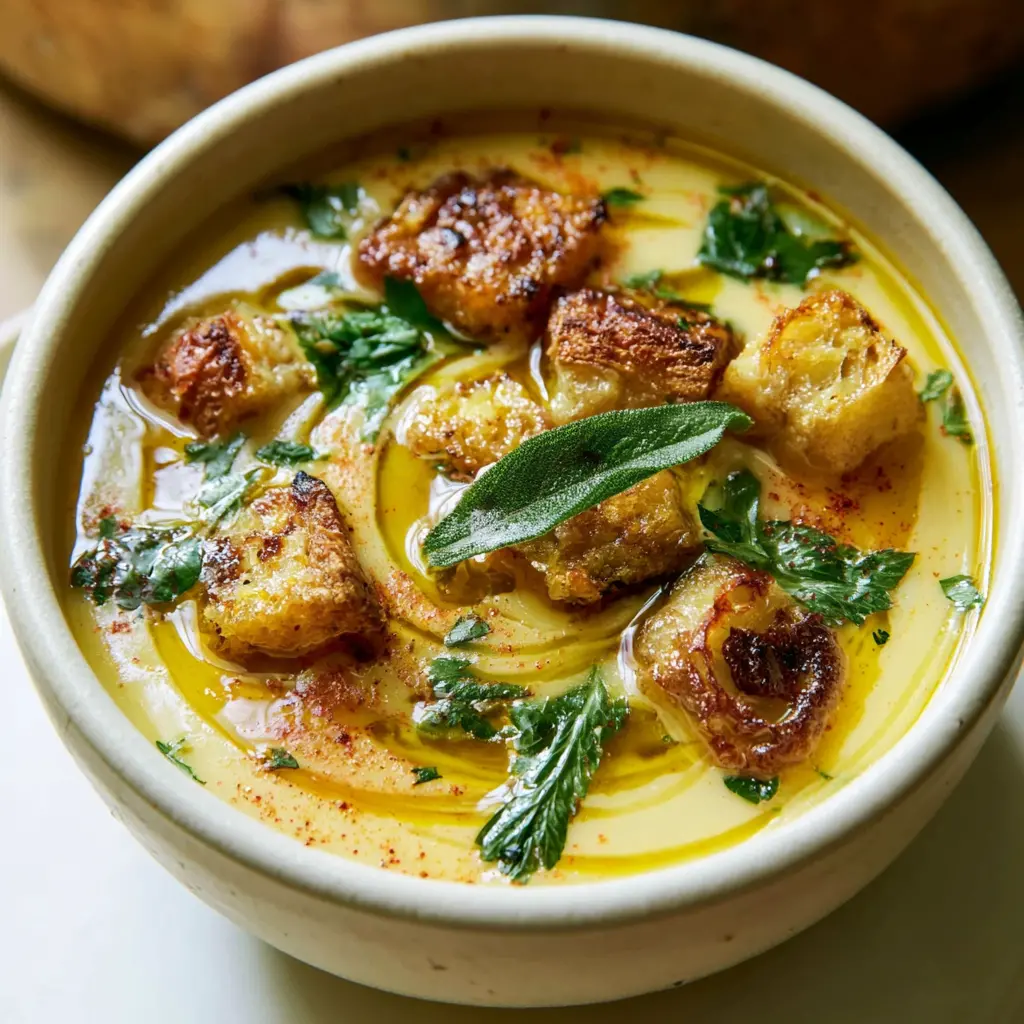
Stage 4: Temper, finish, serve. Whisk a ladleful of hot soup into the aioli, then stir the tempered mixture back into the pot while whisking constantly. Reheat gently over low heat. Do not let it boil. Ladle into warm bowls and top with crusty croutons, a drizzle of olive oil, a sprinkle of smoked paprika, and fresh parsley.
That final drizzle of olive oil isn’t just for looks. It catches the light, carries the paprika, and adds a fresh, grassy note right before you dive in. Don’t skip it.
Garlic Soup Variations
Once you’ve made the base recipe, feel free to play. This soup is forgiving on purpose.
- Vegetarian garlic soup: Swap the chicken stock for vegetable broth. The sage and garlic carry the flavor so well, you won’t miss the chicken at all.
- Roasted garlic version: Roast a whole head of garlic until soft and caramelized, then mash it in instead of blanching. Sweeter, deeper, slightly nutty. Different but wonderful.
- Herb swaps: No sage? Use rosemary or tarragon. Dried thyme works too, just use less since dried herbs are more concentrated.
- Extra richness: Stir in a splash of cream or a handful of shredded Gruyère at the end for a decadent twist.
- Egg drop style: This is where it connects to the classic sopa de ajo tradition. Crack an egg into the simmering soup and let it poach until the white sets but the yolk stays runny. A poached egg in soup is pure comfort.
The original Castilian garlic soup, sopa de ajo, is a rustic Spanish soup built on stale bread, garlic, olive oil, and smoked paprika. This French version is its silky cousin. You can even tear stale bread into this one if you want that garlic and bread soup texture. Both approaches are delicious, and neither is wrong.
What to Serve with Garlic Soup
This garlic soup pairs beautifully with things that can soak up every last drop. The obvious move is crusty bread. Toast thick slices of sourdough, rub them with a cut garlic clove, and watch them vanish.
Or go the crouton route: cubes of sourdough toasted with olive oil, garlic, and a pinch of smoked paprika. They stay crunchy on top and soften deliciously underneath. For a full meal, I love serving this with:
- A simple green salad with lemony vinaigrette. The brightness cuts through the richness.
- A grilled cheese sandwich, because soup and melty bread never miss.
- Roasted chickpeas for extra crunch and protein.
Serve in warm bowls. Cold ceramic will steal the heat right out of your soup. Run the bowls under hot water, dry them, and ladle away.
How to Store and Reheat Garlic Soup
This soup keeps beautifully, with one caveat: the delicate aioli emulsion needs gentle treatment.
- Fridge: Cool completely, then store in an airtight container for 3 to 4 days. Use an ice bath if you’re in a hurry.
- Freezer: Freeze for up to 2 to 3 months and thaw overnight in the fridge. Emulsions can separate slightly after freezing, but a good whisk over low heat usually brings it back. Add a splash of broth if too thick.
- Reheat: Stove over medium-low heat, stirring occasionally. Don’t rush it. Boiling breaks the aioli and turns it grainy. A microwave works too, just use reduced power and stir every 30 seconds.
Make-ahead tip: the aioli can be made up to 2 days ahead and kept refrigerated. Whisk it into the hot soup right before serving. Meal-prep win.
Common Garlic Soup Mistakes to Avoid
Let’s troubleshoot before you start. These are the four things that usually go wrong, and how to fix them fast.
- ❌ Curdled aioli. Added to boiling soup and split into curds.
✅ Fix: Temper the aioli with a ladle of hot soup first, keep the heat low, and never let it boil afterward. An immersion blender can sometimes rescue it. - ❌ Harsh, bitter garlic. Skipped the blanching or left the green germ in.
✅ Fix: Always blanch, always remove that green shoot. Garlic soup should taste like honey, not a penny. Golden, not brown, in every version of this dish. - ❌ Bland soup. Watery stock or not enough salt.
✅ Fix: Use low-sodium chicken stock with real depth. Taste before seasoning, and add salt gradually. - ❌ Soup cools too fast. Room-temperature bowls steal the heat.
✅ Fix: Warm your bowls first. Hot soup deserves a hot home.
More Cozy Soup Recipes
If you love this garlic soup, you’re clearly a person of excellent taste. This is one of those soups that feels like a hug in a bowl, and once you nail the technique, you’ll want to explore more. Classic chicken noodle for sick days. Silky tomato soup for grilled cheese dunking. A creamy mushroom soup when the leaves start turning.
They all share the same promise: simple ingredients, patient cooking, and a result that tastes like far more effort than you actually put in. But first, make this one. The garlic soup is calling.
Final Thoughts
This is one of those recipes that reminds me why I love cooking. It takes humble things, garlic, stock, an egg, olive oil, and turns them into something you’d happily pay $14 for at a restaurant.
Fun fact: This soup was reportedly one of Princess Diana’s favorites. Peasant food that quietly made its way to the palace. I love that.
Make it on a cool evening when you need comfort. Make it when you feel a cold coming on. Make it just because a head of garlic needs a good home. This easy garlic soup is proof that great cooking doesn’t need a long grocery list. Just a few good ingredients, handled with care, and a little patience while the kitchen fills with that smell. You’ll be glad you did.
Garlic Soup FAQ
Why blanch the garlic instead of roasting or frying it?
Blanching tames garlic’s sharp edge without adding color. That matters because browned garlic turns bitter fast. Boiling the cloves for 3 to 4 minutes softens them and mellows their bite, so the soup tastes sweet and rounded instead of harsh and angry.
How do I keep the aioli from curdling?
The short answer: temper it. Whisk a ladle of the hot soup into the aioli before it goes into the pot, and never let the soup boil afterward. If your aioli still splits, scoop out a cup of soup, blend it with the aioli until smooth, then stir it back in. It’s fixable, I promise.
Can I freeze garlic soup with the aioli in it?
Yes, but expect the emulsion to separate a little after thawing. If I know I’m freezing, I leave the aioli out and whisk it in fresh after reheating. If you freeze the finished soup, thaw it overnight in the fridge, then reheat gently over medium-low while whisking. A splash of warm broth helps bring the texture back.
Can I make the aioli without raw egg?
If you’re avoiding raw egg, use a good store-bought olive oil mayonnaise instead. Whisk it with the Dijon and a squeeze of lemon, and you’ll get a creamy result that’s very close. You can also skip the aioli entirely and finish the soup with a swirl of heavy cream or crème fraîche. Different, but still lovely.
Can I use water instead of chicken stock?
You can, but you’ll lose depth. Stock gives the soup body and a savory backbone. If water is your only option, add a bay leaf and a few peppercorns to the simmer, or stir in a spoonful of miso for umami. It won’t be the same soup, but it’ll be a good one.
Can I make the soup less garlicky?
Blanch the garlic a minute or two longer, and skip the raw garlic rub on the croutons. Or just use half the head. Nobody’s grading your garlic intake. The soup will still have character, just a softer one.
What can I use instead of fresh sage?
Rosemary or tarragon are the closest matches and work beautifully. Dried sage or thyme work too, but use about a third of the amount since dried herbs are more concentrated.
Can I use egg whites instead of egg yolk in the aioli?
The yolk is what gives the aioli its creamy emulsion, so egg whites alone will make a thin, finicky sauce. Save this trick instead: if your aioli comes out too thin, whisk in the reserved egg white from the shell. It genuinely works as a thickener.
Expert Notes & Data Insights
Here’s where the cookbook meets the kitchen notebook. I tested this recipe a few times before settling on the final method, and a couple of things surprised me.
The blanching breakdown. Garlic’s sharp bite comes from an enzyme called alliinase. The moment it meets water and air, it starts converting compounds into that punchy, burn-your-tongue heat. Heat deactivates the enzyme. That’s why blanching the cloves for even a few minutes is enough to turn garlic from feisty to sweet. You’re not washing the flavor away; you’re just turning down the volume.
Why tempering is non-negotiable. Aioli is an emulsion, and emulsions are picky about sudden change. Drop cold aioli into boiling soup and the fat clumps together into curds. Warm it gradually with a ladle of soup first, and those fat droplets stay small and smooth. That single step is the difference between velvety and broken.
What the numbers say. In my tests, one head of garlic gave me about 10 to 12 cloves, which mashed out to roughly 3 tablespoons of paste. That’s the sweet spot for a 4-serving pot. Per bowl with aioli and croutons, you’re looking at roughly 200 to 250 calories, mostly from the olive oil. Plenty of vitamin C, a little protein from the stock, and zero dairy unless you add it. Comfort food that doesn’t sit like a brick.
If you remember nothing else: golden, not brown for any garlic you cook. Cool before you store. Temper before you add. Warm the bowls before you serve. Four small rules, one very good pot of soup.
Now go make it. Your kitchen is about to smell incredible.