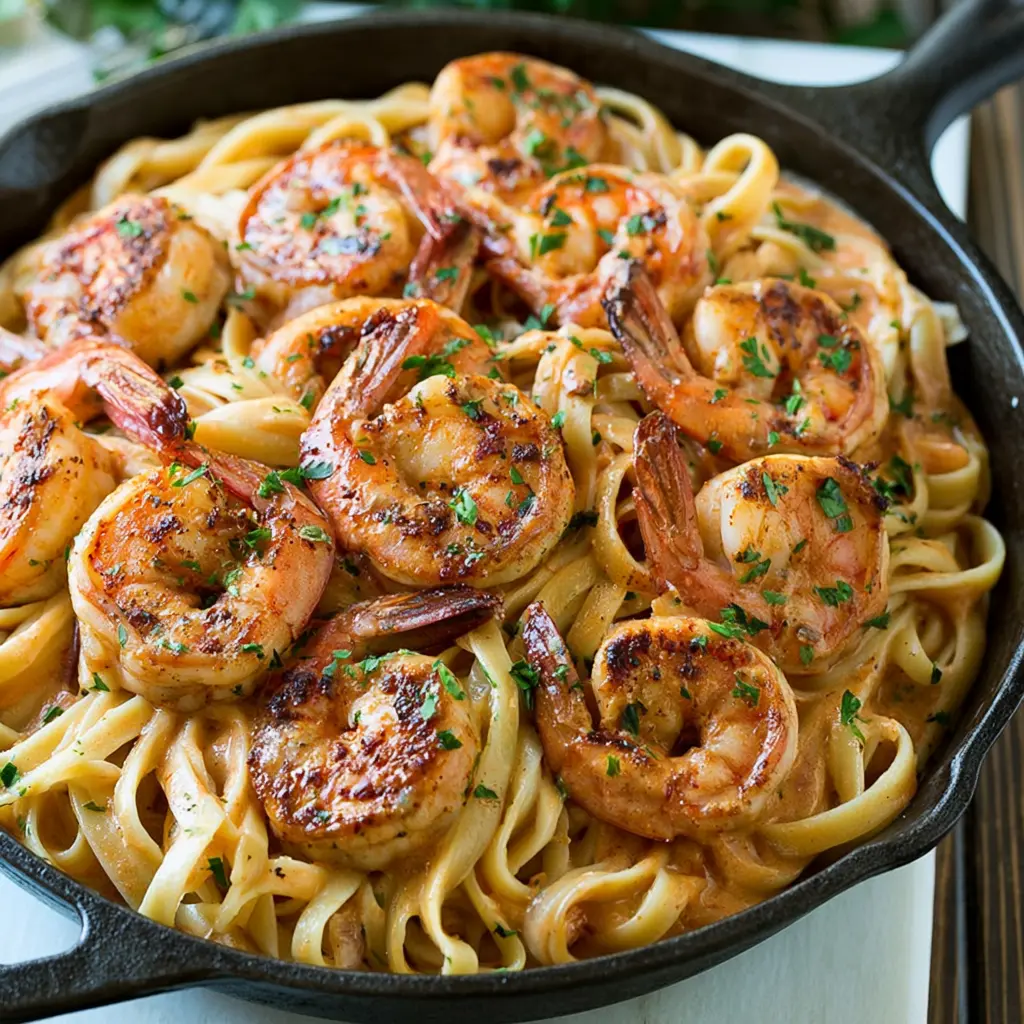
Why This Cajun Shrimp Pasta Works
It’s 6pm, you just walked in the door, and everyone is suddenly starving. You know that feeling. The one where you stare into the fridge and think, “I don’t want takeout again, but I also don’t want to cook for an hour.” This cajun shrimp pasta is the answer I reach for on nights like that.
It’s a creamy cajun shrimp pasta with a roasted red pepper sauce that tastes like restaurant-style pasta at home. Except you’re making it in one skillet, and the whole thing is done in about 30 minutes. I promise the sauce won’t break if you keep it at a gentle simmer, not a rolling boil. I learned that the hard way, but more on that later.
Here’s why it earns a permanent spot in the weeknight rotation:
- Fast and forgiving: 15 minutes of prep, 15 minutes of cooking, zero stress.
- One skillet, less cleanup: you’ll wash one pan and a pot. That’s it.
- Spicy but adjustable: the heat dial is all yours, from family-friendly to genuinely brave.
- That sauce, though: fire-roasted tomatoes, roasted red peppers, and cream make a velvety, smoky sauce that coats every strand of fettuccine.
It’s also perfect timing. We’re in the tail end of Gulf shrimp season, which means sweet, plump shrimp are more affordable than usual. And with back-to-school creeping up, a 30-minute weeknight dinner you can cook on autopilot is basically a survival tool. Each bowl lands around 740 calories with 35 grams of protein, so it actually fills people up.
Key Ingredients for Cajun Shrimp Pasta
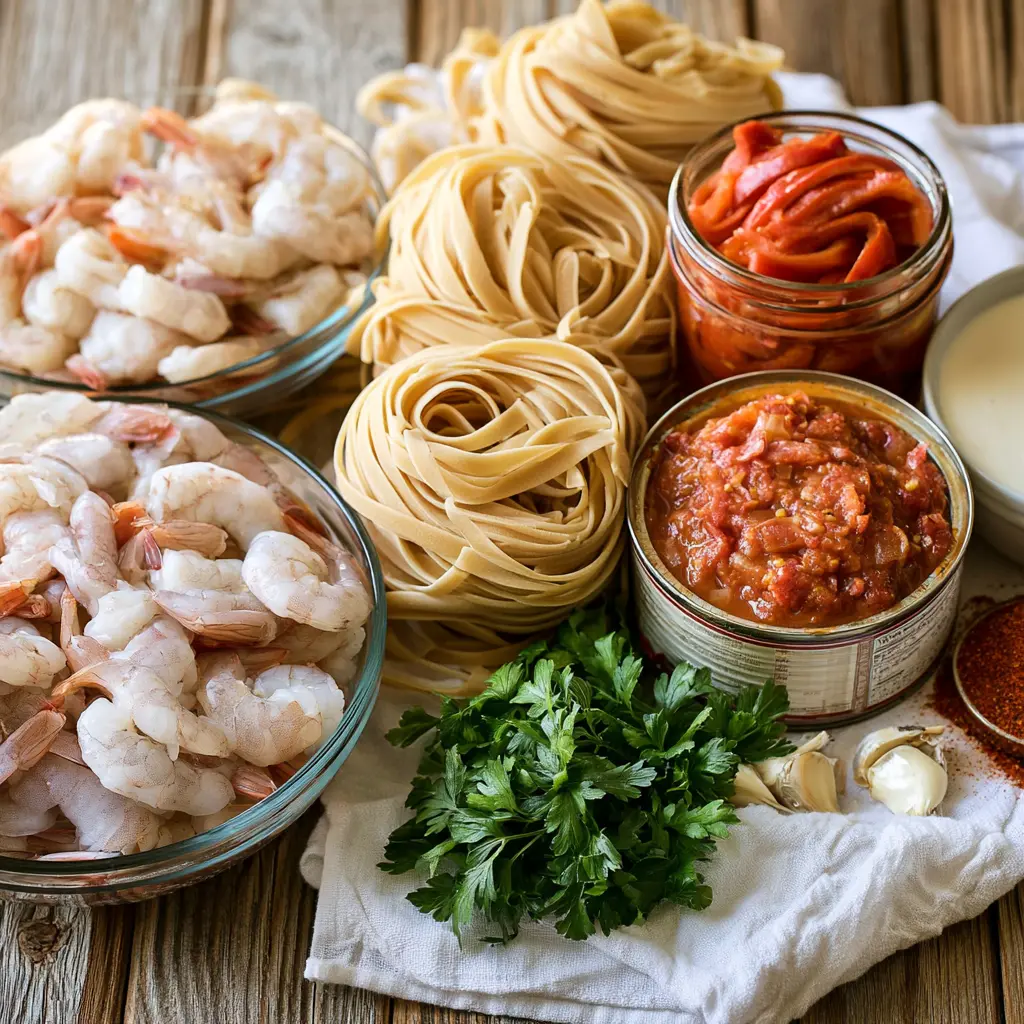
The list is short, and every single thing earns its place. Here’s what you need and why it matters.
Shrimp and Cajun Seasoning
You want medium raw shrimp, peeled and deveined, around 16/20 count. That’s the size that gets plump and juicy when seared, without turning into rubber. I grab a pound and let them sit at room temperature while I chop, because cold shrimp seize up in the pan.
The seasoning is simple but key: a salt-free Cajun Creole seasoning, granulated garlic, a pinch of cayenne if you like heat, and kosher salt. Using a salt-free blend matters more than you’d think. Store-bought blends like Tony Chachere’s already pack in a lot of salt, so if you use one, start small and taste as you go. A homemade cajun spice blend with paprika and cayenne is even better, just remember you’re in control of the salt.
The Roasted Red Pepper Cream Sauce
This is where the magic lives. Diced roasted red peppers from a jar add that sweet, smoky depth without you roasting anything. Fire-roasted crushed tomatoes bring the body and a hint of char. Then heavy cream ties it all together into a creamy spicy pasta sauce that clings to the fettuccine like it means it.
That combination, the roasted peppers and fire-roasted tomatoes, is what makes the sauce taste like it simmered all afternoon. It didn’t. It just acts like it.
How to Make Cajun Shrimp Pasta
This is a one-pan pasta dinner that moves fast, so I like to get everything prepped before the heat turns on. Chop the onion, press the garlic, measure the spices. Once you start, there’s no time for hunting down a cutting board mid-sear. You’ll want a large cast-iron skillet, a big pot for the pasta, and a bowl for the shrimp.
Stage 1: Sear the Shrimp
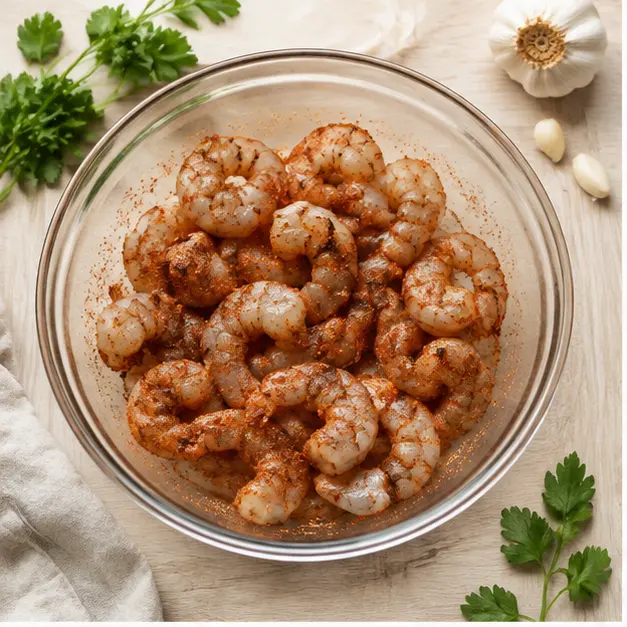
Get the skillet screaming hot over medium-high heat with a good swirl of avocado oil. While that heats, toss the shrimp with the Cajun Creole seasoning, granulated garlic, a pinch of salt, and a pinch of cayenne if you’re bold.
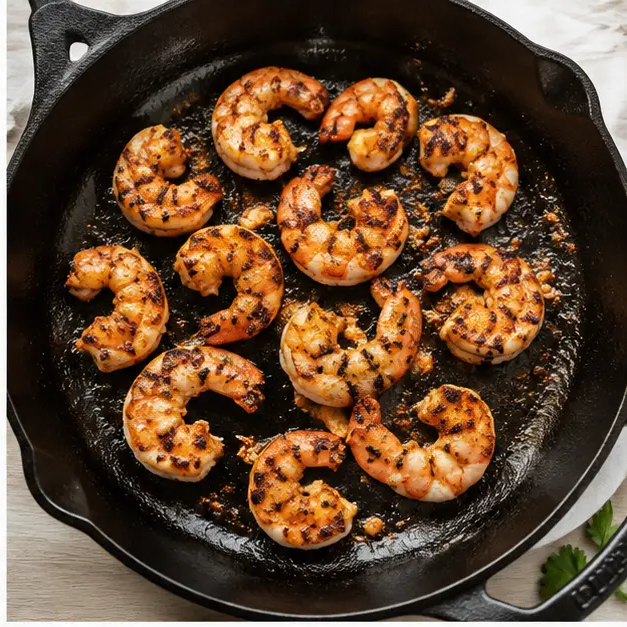
Lay them in one layer. Don’t crowd them, or they’ll steam instead of sear. Let them sit for about 2 minutes until the bottoms turn golden, then flip for another minute. The visual cue is everything: they should curl into a loose C shape and turn pink-orange with browned edges. That’s shrimp doneness, done right. Pull them out before they finish, because they’ll warm through again when you toss them with the hot pasta.
Stage 2: Build the Flavor Base
Drop the heat to medium and add the remaining oil plus a tablespoon of butter. That butter gives the sauce a richness oil alone can’t. Stir in the diced onion and roasted red peppers with a pinch of salt, and let them soften for a few minutes until they’re glossy and just starting to turn golden.
Now add the garlic, red pepper flakes if you want more heat, and a spoonful of tomato paste. This is where the aroma hits. Keep stirring for about 30 seconds until the paste deepens in color. That’s your flavor foundation. It’s the difference between a good sauce and a “what did you put in this” sauce.
Stage 3: Simmer the Creamy Sauce
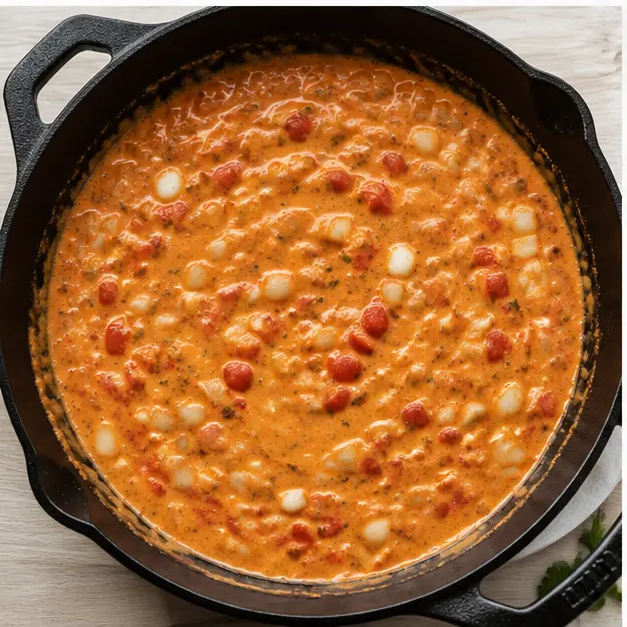
Pour in the fire-roasted crushed tomatoes, chicken broth, and heavy cream. Give everything a good stir and let it come to a gentle simmer. Here’s the rule I live by: keep it at a soft bubble, not a rolling boil. High heat is what makes cream sauces split and turn grainy.
Let it simmer for 2 to 3 minutes, just enough to thicken slightly. The sauce should coat the back of a spoon and look glossy, not tight. If it looks too thick, a splash of the reserved pasta water will loosen it right up. That little starchy helper is your best friend for pasta sauce separation.
Stage 4: Toss and Finish
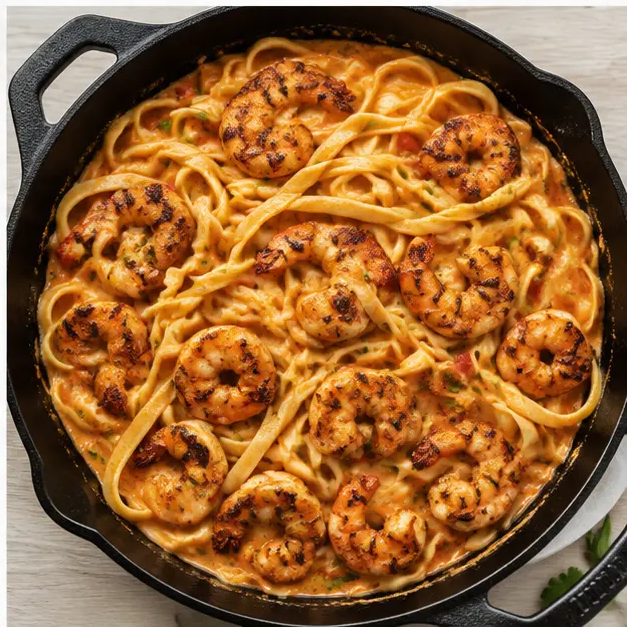
Add the cooked fettuccine right into the skillet along with half the seared shrimp and half the parsley. Toss it all together so every strand gets coated in that creamy orange sauce. The pasta pulls the sauce together as it moves, and the bits of shrimp get folded through for little pockets of flavor.
Then top with the remaining shrimp and a sprinkle of fresh parsley. Serve straight from the skillet if you want that rustic, proud-of-yourself look. I always do. My family knows that skillet on the table means something good just happened in the kitchen.
Tips for the Best Cajun Shrimp Pasta
I burned through a few failed attempts before I got this right. My first batch had rubbery shrimp and a sauce that looked like scrambled eggs had joined the party. So trust me when I say these fixes actually work.
- ❌ Overcooked shrimp: they curl into a tight O and turn rubbery. ✅ Pull them when they form a loose C, just as they turn pink-orange and crusty around the edges. They finish cooking when you toss them with the hot pasta.
- ❌ Split sauce: that grainy, broken look happens when cream boils too hard. ✅ Keep the skillet at a gentle simmer, and the sauce stays silky and glossy.
- ❌ Too-salty seasoning: many store-bought Cajun blends are salt bombs. ✅ Use salt-free Cajun Creole seasoning or taste as you go with blends like Tony Chachere’s.
- ❌ Dry, sticky pasta: the sauce has nothing to bind to. ✅ Save a cup of pasta water before draining and splash some in if the sauce needs loosening.
- ❌ Burnt spices: dry seasonings on high heat turn bitter. ✅ Stir them into the oil with the tomato paste, and keep everything moving.
Variations and Substitutions
This recipe is friendlier to riffing than almost anything else I make. Here are the swaps and twists that work:
- No shrimp? Use chicken or scallops. Flatten a chicken breast to an even thickness and cook it the same way, which turns this into a solid cajun chicken pasta. Wild-caught scallops sear beautifully too, just watch the timing.
- Make it dairy-free: swap the heavy cream for full-fat coconut milk and use oil instead of butter. The sauce turns out lighter but still rich. That’s the best heavy cream substitute for this one.
- Want it creamier? Push the cream up to a full cup and let the sauce reduce until it coats a spoon.
- Add more vegetables: bell peppers, mushrooms, zucchini, or asparagus all play nicely. Sauté them with the onion in stage two.
- Change the pasta: fettuccine is great, but linguine, spaghetti, or penne all work. Short shapes like farfalle and rotini catch the sauce really well. Some of my favorite penne pasta recipes start right here.
- Add andouille sausage for a classic Louisiana punch. Slice it and sear it before the shrimp. Keep it as an optional addition, not part of the base recipe.
- Dial the heat down: skip the cayenne and red pepper flakes. The Cajun seasoning still delivers a subtle warm kick.
- Dial it up: add extra cayenne or finish with hot sauce at the table. Brave souls only.
- Grate some parmesan over the top if you have it around. That sharp, salty finish is a nice touch, even though the base recipe doesn’t need it.
Storage and Reheating
Creamy pastas are notorious for splitting in the microwave. I get it, I’ve been saddened by one too many containers of separated cajun alfredo. But the fix is easy.
Store leftovers in an airtight container in the fridge for up to 3 days. The pasta will soak up some of the sauce, so when you reheat, add a splash of chicken broth or a little milk to bring it back to life.
Stovetop is the best way to reheat: warm it over medium-low heat, stirring often, until hot. If you’re in a rush, the microwave works too, in 30-second increments with a stir between each round. Just add that splash of liquid first.
Can you freeze it? Technically yes, up to 3 months in a freezer bag laid flat. The texture won’t be quite as silky when it thaws, because cream can shift when frozen. It’s still tasty, just not company-worthy. For meal prep, blend the onion, roasted red peppers, and garlic mixture and keep it in the fridge for a week or freeze for 3 months, then cook fresh when you’re ready.
What to Serve with Cajun Shrimp Pasta
This skillet dinner is rich, spicy, and creamy, so the best sides are cool, crisp, and simple. On a hot August evening, when you don’t want the oven blasting heat into the kitchen, this one-pan dish does the heavy lifting on the stove top.
- A crisp green salad with a bright vinaigrette cuts the richness and cools the heat.
- Garlic bread or a hunk of crusty sourdough to soak up that sauce. You will want to soak it up.
- Roasted or grilled zucchini and asparagus if you want more green on the plate.
- Cold lemonade or iced tea on the side. Something about the citrus just handles cajun heat beautifully.
When you make this creamy cajun shrimp pasta tonight, tag me. I want to see that saucy skillet and the empty plates. And if you’re collecting weeknight winners, save this cajun shrimp pasta on Pinterest so it’s waiting for you the next time the 6pm scramble hits.
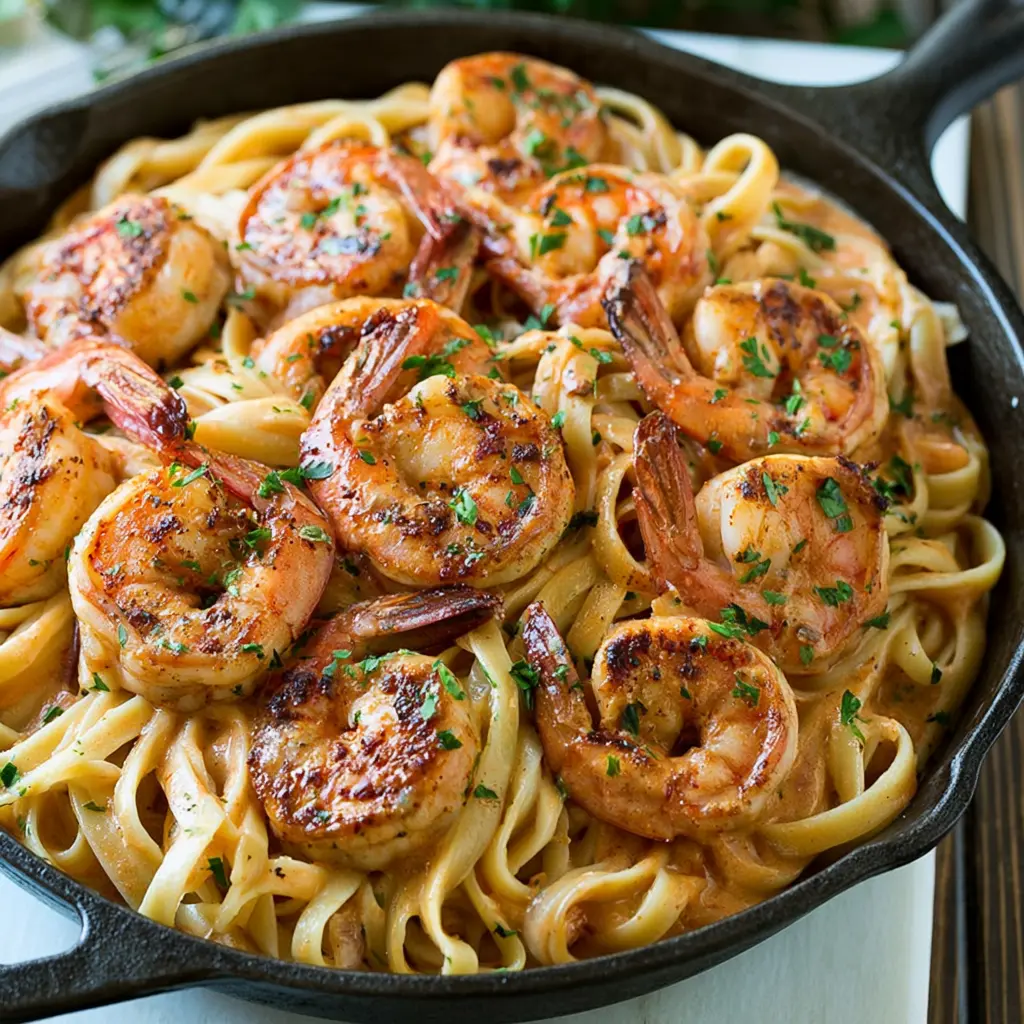
Cajun Shrimp Pasta with Roasted Red Pepper Cream Sauce
Ingredients
Method
- Gather and prep all your ingredients before you begin, measuring spices and chopping the onion, peppers, garlic, and parsley.
- Cook the fettuccine in a large pot of salted boiling water according to package directions until just al dente. Drain and set aside, reserving a little pasta water if desired.
- In a bowl, combine the shrimp with about 1 tablespoon of the oil, the Cajun Creole seasoning, granulated garlic, a pinch of salt, and a pinch of cayenne if using. Toss to coat evenly.
- Set a large cast-iron skillet over medium-high heat and add about 2 tablespoons of the oil. Once the oil is shimmering, arrange the shrimp in one layer and sear for about 2 minutes until golden brown. Flip and sear for another minute, then remove the shrimp from the skillet.
- Reduce the heat to medium. Add the remaining 2 tablespoons oil and the butter to the skillet, then stir in the onion and roasted red peppers with a pinch of salt. Sauté for 2 to 3 minutes until softened and lightly golden.
- Stir in the garlic, red pepper flakes (if using), and tomato paste. Cook for about 30 seconds, stirring constantly, until aromatic and the paste turns a deeper color.
- Pour in the crushed tomatoes, chicken broth, and heavy cream, and stir to combine. Let the sauce simmer gently for 2 to 3 minutes to thicken slightly.
- Add the cooked fettuccine to the sauce along with half of the seared shrimp and half of the parsley. Toss well to coat the pasta in the creamy sauce.
- Top with the remaining shrimp and sprinkle the rest of the parsley over the dish. Serve directly from the skillet or transfer to a platter first.
Nutrition
Notes
Tried this recipe?
Let us know how it was!Frequently Asked Questions
Source: Learn More About This Dish