

Why You’ll Love This Roasted Butternut Squash Cauliflower Soup
I know what you’re thinking. Soup in summer? In June? In Los Angeles? Trust me, I get it. When it’s pushing 85 degrees outside, the last thing you want is to stand over a hot stove for an hour. But this roasted butternut squash cauliflower soup is different. It’s the soup that convinced me that comfort food doesn’t have to be heavy.
The first time I made butternut squash soup, I boiled it. Just cubed it up, threw it in a pot with some broth, and simmered until soft. And you know what? It was fine. Fine. But then I tried roasting the vegetables instead, and honestly, it was a total game-changer. That caramelization, those browned edges, the way the natural sugars concentrate and deepen. Night and day, I promise.
This version is light enough for a breezy summer evening but still feels indulgent. It’s dairy-free, vegan, and comes together on a single sheet pan. Plus, it’s freezer-friendly, so you can make a big batch now and stash it for those cooler days ahead. Or, you know, for when you just want a cozy meal even when it’s warm outside. No judgment here.
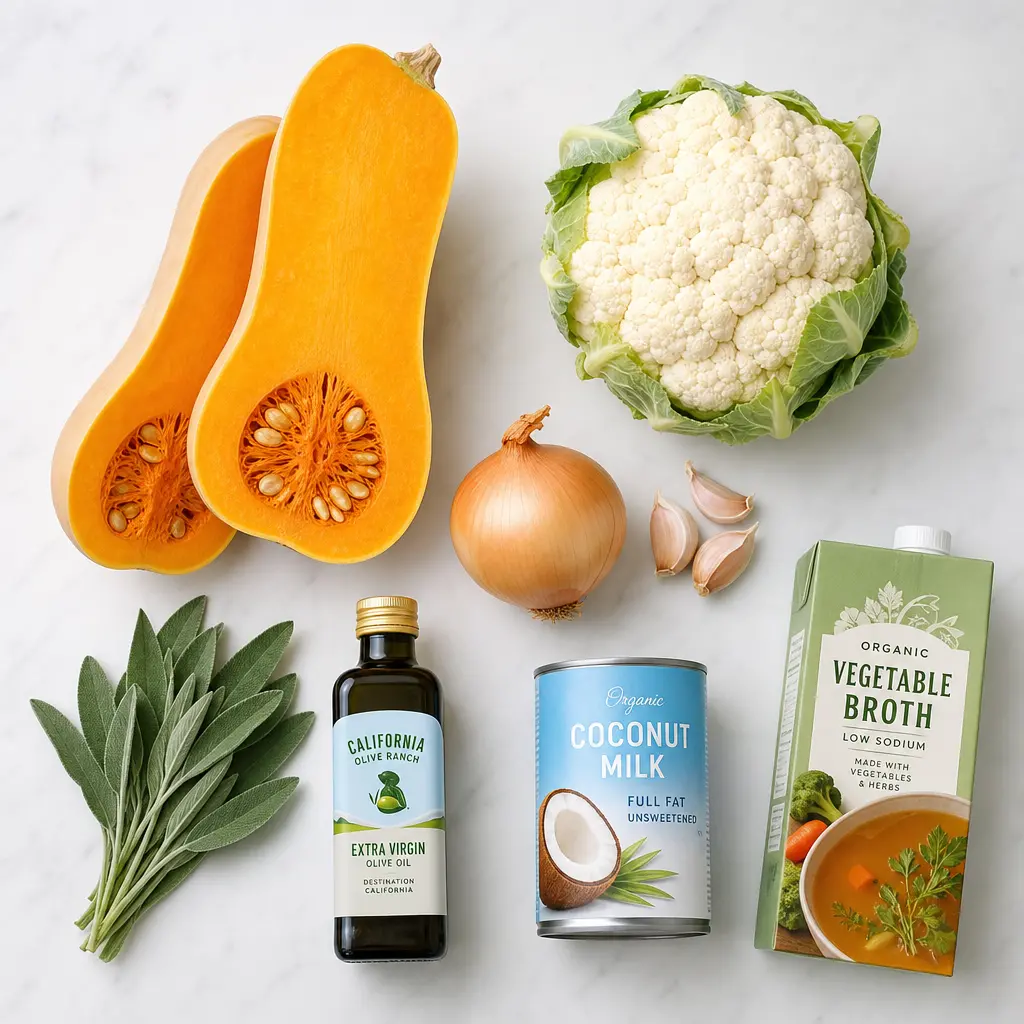
What Is in This Roasted Vegetable Soup?
This roasted butternut squash cauliflower soup uses simple, whole ingredients. Nothing fancy, nothing hard to find. Just good produce and a few pantry staples that do the heavy lifting.
- Butternut squash the star of the show. Look for one that feels heavy for its size, about 2 to 3 pounds. That orange flesh gets so sweet and nutty when roasted.
- Cauliflower adds creaminess without any dairy. When roasted, it gets this subtle sweetness that pairs perfectly with the squash.
- Yellow onion and garlic the aromatic base. They soften and sweeten in the oven.
- Fresh sage this is non-negotiable for me. The earthy, slightly peppery flavor is made for roasted squash.
- California olive oil use a good one. It’s what helps everything caramelize.
- Vegetable broth the liquid base. Low-sodium is best so you can control the salt.
- Full-fat coconut milk this is what makes it creamy without any cream. It adds a subtle richness that’s just right.
That’s it. Eight ingredients, and most of them are vegetables. I love recipes like this, where the produce does all the work.
How to Make the Best Roasted Butternut Squash and Cauliflower Soup
Here’s the thing about this roasted butternut squash cauliflower soup: the oven does most of the work. You’re basically just chopping, roasting, blending, and simmering. Four stages, minimal effort, maximum flavor.
Stage 1: Prep and roast the vegetables.
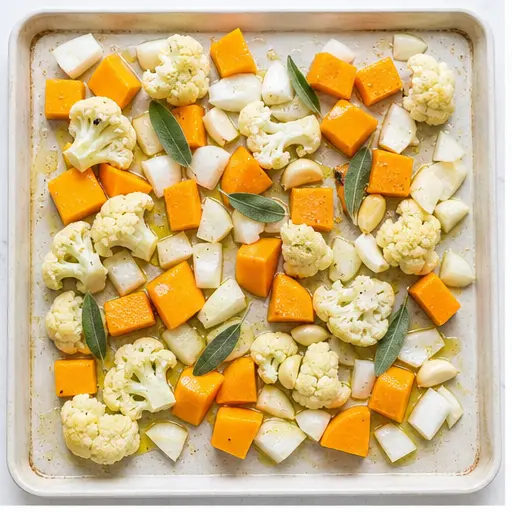
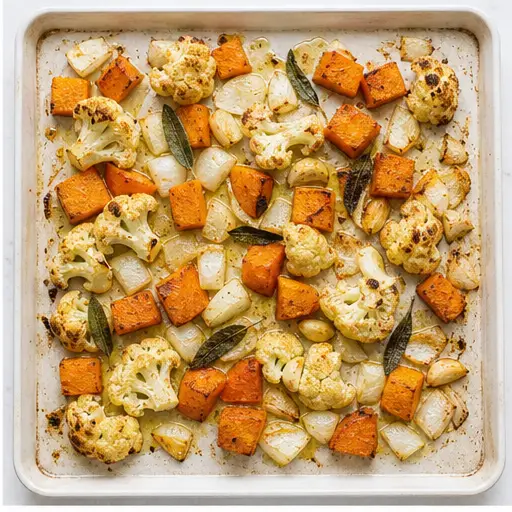
Preheat your oven to 425°F. On a large rimmed baking sheet, combine the cubed butternut squash, cauliflower florets, chopped onion, minced garlic, and fresh sage. Drizzle with olive oil, season with salt and pepper, and toss everything together until evenly coated. Spread it out in a single layer crowding the pan will steam instead of roast, and we want those caramelized edges. Roast for 20 to 25 minutes, until the vegetables are fork-tender and lightly browned. Don’t skip this step. That browning is where the flavor lives.
Stage 2: Blend until smooth.
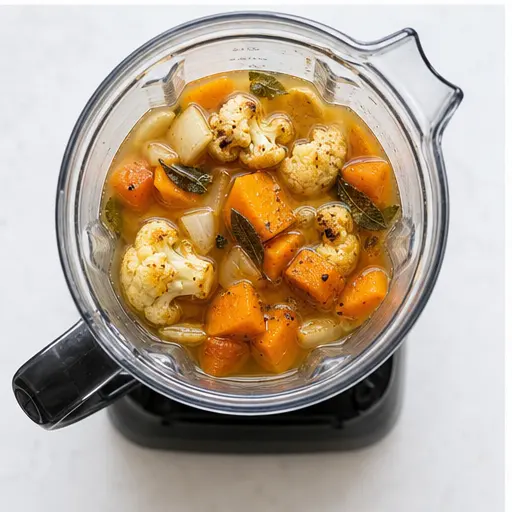
Transfer the roasted vegetables to a high-speed blender or food processor. Work in two batches if needed. Add about half the vegetable broth (2 cups) and puree until completely smooth. This is where the magic happens the roasted vegetables break down into this velvety, golden-orange puree that smells absolutely incredible. Pro tip: let it cool for a few minutes before blending, or vent the lid. Hot soup expands and can pop the lid off. I learned that the hard way.
Stage 3: Simmer and finish.
Pour the puree into a large pot. Stir in the remaining 2 cups of broth and bring the soup to a gentle simmer over medium heat. Mix in the coconut milk, then taste and adjust seasoning with more salt and pepper. If it seems too thick, add a splash of water until it reaches your preferred consistency. This is your chance to dial it in exactly how you like it.
Stage 4: Serve and garnish.
Ladle the soup into bowls. Finish with a drizzle of coconut milk, a few fresh sage leaves, or a sprinkle of toasted pepitas for crunch. The contrast between the smooth soup and those little crunchy seeds is everything.

Tips and Tricks for Perfect Soup
I’ve made this roasted butternut squash cauliflower soup more times than I can count, and I’ve picked up a few things along the way. Here are the tips that make a real difference.
- Don’t skip the caramelization. Those browned edges on the squash and cauliflower are pure flavor. If your vegetables aren’t getting color after 20 minutes, give them another 5. You want visible golden-brown spots.
- Use parchment paper. Line your baking sheet with parchment before roasting. It makes cleanup a breeze and prevents sticking without extra oil.
- Let it cool slightly before blending. Hot liquid in a blender can create pressure and blow the lid off. Let the roasted vegetables sit for 5 minutes, or remove the center cap of the blender lid and cover with a kitchen towel.
- Adjust thickness as you go. Start with the full amount of broth, then add water if needed. Different squashes release different amounts of moisture, so trust your eyes.
- Taste and adjust. The salt level depends on your broth. Always taste before serving and adjust accordingly.
Pro Tip: Roasting on Parchment
Cleanup hack: Line your sheet pan with parchment paper before adding the vegetables. After roasting, just lift the parchment and transfer everything to the blender. No scrubbing, no soaking. It’s one of those small things that makes a big difference when you’re trying to keep the kitchen tidy.
Storage and Make Ahead
This roasted butternut squash cauliflower soup is a meal prep dream. It stores beautifully and actually gets better after a day in the fridge as the flavors meld together.
Refrigerator: Store leftovers in an airtight container for up to 5 days. Reheat gently in a saucepan over medium-low heat, stirring occasionally. Add a splash of water or broth if it thickens too much.
Freezer: This soup freezes like a champ. Let it cool completely, then transfer to freezer-safe containers or bags. Leave a little headroom for expansion. It keeps for up to 3 months. Thaw overnight in the fridge before reheating.
Make ahead: You can roast the vegetables up to 2 days in advance and keep them in the fridge. Then just blend and simmer when you’re ready to eat. That’s my favorite way to do it on busy weeknights.

Common Mistakes to Avoid
Even simple recipes have pitfalls. Here are the most common problems I’ve run into with this roasted butternut squash cauliflower soup, and how to fix them.
- ❌ Burnt vegetables: If your oven runs hot, check the vegetables at 18 minutes. Cut any smaller pieces that might burn before the larger ones are done. ✅ Solution: Cut your squash and cauliflower into uniform 1-inch cubes for even cooking.
- ❌ Soggy, not caramelized: This happens when the pan is overcrowded. The vegetables steam instead of roast. ✅ Solution: Use the largest rimmed baking sheet you have, and spread everything in a single layer. If needed, use two sheets.
- ❌ Soup is too thin: Sometimes the squash releases more moisture than expected. ✅ Solution: Simmer the soup uncovered for 5 to 10 minutes to reduce and thicken.
- ❌ Soup is too thick: The opposite problem, usually from a denser squash. ✅ Solution: Add water or extra broth a splash at a time until it reaches your desired consistency.
- ❌ Over-blending hot soup: The lid pops off and you have a mess. ✅ Solution: Let the vegetables cool for 5 minutes, vent the blender lid, and cover with a towel while blending.
Serving Suggestions
This roasted butternut squash cauliflower soup is satisfying on its own, but it pairs beautifully with a few simple sides. Here’s what I usually go for.
- Crusty sourdough bread for dipping. A slice of good bread makes any soup feel like a meal.
- Simple green salad with a lemony vinaigrette to cut through the richness.
- Toasted pepitas for crunch. They add texture and a little protein boost.
- Extra drizzle of coconut milk because it looks pretty and tastes great.
For a heartier meal, serve it alongside a grain bowl or a simple roasted chicken. But honestly, I eat it as a main dish with just bread and butter. It’s that satisfying.
More Soup Recipes
If you love this roasted butternut squash cauliflower soup, you might also enjoy these other easy, veggie-forward soups. They’re all built on the same principle: roast the vegetables first, then blend. It’s a technique that works every time.
- Classic Tomato Basil Soup (roasted, of course)
- Roasted Red Pepper and Tomato Soup
- Curried Carrot and Ginger Soup
- Broccoli and Cheddar Soup (made with real cheese, not processed)
Each one is freezer-friendly, dairy-free adaptable, and perfect for meal prep. Soup season isn’t just for fall, you know.

Creamy Roasted Butternut Squash Cauliflower Soup
Ingredients
Method
- Preheat your oven to 425°F.
- On a large rimmed baking sheet, combine the butternut squash, cauliflower, onion, garlic, sage, and olive oil. Season with salt and pepper, then toss everything together until evenly coated. Roast for 20-25 minutes, or until the vegetables are fork-tender and lightly browned.
- Transfer the roasted vegetables to a high-speed blender or food processor (work in two batches if needed). Add 2 cups of the vegetable broth and puree until completely smooth.
- Pour the puree into a large pot. Stir in the remaining 2 cups of broth and bring the soup to a gentle simmer over medium heat. Mix in the coconut milk, then taste and adjust seasoning with more salt and pepper. If the soup seems too thick, add a splash of water until it reaches your preferred consistency.
- Ladle the soup into bowls and finish with a drizzle of coconut milk, a few fresh sage leaves, or a sprinkle of toasted pepitas for crunch.
Nutrition
Notes
Tried this recipe?
Let us know how it was!Frequently Asked Questions
Source: Health & Nutrition Research











One response to “How to Make the Best Roasted Butternut Squash Cauliflower Soup”
I made this soup last night and it was absolutely incredible! The roasting really does make a huge difference in flavor. I added a pinch of nutmeg and cayenne pepper for a little warmth, and it was perfect for a chilly autumn evening. Will definitely be making this again.