Chocolate Passionfruit Layer Cake
Ingredients
Method
- Place the chopped chocolate, heavy cream, butter, and glucose syrup in a large microwave-safe bowl. Microwave in 20-second bursts, stirring after each burst, until the chocolate is fully melted and the mixture is smooth.
- Alternatively, fill a medium saucepan about one-third full with water and bring it to a simmer. Set a heatproof bowl over the pan, turn the heat to low, add all the ganache ingredients, and stir gently until the chocolate is melted and the mixture is silky.
- Press a sheet of plastic wrap directly onto the surface of the ganache so a skin does not form. Let it sit at room temperature until fully set, about 4 hours; it should be firm to the touch but still slightly soft.
- Right before frosting, soften the set ganache by microwaving for 10 seconds and stirring with a spatula until it becomes spreadable. You can also rewarm it over the double boiler, stirring just until soft.
- Combine the passionfruit pulp and sugar in a microwave-safe bowl. Microwave for 2 minutes, then whisk thoroughly to dissolve the sugar.
- Add the egg yolks and whisk to combine. Microwave for 40 seconds, then stir. Repeat two more times, or until the mixture is thick enough to coat the back of a spoon.
- Add the cubed butter and stir until it is melted and the curd is completely smooth. Cover with plastic wrap and refrigerate for at least 3 hours or overnight until set.
- Preheat the oven to 350°F (175°C) for a convection/fan-forced oven or 375°F (190°C) for a conventional oven. Grease three 8-inch round cake pans with cooking spray and line each bottom with parchment paper.
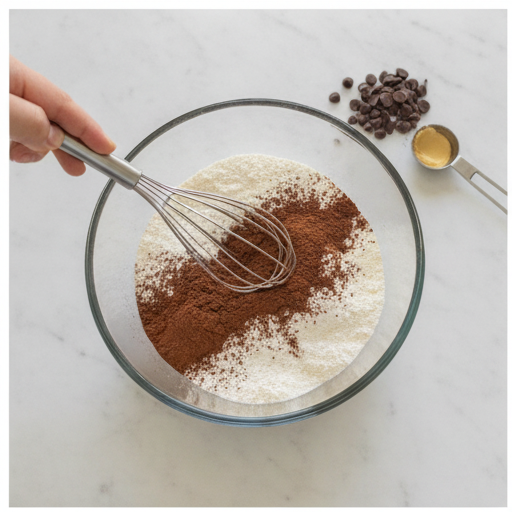
- In a large mixing bowl, whisk together the flour, sugar, cocoa powder, baking powder, baking soda, and salt until evenly combined.
- Add the milk, eggs, vegetable oil, espresso or instant coffee, and vanilla extract to the dry ingredients. Stir until well combined.
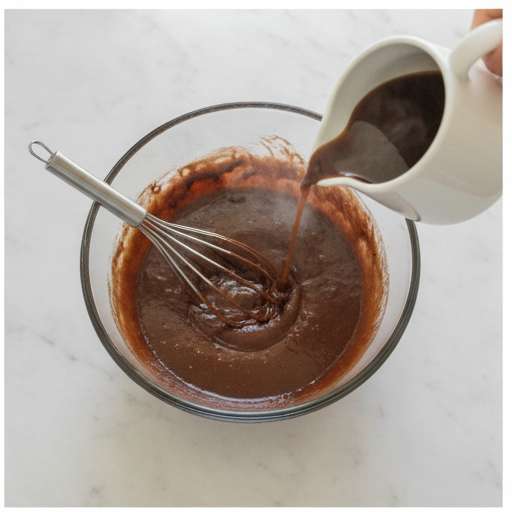
- Pour in the boiling water and stir until the batter is smooth. The batter will be very thin once the water is added; this is completely normal.
- Divide the batter evenly among the prepared cake pans. Bake for 20-25 minutes, or until a toothpick inserted into the center comes out clean. Let the cakes cool in the pans for 10 minutes, then turn them out onto a wire rack to cool completely.
- Trim the domed tops off the cooled cake layers with a large serrated knife or a cake leveler.
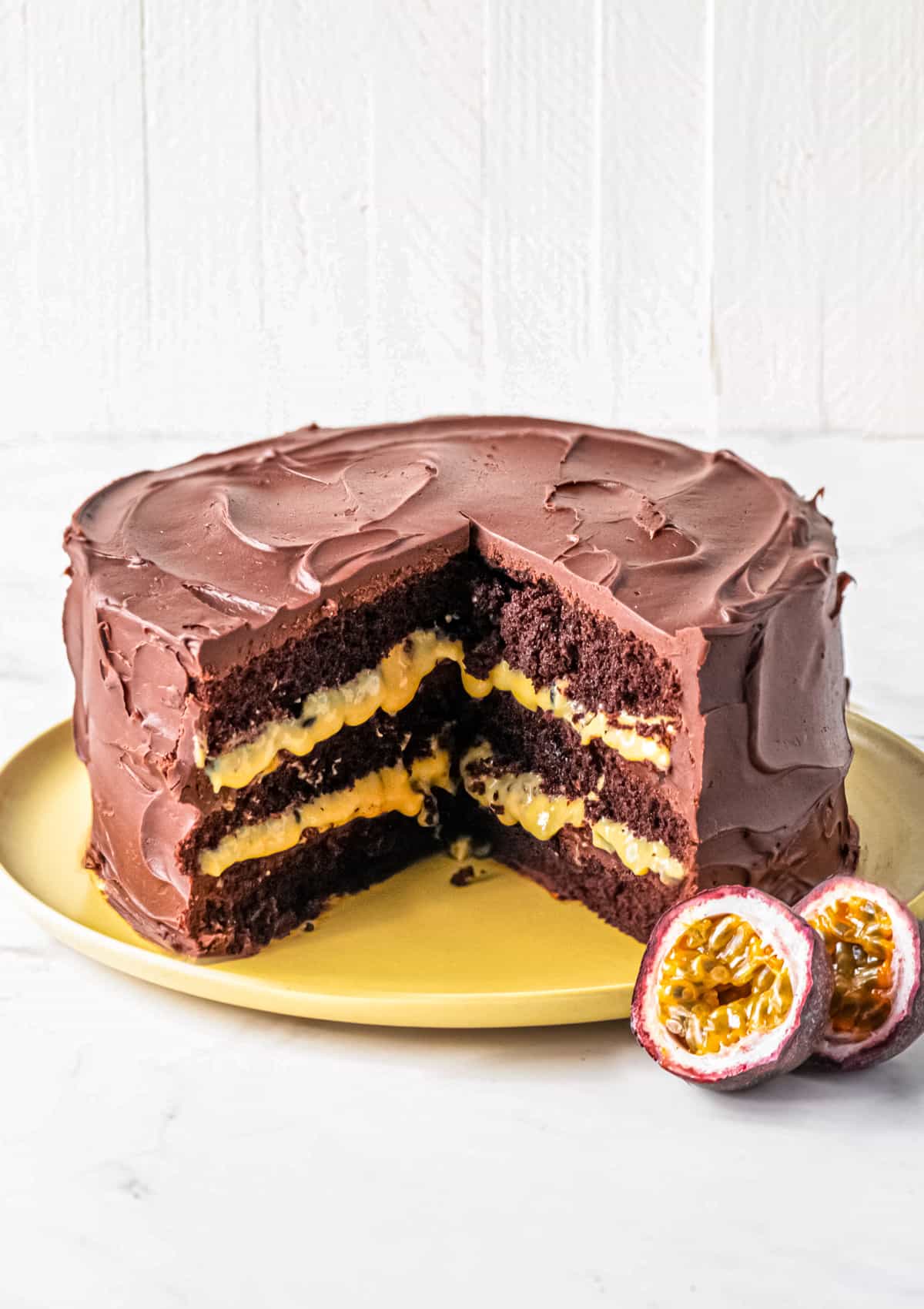
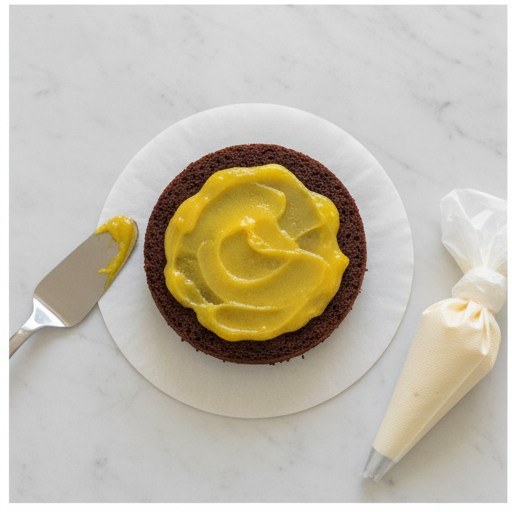
- Put a small dab of ganache on the serving plate or cake board and spread it slightly. Set the first cake layer on top and press gently to seat it. Spread about 4-5 tablespoons of ganache over the cake. Pipe a ring of ganache around the perimeter to create a dam, then fill the center with one-third of the passionfruit curd and spread it evenly. Repeat with the next cake layer and another third of the curd, then finish with the third cake layer.
- Frost the top and sides of the assembled cake with the remaining ganache, smoothing with an offset spatula. Chill the finished cake in the refrigerator for 1 hour. Just before serving, top with fresh passionfruit halves or extra passionfruit pulp if desired.
Nutrition
Notes
Tried this recipe?
Let us know how it was!Why This Chocolate Passionfruit Layer Cake Works
The first time I cracked open a passionfruit, I honestly wasn’t sure what to do with it. That floral, almost perfumed aroma hit me first, then the sharp tang made my whole face scrunch. I remember thinking there’s no way this belongs anywhere near chocolate. Until I tried this cake.
Here’s the thing about a chocolate passionfruit layer cake: it shouldn’t work on paper. Rich, dark, slightly bitter chocolate against bright, tart, seedy passionfruit? It sounds like a mistake. But it’s not. It’s genuinely one of the best flavor combinations I’ve ever baked.
The simple science is this: the acidity in passionfruit cuts straight through the fat and richness of the chocolate. Think about how a squeeze of lemon brightens a rich sauce or how raspberries save a dense chocolate torte. Same idea. The curd wakes up the chocolate, and the chocolate softens the tang. They make each other better than either could be alone.
So yes, to answer the question everyone asks: passionfruit and chocolate absolutely go together. And this cake proves it.
Ingredients You’ll Need
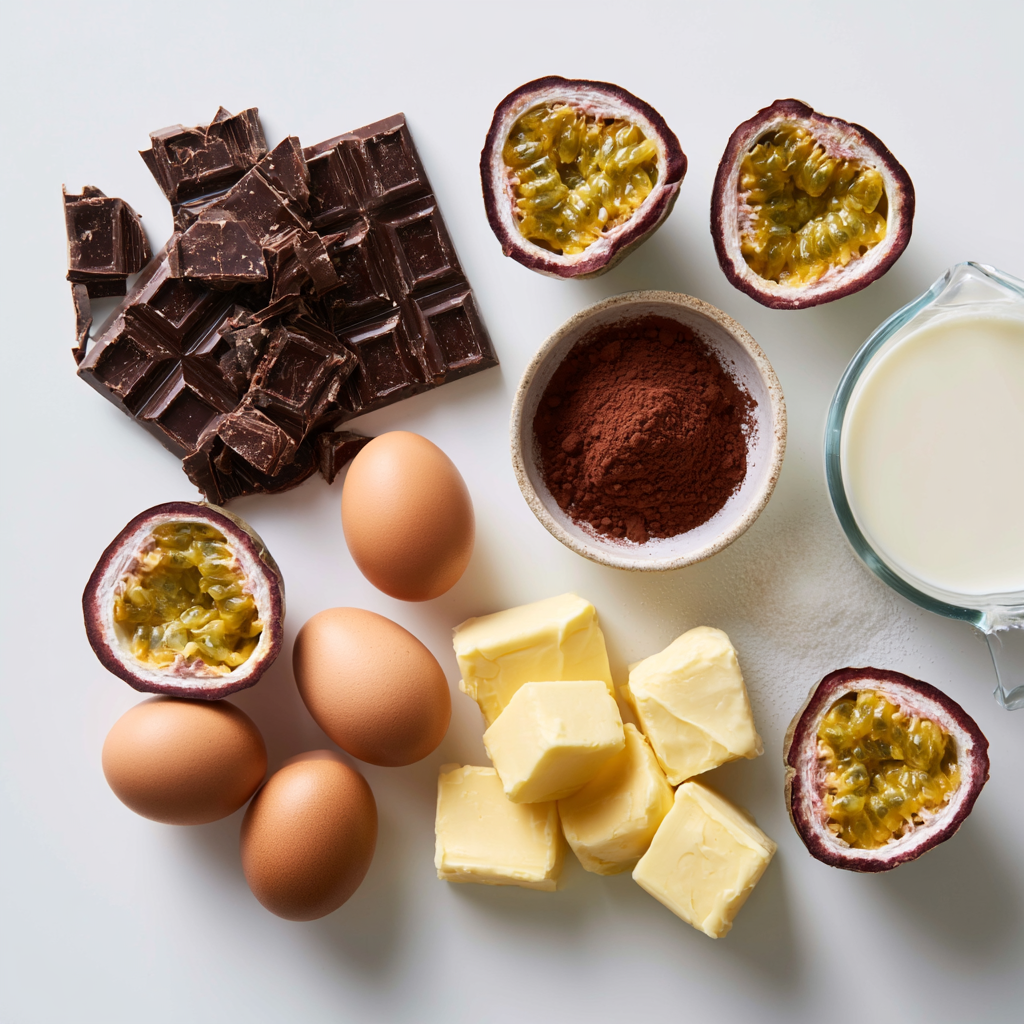
This cake has three components, and each one earns its place. You’ll be making a chocolate ganache, a passionfruit curd, and the dark chocolate cake layers themselves. None of it is complicated, but each part wants a little attention.
For the cake, Dutch-processed cocoa powder is non-negotiable. It gives you that deep, dark, almost fudgy color and a smoother flavor than natural cocoa. The shot of brewed espresso is marked optional, but I never skip it. You won’t taste coffee. You’ll just taste more chocolate. That’s the secret.
A few ingredient notes before you start:
- Passionfruit pulp: canned or fresh both work great. Strain the seeds if you prefer a silky curd, or keep them for that authentic tropical crunch. I keep them most of the time.
- Chocolate: use good-quality semisweet or bittersweet bars, 60 to 70% cacao. Skip the chocolate chips entirely, they contain stabilizers that mess with how smoothly the ganache melts.
- Butter: unsalted, cubed, and at room temperature for both the curd and the ganache.
- Milk and eggs: bring them to room temperature first. Cold ingredients seize up the batter and make the crumb less tender.
If you can’t find fresh passionfruit at your usual store, check the frozen section at Whole Foods or Trader Joe’s. Frozen pulp swaps in cup for cup with fresh, and the flavor is honestly just as bright.
The Chocolate Ganache
The ganache is what frosts and fills this cake, so it needs to be silky and smooth. You’re combining chopped chocolate, heavy cream, cubed butter, and a little glucose syrup or light corn syrup. That syrup isn’t just for sweetness, it stabilizes the ganache so it stays glossy and spreadable instead of turning grainy or splitting.
You can melt everything in the microwave in 20-second bursts, stirring after each burst. Or use a double boiler over simmering water if you prefer the slower route. Both work, it’s really about which method you trust more. I usually microwave, because it’s faster and I’m impatient.
Then comes the part that tests your willpower: press plastic wrap directly onto the surface of the ganache, and walk away for about 4 hours. Let it set at room temperature until it’s firm to the touch but still slightly soft. This is where some recipes go wrong, they rush it. If you’re in a hurry, I get it, but the texture really does need that time.
Right before you frost, give the ganache a quick 10-second microwave burst and stir it with a spatula. It’ll loosen into the perfect spreadable consistency.
The Passionfruit Curd
The curd is the heart of this cake. It’s what makes people pause mid-bite, look at the slice, and go, wait, what is that?
This version is surprisingly easy because you make it in the microwave. Combine the passionfruit pulp and sugar, microwave for 2 minutes, then whisk in the egg yolks. Keep microwaving in 40-second bursts, stirring between each one, until the mixture is thick enough to coat the back of a spoon. Finally, stir in the cubed butter until everything melts into a smooth, glossy curd.
Two things to remember, and both are non-negotiable:
- Press plastic wrap directly onto the curd’s surface while it chills. Otherwise a skin forms on top, and it changes the texture completely.
- Refrigerate for at least 3 hours, or overnight if you can wait. The curd needs to set firm enough to hold its position between cake layers.
If your curd ends up a little thin, don’t panic. An extra 20 seconds in the microwave usually fixes it, just stir well between bursts. If it looks slightly curdled, a vigorous whisk usually brings it back. Heat and egg yolks can be dramatic, but they’re forgiving.
The Chocolate Cake Layers
This is a moist chocolate cake recipe, and the trick is in the liquid. Boiling water gets stirred into the batter at the very end, which makes the batter almost worryingly thin. Trust it. That thin batter is exactly what creates a tender, moist crumb instead of something dry and crumbly. Some recipes rely on buttermilk, but this one gets the same effect from boiling water, which you always have on hand.
Whisk your dry ingredients first, then add the milk, eggs, vegetable oil, espresso, and vanilla. Once that’s combined, pour in the boiling water and stir until smooth. The batter will look loose and almost soupy. That’s normal. Divide it evenly between three greased 8-inch pans, each lined with parchment paper on the bottom.
Here’s how you know the layers are done:
- A toothpick inserted into the center comes out clean, not smeared with wet batter.
- The cakes have pulled away from the pan edges just slightly.
- The kitchen smells intensely, almost unfairly, chocolatey.
Bake at 350°F for a convection or fan-forced oven, or 375°F for a conventional oven. Start checking around 20 minutes. Let the cakes cool in the pans for 10 minutes, then turn them out onto a wire rack. Cool completely before you even think about leveling. Warm cakes crumble, and crumbly cakes are sad cakes.
How to Assemble the Chocolate Passionfruit Layer Cake
Assembly is where a lot of bakers get nervous, so let me walk you through the four stages. I promise, none of this needs a pastry degree or fancy equipment. A serrated knife, an offset spatula, and a bit of patience go a long way.
Stage 1: Level and seat. Trim the domed tops off the cooled layers with a large serrated knife or a cake leveler. Every cake domes, it’s completely normal. You’re just fixing it. Then put a small dab of ganache on your serving plate or cake board, set the first layer on top, and press gently so it stays put.
Stage 2: Fill with a dam. Spread about 4 to 5 tablespoons of ganache over that first layer. Then pipe a ring of ganache around the perimeter to create a dam. This is the step people skip, and it’s exactly why their curd oozes out the sides and the whole cake slides. The dam holds everything in place. Fill the center with a third of your passionfruit curd and spread it evenly. Repeat with the second layer and another third of the curd, then top with the third cake layer.
Stage 3: Crumb coat. This is the layer nobody sees but everyone benefits from. Frost the entire assembled cake with a thin layer of ganache, just enough to trap all the loose crumbs. Then chill it. Trust me, the 20-minute chill between crumb coat and final coat is non-negotiable. I know it’s annoying because you want to finish, but it’s exactly what gives you that clean bakery-style layer cake finish instead of crumbs ruining your frosting.
Stage 4: Final coat and chill. Once the crumb coat is set, apply the rest of the ganache with an offset spatula. Smooth the top and sides as best you can. A turntable helps if you have one, but a steady hand and a spatula work just fine. The ganache is forgiving, and the final chill covers a multitude of sins. Refrigerate the finished cake for at least 1 hour before serving. This isn’t optional in summer. The cold keeps the layers clean and sharp when you slice.
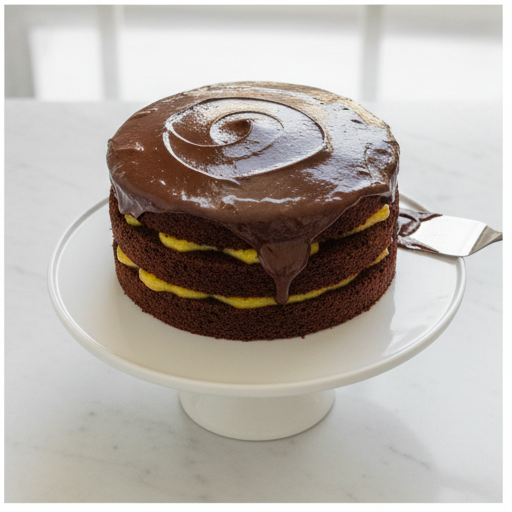
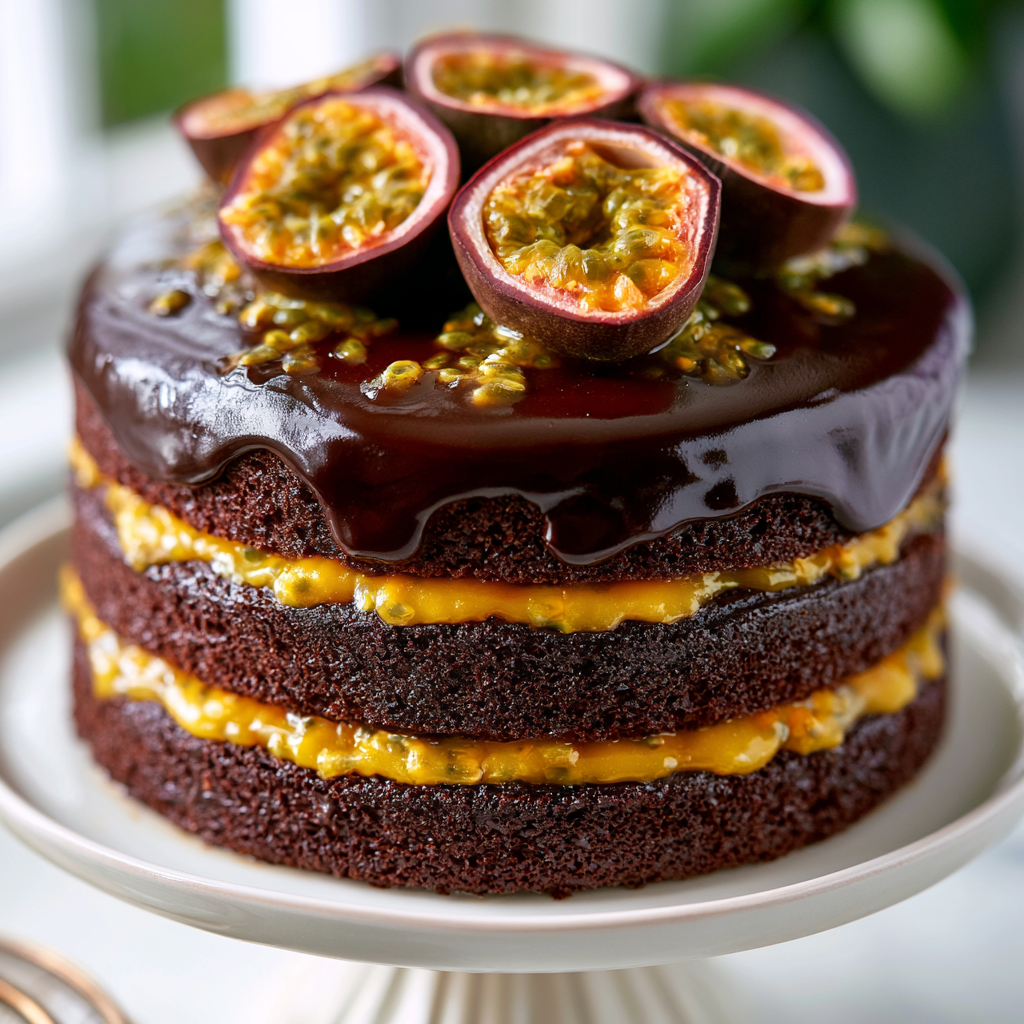
Right before serving, top the cake with fresh passionfruit halves or a spoonful of extra pulp. The seeds catching the light, that bright yellow against the dark ganache, is genuinely one of the prettiest moments in baking.
Make Ahead, Storage, and Serving
This cake was practically designed for make-ahead cake layers, which is a lifesaver during summer party season. Here’s the timeline I actually use when I’m baking for a crowd:
- Up to 2 days before: Make the ganache and the curd. Keep both covered in the fridge. The ganache will set firm, so bring it to room temperature or warm it briefly before assembly.
- The day before: Bake the cake layers, cool them completely, and wrap them tightly in plastic wrap.
- Assembly day: Level, fill, crumb coat, and frost. Then chill everything thoroughly.
If you’re baking in summer heat, and let’s be honest, most of us are, bake early in the morning before the kitchen warms up. By the time the sun is beating down, the cake is already chilling in the fridge. That’s my favorite hot weather baking tip.
Store leftovers in an airtight container in the refrigerator for up to 3 days. Bring slices to room temperature before serving, or eat it cold if you’re like me. The cold tart curd actually tastes more refreshing in 90 degree heat, which makes this the perfect summer celebration cake. It’s lighter than a fudge cake, more special than ice cream, and everyone remembers it.
Expert Tips, Variations, and Troubleshooting
Let’s talk about what can go wrong, because it can, and that’s okay. Every baker has a lopsided layer story.
- ❌ Not piping a ganache dam before adding the passionfruit curd. ✅ Always pipe that ring around the edge. It prevents oozing and stops the cake from sliding apart.
- ❌ Skipping the plastic wrap on the curd while it chills. ✅ Press it right onto the surface to prevent a milk film from forming.
- ❌ Cutting cake layers too thin when leveling. ✅ Take off just the dome and keep the layers thick. Thin layers fall apart during assembly.
- ❌ Guessing at measurements with volume instead of weight. ✅ Use a kitchen scale when you can. Baking is chemistry with a better payoff.
For substitutions, a few options work well. Sunflower oil can replace vegetable oil in the cake. Corn syrup can replace glucose syrup in the ganache. Fresh passionfruit pulp swaps in for canned in equal amounts, just decide whether you want to keep the seeds or strain them out.
If you need this cake gluten-free, a good 1:1 gluten-free all-purpose baking blend usually works in place of the all-purpose flour. For an egg-free curd, you can try a cornstarch-thickened version, but I’ll be honest, it’s not quite the same texture. Those are adaptations, not upgrades, and that’s a fair tradeoff when you need them. The recipe itself, as written, is already pretty close to perfect.
Frequently Asked Questions
Make This for Your Next Celebration
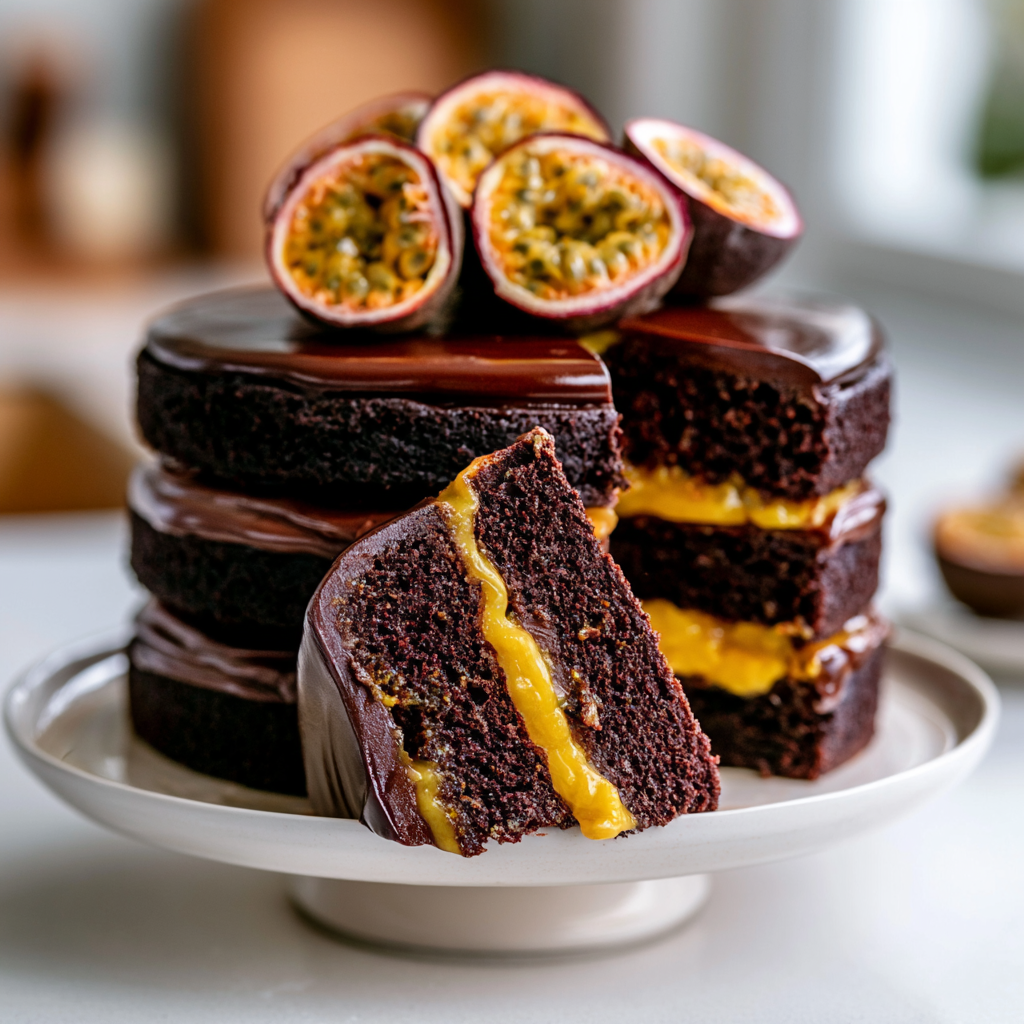
This chocolate passionfruit layer cake is the kind of dessert that turns a good gathering into a great one. It’s the cake people photograph before they eat it, then text you about the next day. The first slice reveals those distinct layers, dark chocolate, glossy ganache, and sunny yellow curd, and honestly, people gasp a little.
Make it for the last big cookout of the summer. Labor Day weekend is calling, and this cake answers. Watch it disappear before the burgers even hit the grill. When you make it, and you will, save this chocolate passionfruit layer cake to your Pinterest board so it’s ready for your next excuse to celebrate. And send me a photo. I genuinely love seeing this cake in the wild.
Source: Learn More About This Dish