
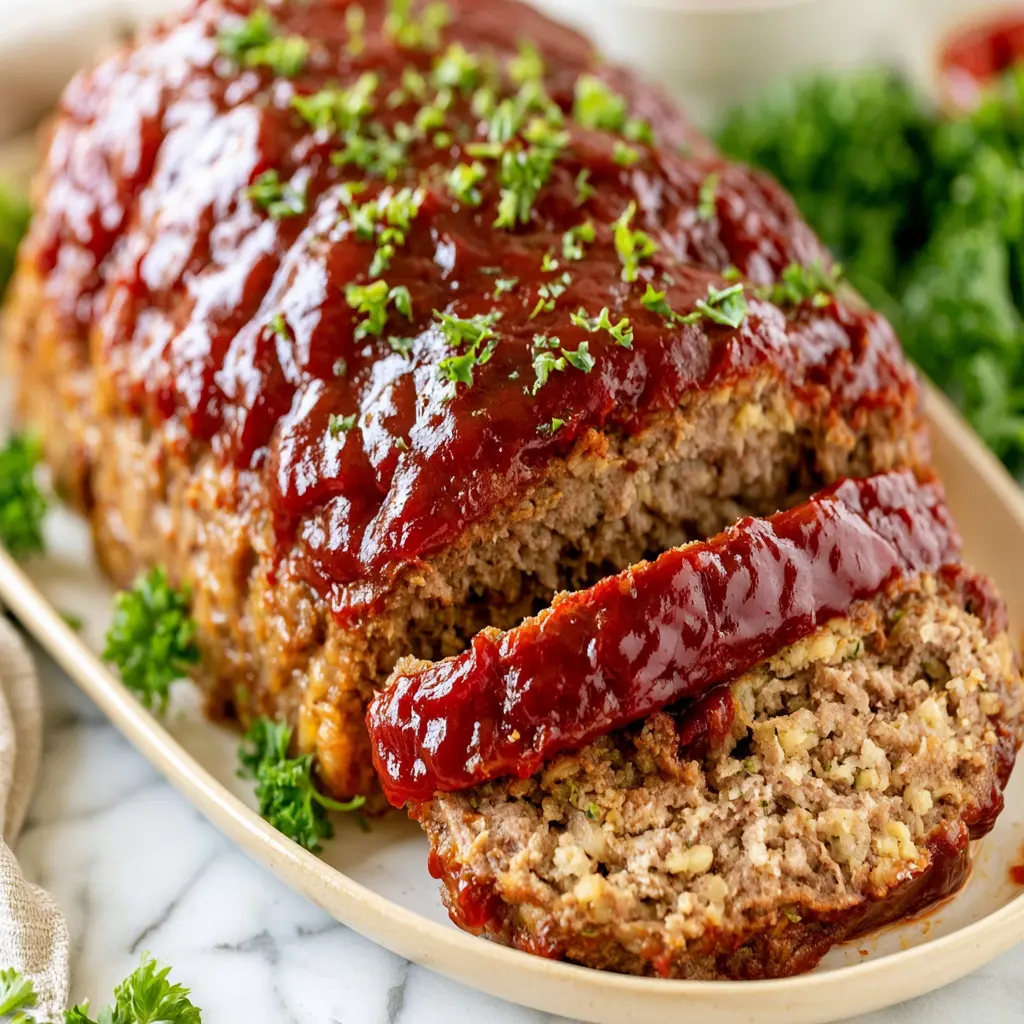
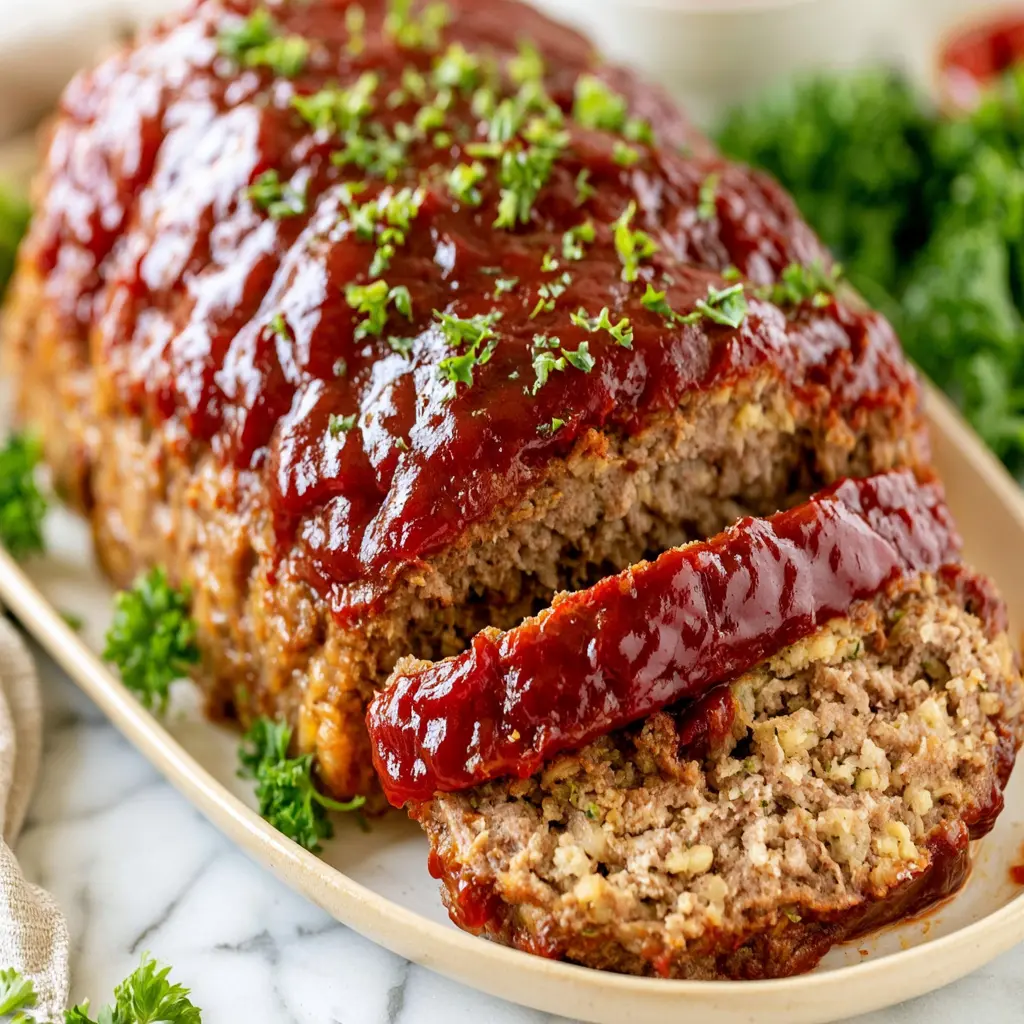
Classic Meatloaf with Onion Soup Mix and Brown Sugar Glaze
Ingredients
Method
- Preheat the oven to 350 degrees F with a rack in the center position.
- In a large mixing bowl, whisk the dry onion soup mix, eggs, water, and ketchup until fully combined.
- Add the ground beef and bread crumbs to the bowl and mix just until no dry spots remain. Do not overmix.
- Shape the mixture into a smooth loaf and place it in a lightly greased loaf pan, a meatloaf pan, or a foil-lined baking dish.
- Bake uncovered for about 1 hour and 15 minutes, checking at the 1 hour mark, until the center reaches an internal temperature of at least 165 degrees F on an instant-read thermometer.
- To make the glaze, combine the ketchup, brown sugar, and ground mustard in a small saucepan. Warm over medium heat, stirring often, until the sugar dissolves into a glossy sauce.
- Brush the glaze over the baked meatloaf, let it rest for 5 minutes, then slice and serve.
Nutrition
Notes
Tried this recipe?
Let us know how it was!Why This Classic Meatloaf Recipe Works
I can still picture my grandmother’s kitchen on a Sunday evening. That smell, the one that wrapped around you the second you walked in, was always the same: a classic meatloaf baking in the oven, the sweet edge of a brown sugar glaze starting to caramelize on top. She never measured anything. And honestly? That used to drive me crazy as a kid who wanted the recipe.
But here’s the thing about a classic meatloaf. It forgives you. It’s a working person’s comfort food, the kind that shows up on school nights when everyone is hungry and homework is waiting. And when you get it right, when it’s juicy and tender and that ketchup glaze has that sticky-sweet pull, it becomes the dinner your own kids will remember.
This recipe leans on a little shortcut: a packet of dry onion soup mix. One envelope carries all the onion and garlic flavor your grandma’s version got from a long saute, without an extra pan to scrub. Pair that with my brown sugar meatloaf topping, and you’ve got a meal that tastes like you fussed for hours when you actually spent maybe 15 minutes on your feet. Even in August, when the oven feels like the last place you want to be, the hands-on work is so quick it barely registers.
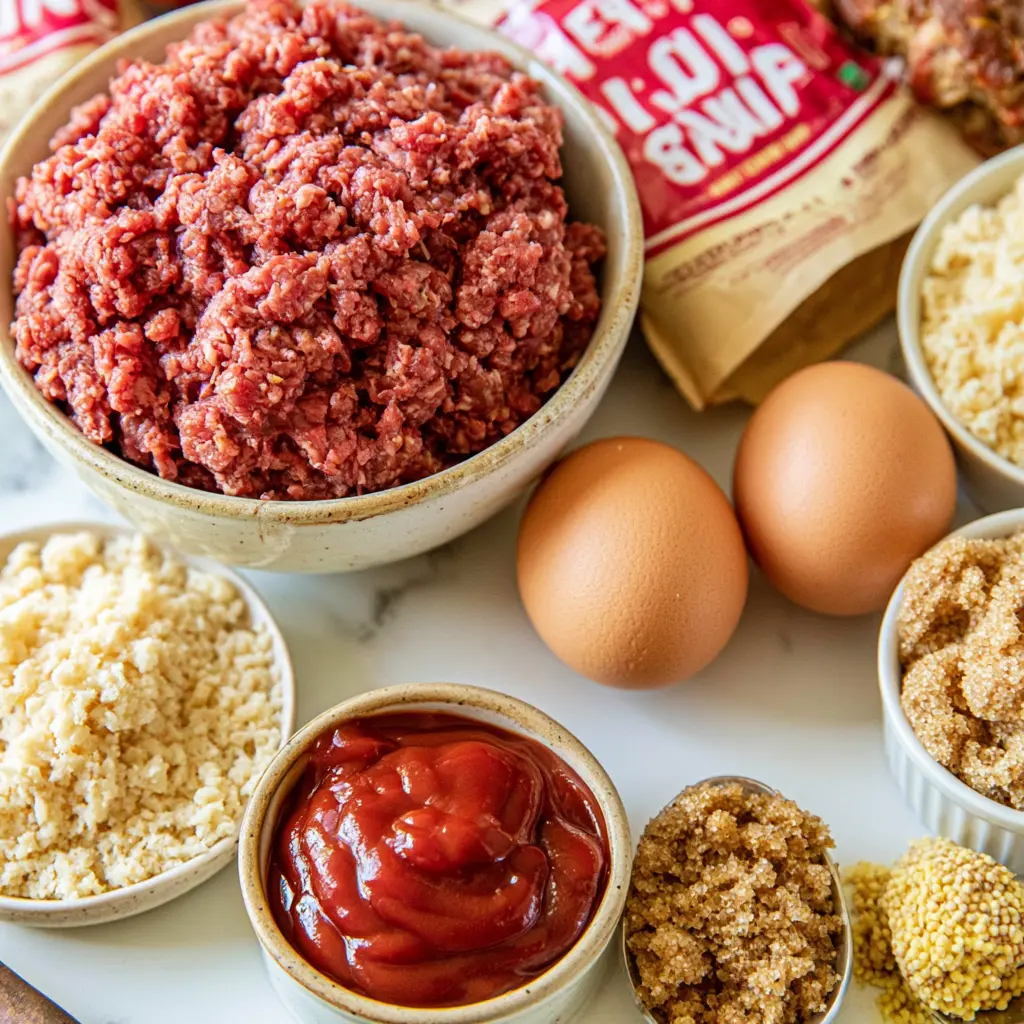
You only need pantry staples for this ground beef meatloaf: 2 pounds of 80/20 ground beef, an envelope of onion soup mix, two eggs, a cup of plain breadcrumbs, water, ketchup, and a little black pepper. The glaze is just ketchup, packed light brown sugar, and ground mustard warmed together into a glossy sauce. No specialty runs, no expensive ingredients.
Why does this easy weeknight dinner work so well? Here are the three reasons I keep coming back to it:
- The onion soup mix does the heavy lifting on flavor. Salt, onion, garlic, a touch of sugar, it’s all in there.
- The water keeps things tender. Sounds backwards, but it hydrates the breadcrumbs from the inside and creates steam as it bakes.
- The brown sugar glaze hits that sweet-savory spot that makes people fight over the end slices.
How to Keep Classic Meatloaf Moist
Let’s address the elephant in the room. We’ve all served a sad, grey brick pretending to be meatloaf. Mine could have doubled for a hockey puck, honestly. It was dry, crumbly, and no amount of extra ketchup on the table could save it. So what is the secret to moist meatloaf?
It’s not one single thing. It’s a few small decisions working together, and once you understand them, you’ll nail a juicy meatloaf every single time.
- Use 80/20 ground beef. The fat is flavor and moisture. Leaning out to 93/7 might save you some calories, but it also steals the juiciness. This classic meatloaf can handle a little fat.
- Don’t overmix. This is the big one. Mix until no dry spots remain, then stop. Overworking the meat packs the proteins tight, and you end up with something dense and tough.
- Respect the binder. The eggs and breadcrumbs hold everything together. They soak up the water and keep the crumb tender instead of dry and crumbly.
- Let it rest before slicing. I know, I know, it smells incredible. But give it 5 minutes. The juices need to redistribute, or they’ll run all over the cutting board and leave you with dry slices.
Common Meatloaf Mistakes
❌ Overmixing the meat mixture. You get a dense, tough loaf that no glaze can rescue. ✅ Mix just until combined. A few streaks are totally fine.
❌ Skipping the rest time. Slicing too fast lets the juices escape. ✅ Set a timer for 5 minutes. Trust the process.
❌ Using overly lean ground beef. Dry, crumbly results that fall apart on the plate. ✅ Stick with 80/20. Your taste buds will thank you.
Loaf Pan vs. Baking Sheet
Which pan should you use for this meatloaf with brown sugar glaze? Honestly, both work. It just depends on what you want out of it.
A loaf pan gives you clean edges and a taller, more traditional shape. The sides trap a bit of moisture, so the meat stays juicier. That’s my default for a classic meatloaf because it looks like the one from the childhood cookbook, the kind that shows up in school-night dinner memories.
A baking sheet, shaped free-form, lets the heat circulate all the way around, so you get more browned crust on every side. The texture comes out a little firmer, and some folks say the flavor concentrates more. If you want maximum caramelization, shape the loaf on a foil-lined baking sheet.
My advice? Start with the loaf pan. Grease it lightly, ease the mixture in gently (don’t pack it down hard, that creates density), and bake uncovered so the top develops a nicely browned crust. You can always switch to free-form once you’ve got the base recipe down.
How to Make Classic Meatloaf
This is a straightforward process, but let me walk you through the four stages so you know exactly what to look for. The full measurements are in the recipe card up top, but the reasoning lives right here.
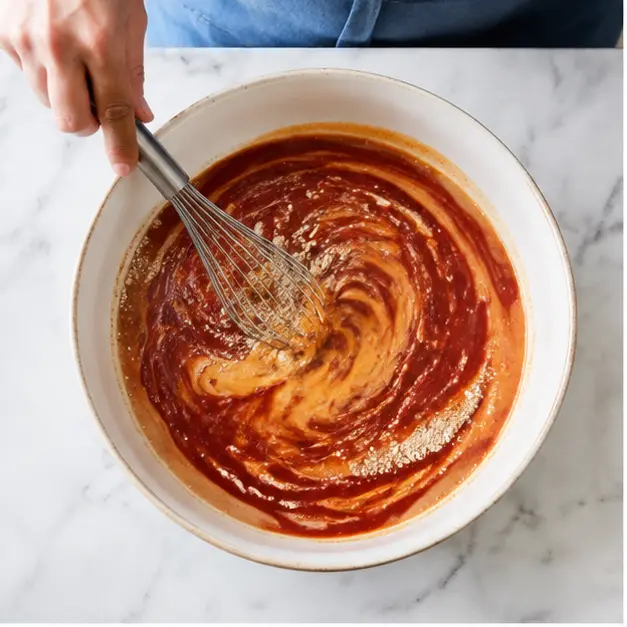
Stage 1: Whisk the wet base. In a large bowl, whisk the dry onion soup mix, eggs, water, and ketchup until fully combined. The color shifts to a pinkish-red, and the soup mix mostly dissolves into the liquid. This is your flavor foundation, so spend the extra 30 seconds making sure it’s smooth.
Stage 2: Add the beef and breadcrumbs. Dump in the ground beef and breadcrumbs, then use your hands to fold everything together gently. Stop the second you don’t see dry spots anymore. This is the easiest place to ruin a juicy meatloaf, so resist the urge to keep squeezing and kneading.
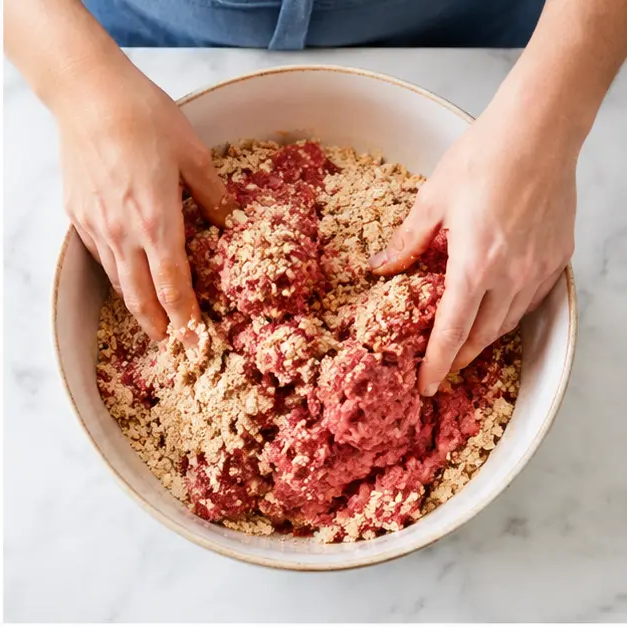
Stage 3: Shape and pan it. Transfer the mixture to a lightly greased loaf pan and shape it into a smooth, even loaf with a gentle domed top. Don’t press it down hard. You want it to hold together, not be compressed into a dense block. Smooth the top so it bakes evenly.
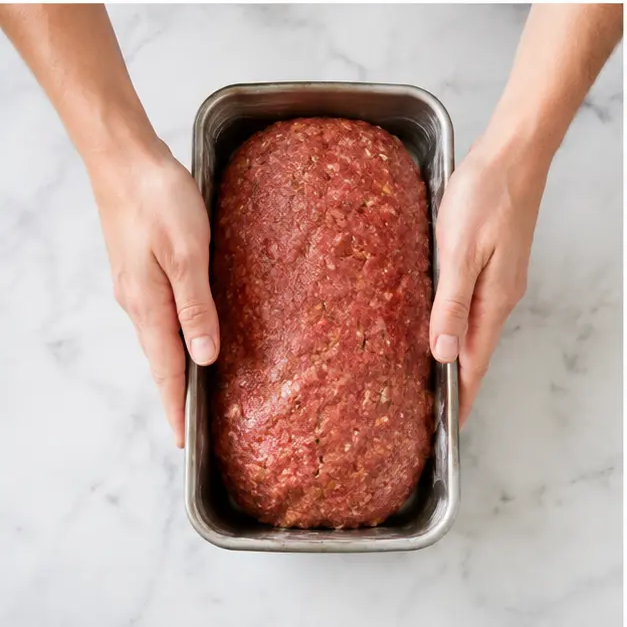
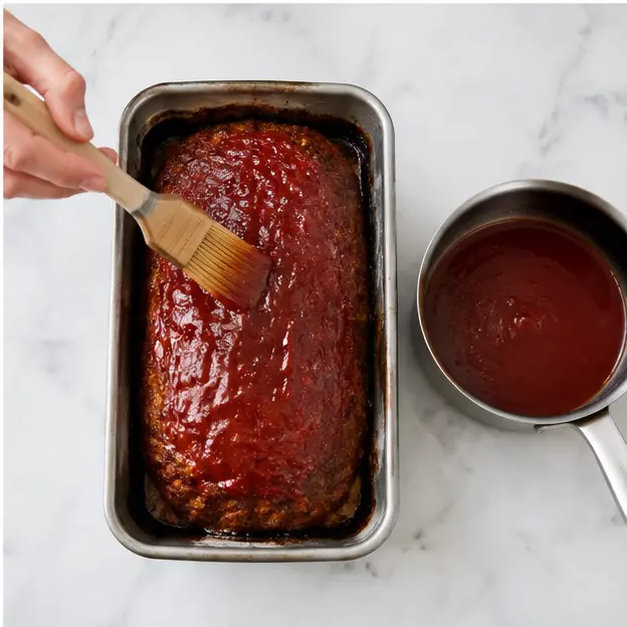
Stage 4: Bake, then glaze. Bake uncovered at 350°F for about 1 hour and 15 minutes, checking at the 1 hour mark. Pull it out when the center hits at least 165°F internal temperature on an instant-read meat thermometer. While it bakes, warm the ketchup, brown sugar, and ground mustard in a small saucepan until the sugar dissolves into a glossy sauce. Brush the glaze over the baked meatloaf, let it rest for 5 minutes, then slice and serve.
Alcohol-Free Variation
This recipe can easily be made without alcohol. Here are the substitutions I recommend:
- Rum → pineapple juice + 1/2 tsp almond extract. For tropical sweetness
These swaps maintain the depth of flavor while keeping the dish completely alcohol-free. Perfect for family-friendly meals or personal preference.
Classic Meatloaf Variations & Substitutions
Once you’ve got the base recipe memorized, feel free to make it your own. Meatloaf variations are part of the fun. Here are the ones I actually recommend:
- Ground turkey meatloaf: Swap the beef for 2 pounds of ground turkey or chicken, and add an extra 1/4 cup of water to keep it moist. Bake to the same 165°F internal temperature.
- Gluten-free: Replace the plain breadcrumbs with crushed Rice Chex or Corn Chex. Same texture, no gluten, and the kids won’t notice a thing.
- Less sweet: Cut the brown sugar in the glaze in half if your family prefers a tangier, less sweet loaf.
- Veggie add-ins: Stir in about 1/4 cup of finely chopped sauteed mushrooms, or shredded carrots and zucchini, for extra moisture and nutrition.
- Cheese: Fold in 1/4 cup of grated Parmesan for a savory umami bump.
One note: if you swap in ground turkey, keep an eye on the bake time. Poultry can cook a little faster, but the thermometer is the ultimate judge. Always trust the 165°F reading over the clock.
What to Serve with Classic Meatloaf
You can’t talk about classic meatloaf without talking about the sides. The perfect plate, to me, has that slice of meatloaf sitting next to a mountain of mashed potatoes, maybe some of that glaze spooned over the top. Green beans on the side, the kind with a little crunch left in them.
Other winners? Buttered noodles, roasted carrots, a crisp green salad with a sharp vinaigrette to cut through the richness, or simple steamed broccoli. In the summer, I love thick slices of ripe tomato with a sprinkle of salt on the side. The brightness balances the sweet glaze beautifully.
And honestly, the leftovers make one of the greatest sandwiches you’ll ever pack for lunch. Cold meatloaf on white bread with a swipe of mayo and a little extra ketchup? That’s a childhood memory right there.
How to Store and Reheat Leftovers
Leftover meatloaf is a gift, especially on a busy school week. Store it in an airtight container and it’ll keep in the fridge for 3 to 4 days. You can also make the whole meatloaf sandwich situation work for lunch the next day, which honestly might be the best part.
For longer storage, freeze it. Individual slices wrapped in plastic wrap and then foil are perfect for grabbing one at a time. You can also freeze the whole cooked loaf, or assemble the uncooked meatloaf in the pan, wrap it tightly, and freeze it for a future dinner.
- Reheat in the oven: Place slices in a baking dish, sprinkle with a little water or broth, cover with foil, and warm at 350°F until heated through.
- Reheat in a skillet: A quick sear in a lightly oiled pan brings back that caramelized edge.
- Air fryer: A few minutes at 350°F gives you crispy edges and a warm, tender center.
Classic Meatloaf FAQ
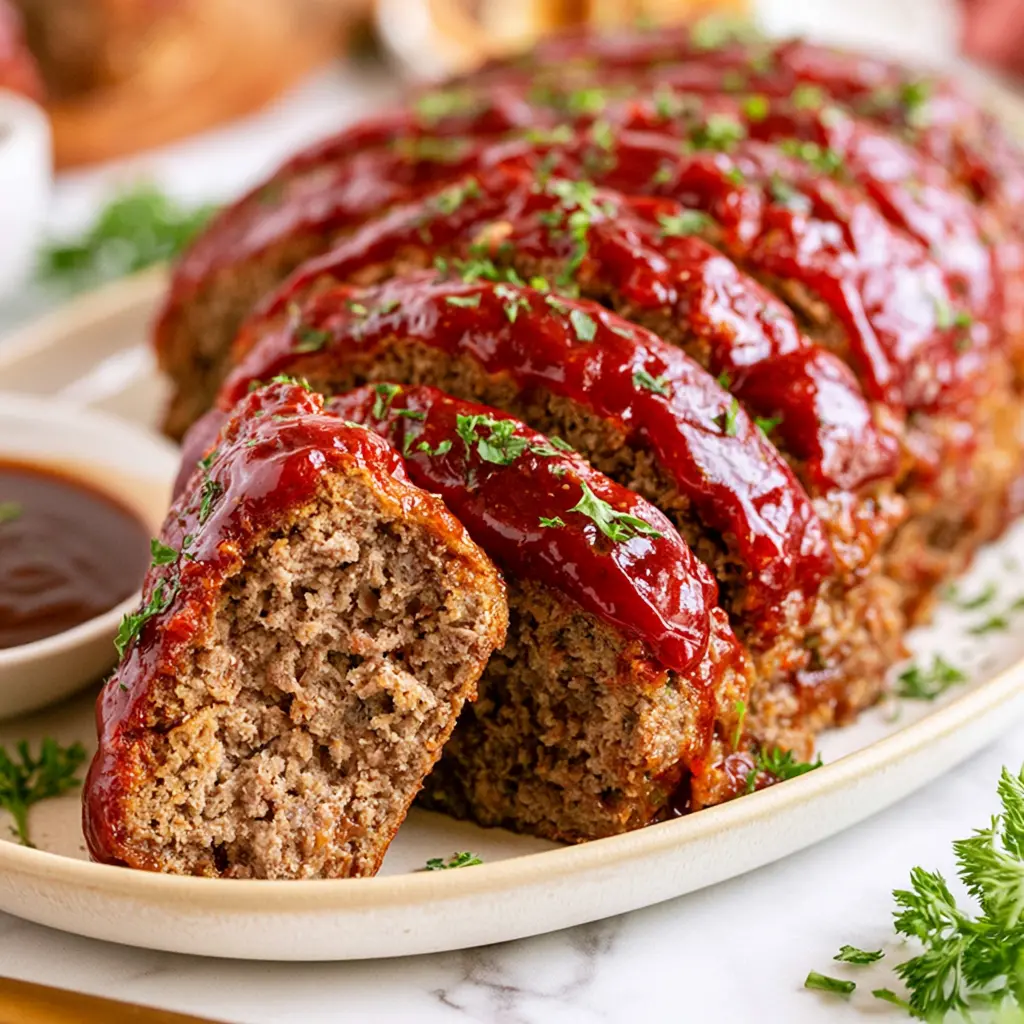
There it is. A classic meatloaf that actually lives up to the name: juicy, tender, glossy with that brown sugar glaze, and simple enough for any school night. The kind of dinner that makes the whole house smell like somewhere you want to be.
When you make this, and you will, come back and tell me how the family reacted. I’d love to hear about the first slice moment, the fighting over the end piece, the sandwich requests for tomorrow’s lunch. You can also find me over on Pinterest, where I pin all my favorite comfort food recipes, this one included. Happy cooking, friend.
Source: Learn More About This Dish






4 responses to “How to Make a Juicy Classic Meatloaf Every Time”
This meatloaf was a huge hit with my family! I swapped the ground beef for ground turkey and added a little extra ketchup to the glaze. It stayed so moist and the brown sugar topping caramelized perfectly. Definitely my new go-to meatloaf recipe.
I’m excited to try this, but I don’t have Lipton Onion Soup Mix in the pantry right now. Could I substitute with a diced onion and some garlic powder instead? Also, do you think I could assemble this the night before and bake it the next day?
Hi Debbie! You can absolutely use a finely chopped small onion sautéed with a little garlic as a substitute, though you’ll want to add about 1/2 teaspoon of salt to mimic the seasoning. And yes, you can assemble it the night before, just keep it covered in the fridge and add an extra 10 minutes to the bake time. Enjoy!
The flavor was good and the glaze is delicious, but I found the meatloaf a bit on the salty side for my taste. I think next time I’ll use half the soup mix or skip adding the extra black pepper. Also, mine needed about 15 more minutes in the oven. Still a solid comfort food recipe, just needs tweaking for my household.