
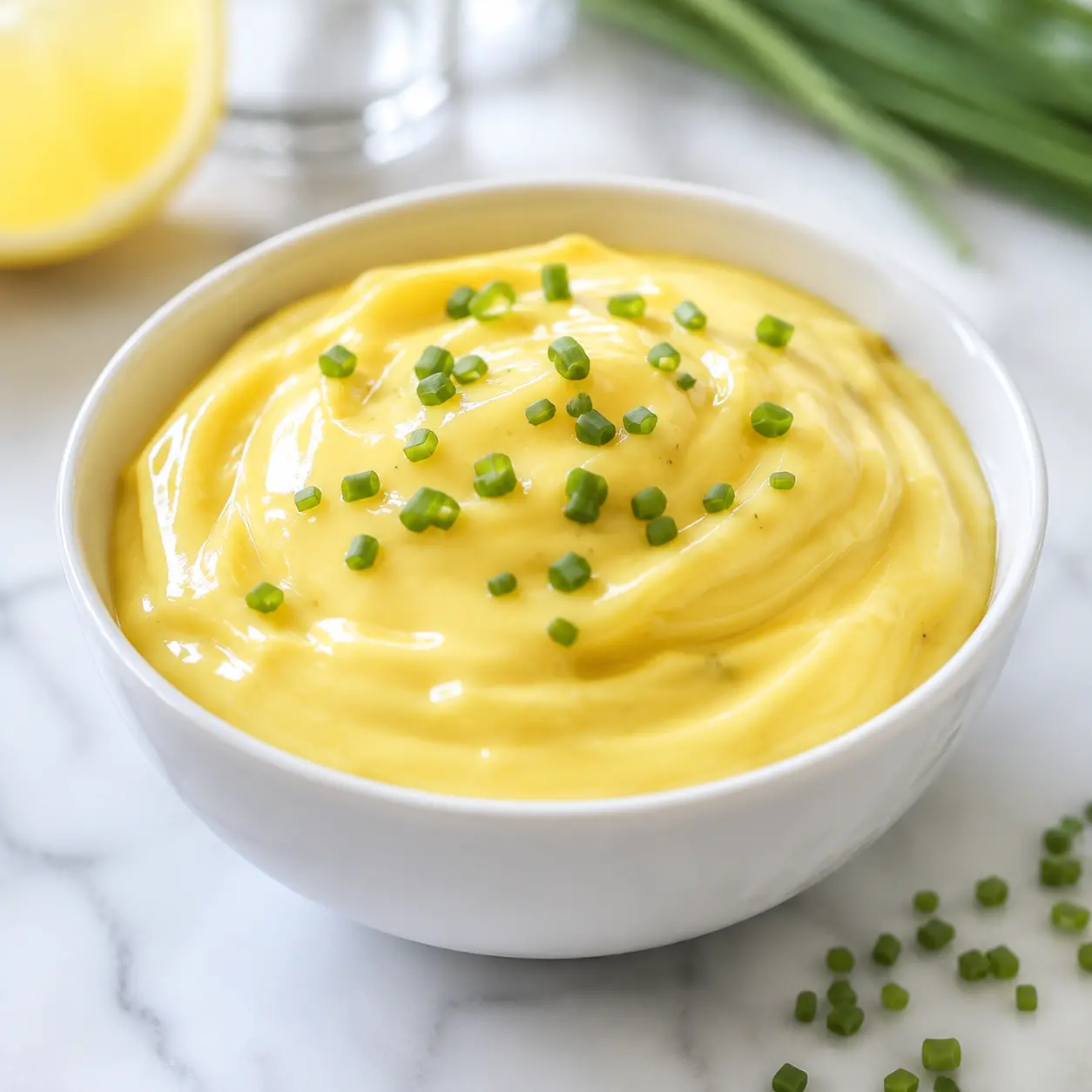
Why This Easy Hollandaise Sauce Works
I know the fear hollandaise is known for being finicky, but I promise it’s all about the right temperature. For years I avoided making it from scratch, convinced I’d end up with scrambled eggs and a sink full of wasted butter. Sound familiar?
Here’s the thing: most recipes make it way more complicated than it needs to be. They tell you to use a double boiler, clarify butter, or break out the blender. And sure, those methods work. But this easy hollandaise sauce recipe skips all the fuss. You don’t need any special equipment. Just a saucepan, a whisk, and about ten minutes.
What makes this hollandaise recipe different? The technique. You melt the butter directly into the egg mixture over low heat, whisking constantly. No separate bowl, no pouring warm butter in a thin stream. The Dijon mustard acts as a stabilizer, helping the emulsion hold together. And the spoon test? That’s your visual cue that it’s ready.
This is the kind of hollandaise from scratch that feels like a secret weapon. Once you’ve made it once, you’ll never reach for a packet again.
Ingredients You Need
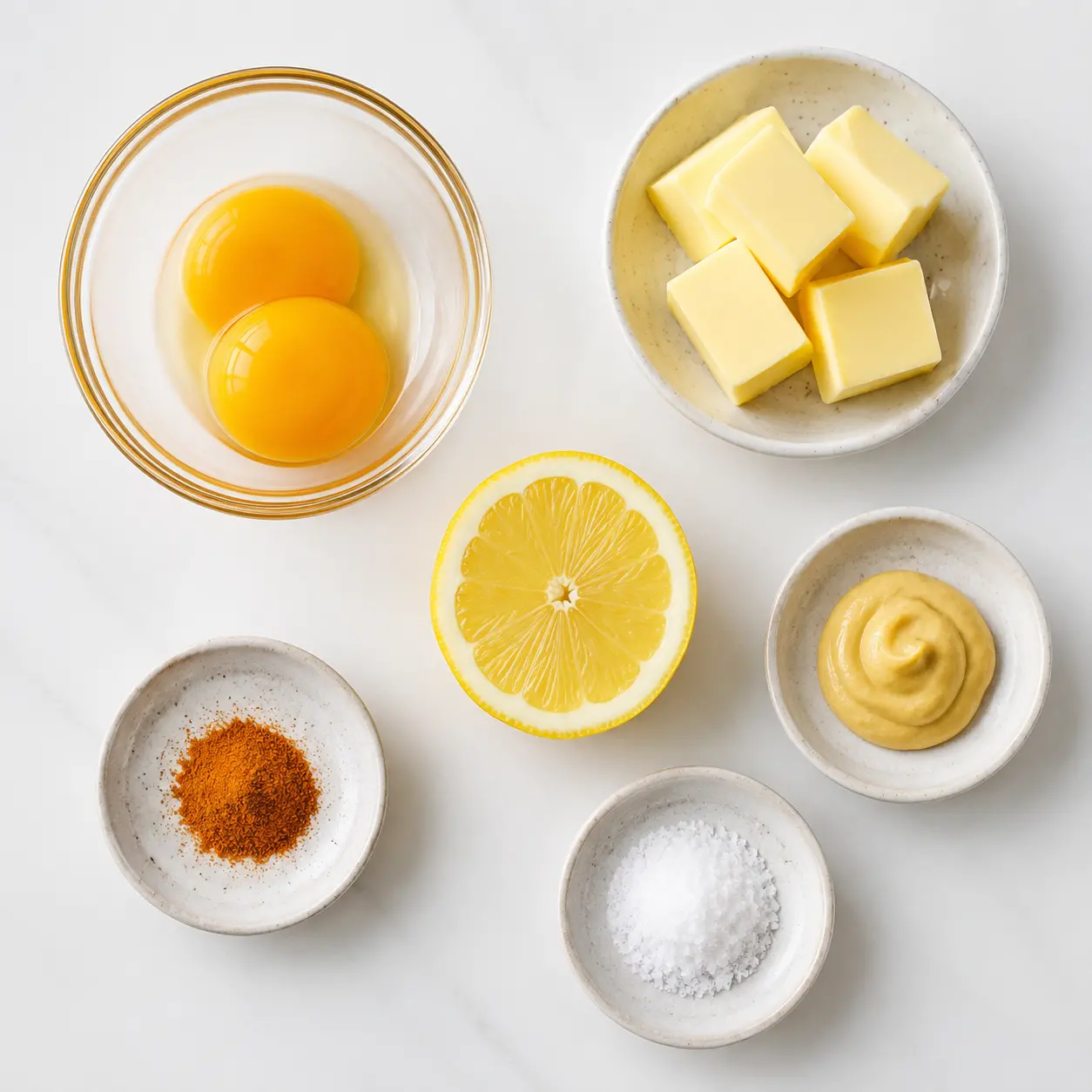
This hollandaise sauce recipe uses just seven ingredients. Most of them are probably in your fridge right now.
- Egg yolks The heart of the sauce. They act as the emulsifier, binding the fat and water together. Use large eggs for the best ratio.
- Lukewarm water Helps the yolks cook gently and creates the right consistency. Not hot, not cold.
- Fresh lemon juice Adds brightness and acidity. Meyer lemons are lovely if you can find them, but regular lemons work great.
- Dijon mustard The secret stabilizer. It helps prevent the sauce from breaking and adds a subtle tang.
- Unsalted butter Cut into small pieces so it melts evenly. Using unsalted lets you control the salt level.
- Fine sea salt Just a pinch to bring out the flavors.
- Cayenne pepper A tiny amount for warmth, not heat. It’s the classic finishing touch.
One note: use a non-reactive saucepan, like stainless steel or enamel. Reactive pans (like uncoated aluminum) can give the sauce a metallic taste from the lemon juice.
How to Make Hollandaise Sauce
Let’s walk through the process. This is the stovetop method, and it’s simpler than you think. The key is temperature for hollandaise keep it low and slow.
Stage 1: Whisk the Base
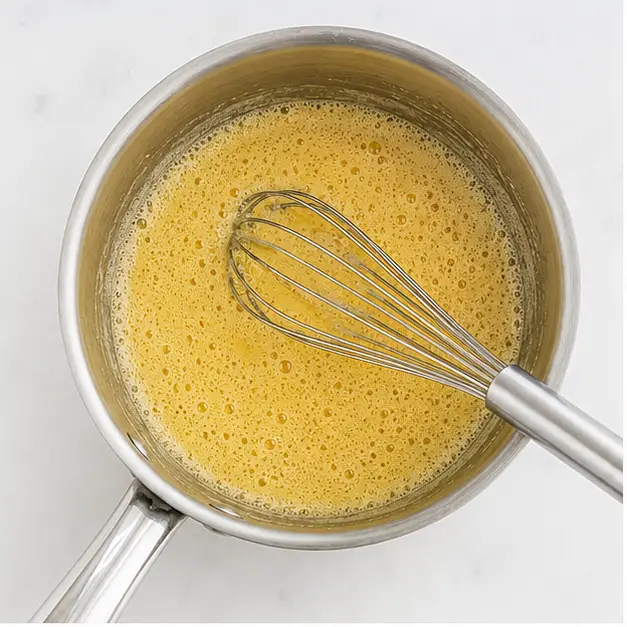
Separate your eggs and drop the yolks into a small non-reactive saucepan. Add the lukewarm water, lemon juice, and Dijon mustard. Whisk until everything is well combined and slightly frothy. You’re building the foundation here, so take your time.
Stage 2: Add the Butter
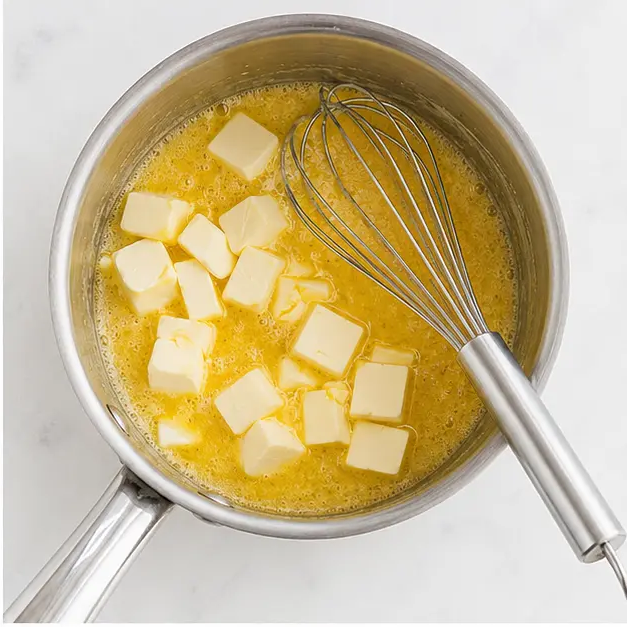
Toss the butter pieces right into the saucepan with the egg mixture. Don’t worry about melting them separately. The butter will melt as the pan warms up, and that gradual melting is what gives you a stable emulsion.
Stage 3: Cook Over Low Heat
Set the pan over low to medium-low heat. Whisk constantly. This is non-negotiable. As the butter melts, the mixture will go from liquid to frothy. Keep butter liquid but NOT hot test with finger. If the butter starts to sizzle or you see the eggs clumping, lift the pan off the heat and keep whisking. You’re looking for a smooth, slightly thickened sauce after about 3 minutes.
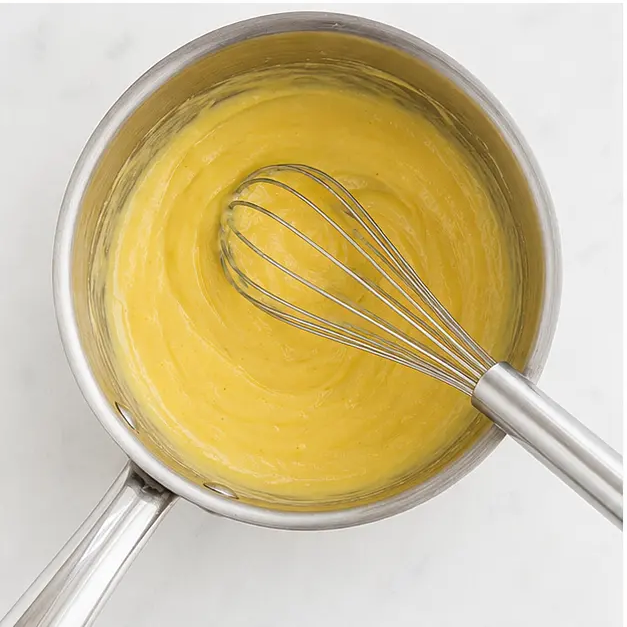
Stage 4: The Spoon Test
Here’s how you know it’s done. Dip a spoon into the sauce and draw a line through it with your finger. If the line stays clear and the sauce doesn’t run back together, you’re there. Remove from heat immediately. Stir in the salt and cayenne pepper. That’s it. You just made hollandaise from scratch.
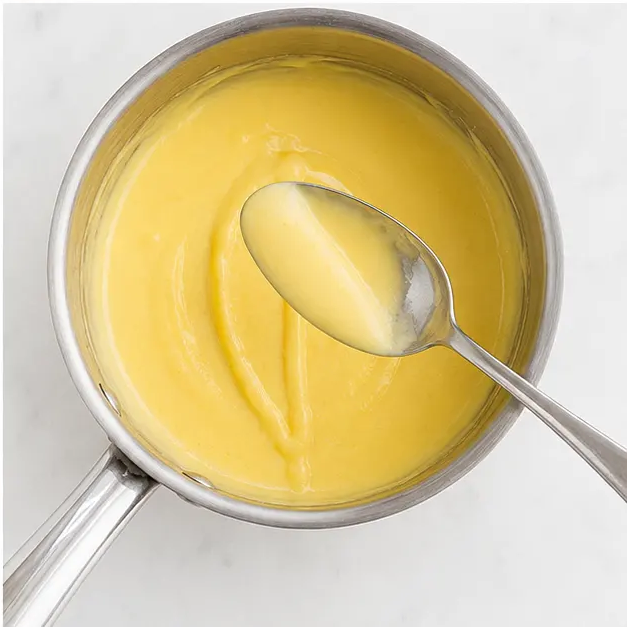
Tips for Perfect Hollandaise
Even with a foolproof recipe, a few things can go wrong. Here’s how to handle them.
Common Mistakes to Avoid
❌ Sauce gets too thick: Whisk in 1 teaspoon of warm water. It’ll loosen right up without breaking the emulsion.
❌ Sauce starts to separate: Remove from heat immediately. Whisk in 1 teaspoon of warm water vigorously until it comes back together. If that doesn’t work, start a new yolk in a clean bowl and slowly whisk the broken sauce into it.
❌ Sauce is too thin: You probably didn’t cook it long enough. Return to low heat and whisk constantly for another 30-60 seconds. It should thicken quickly.
❌ Eggs scrambled: The heat was too high. Start over. Next time, keep the heat lower and lift the pan off the burner if needed.
Pro tip: Yolks should reach 140-145°F for safety but not exceed 160°F. If you have a thermometer, use it. If not, trust the spoon test.
Variations to Try
Once you’ve mastered the basic hollandaise sauce, try these twists.
- Béarnaise sauce: Replace the lemon juice with tarragon vinegar and stir in 1 tablespoon of fresh chopped tarragon and 1/2 teaspoon dried tarragon at the end. Perfect with steak.
- Mustard hollandaise: Increase the Dijon to 1 tablespoon for a sharper, more robust flavor. Great on roasted vegetables.
- Herb hollandaise: Stir in 1 tablespoon of finely chopped fresh chives, parsley, or dill just before serving. Lovely over fish.
- Citrus hollandaise: Use half lemon juice and half fresh orange juice for a milder, sweeter sauce. Try it on asparagus.
- Low carb hollandaise: This sauce is naturally low in carbs (about 1g per serving). Serve it over grilled salmon or steamed broccoli for a keto-friendly meal.
What to Serve with Hollandaise
This hollandaise sauce is incredibly versatile. Here are some classic pairings.
- Eggs Benedict The classic. Poached eggs on toasted English muffins with Canadian bacon or smoked salmon, all topped with hollandaise.
- Asparagus Steamed or grilled asparagus with a generous drizzle of hollandaise. Perfect for spring.
- Roasted vegetables Broccoli, cauliflower, or artichokes all benefit from a creamy hollandaise.
- Grilled salmon A light, lemony hollandaise is the perfect finishing touch for salmon.
- Steak Béarnaise is traditional, but classic hollandaise works beautifully too.
- Poached eggs on toast The simplest way to enjoy it. Just eggs, toast, and sauce.
Storage and Reheating
Hollandaise is best served fresh, but you can make it ahead if needed.
To store: Transfer leftover sauce to an airtight container and refrigerate within 2 hours. It will keep for up to 2 days. The texture will thicken as it cools.
To reheat: Warm gently over very low heat or in a double boiler, whisking constantly. Do not let it simmer or boil, or the eggs will scramble. If the sauce separates during reheating, whisk in 1 teaspoon of warm water to bring it back together.
Can you freeze hollandaise? Yes. Freeze in an airtight container for up to 3 months. Thaw overnight in the refrigerator, then reheat gently.

Frequently Asked Questions
Once you master this, you’ll never fear hollandaise again. It’s one of those sauces that feels fancy but is actually just butter, eggs, and a little patience. Make it for brunch this weekend. Your guests will think you spent hours on it.
For more inspiration, check out our hollandaise sauce ideas on Pinterest.
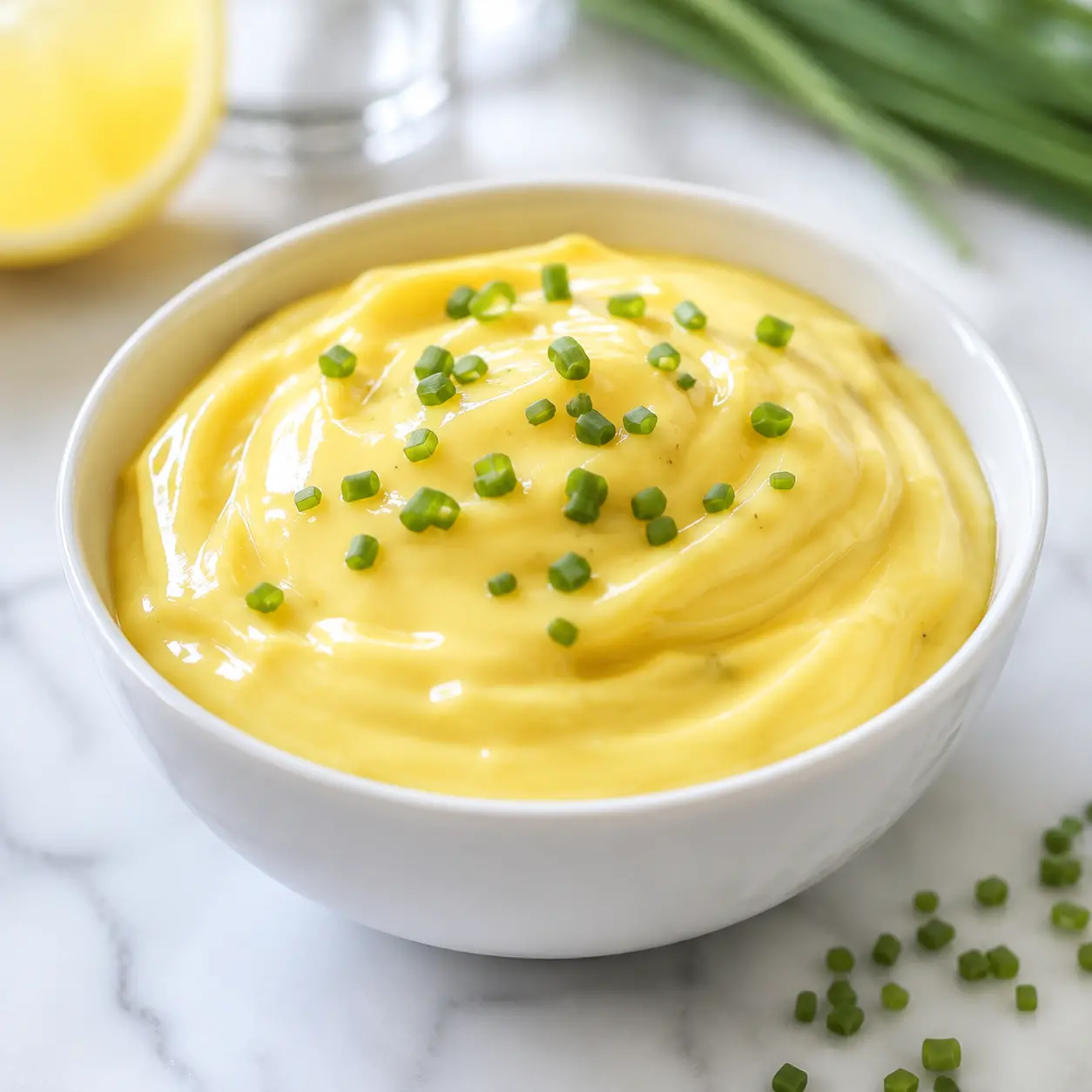
Easy Hollandaise Sauce
Ingredients
Method
- Separate the eggs and place the yolks in a small non-reactive saucepan. Add the water, lemon juice, and Dijon mustard, and whisk until well combined.
- Add the butter pieces to the egg mixture in the saucepan.
- Set the pan over low to medium-low heat and whisk constantly. As the butter melts, the mixture will become frothy. If the butter starts to sizzle or the eggs begin to clump, lift the pan off the heat and keep whisking. Cook for about 3 minutes, until the sauce is smooth, slightly thickened, and coats the back of a spoon. To test, draw a line through the sauce on the spoon with your finger; the line should stay clear.
- Remove the sauce from the heat immediately. Stir in the salt and cayenne pepper, adjusting to taste. Serve right away or cover to keep warm. If the sauce becomes too thick, whisk in 1 teaspoon of warm water to thin it.
Nutrition
Notes
Tried this recipe?
Let us know how it was!Source: Nutritional Information






5 responses to “How to Make Hollandaise Sauce from Scratch in 10 Minutes”
This was my first time making hollandaise from scratch and it turned out great! However, I found it a bit too lemony for my taste—could I reduce the lemon juice to 1 teaspoon without affecting the emulsion? Also, does the type of Dijon mustard matter? I used a cheap store brand and it seemed fine.
Hi James, so glad it worked for your first try! Yes, you can absolutely reduce the lemon juice to 1 teaspoon—just add a splash of water to maintain the liquid ratio if needed. And any Dijon mustard works, even store brands, as long as it’s smooth (not whole grain). Enjoy!
I made this to go with some grilled salmon and asparagus. The sauce was incredibly rich and smooth, and the cayenne gave it just a tiny kick. My only issue was that it started to thicken too much as it sat—any tips for keeping it warm without it breaking?
Thanks, Emily! To keep it warm, I recommend placing the saucepan in a shallow bowl of warm (not hot) water and whisking occasionally. If it gets too thick, just whisk in a teaspoon of warm water at a time. Avoid direct heat or it will break. So glad you enjoyed it with salmon!
I’ve been terrified of making hollandaise for years after a disastrous attempt that ended in scrambled eggs. This recipe was a game-changer! The Dijon mustard really does help stabilize it. I made it for a Sunday brunch and it was perfectly silky and lemony. Thank you for finally helping me conquer this sauce!