Ingredients
Method
Prepare Salmon
- Pat the salmon fillet completely dry with paper towels, then slice it into 1-inch cubes.
Season Salmon
- In a medium bowl, combine the salmon cubes with the olive oil, a generous pinch of sea salt, and a few turns of black pepper. Gently toss to coat every piece.
Make Sauce Base
- In a separate bowl, whisk together the soy sauce, honey, minced garlic, grated ginger, rice vinegar, and sriracha until the mixture is completely smooth.
Prepare Cornstarch Slurry
- In a small dish, whisk the cornstarch and cold water together until the mixture is lump-free and silky. Set aside.
Cook Salmon (Choose Method)
- Pick your cooking method: Oven-Bake: Preheat the oven to 400°F. Line a baking sheet with parchment paper. Arrange the salmon cubes in a single layer with space between them. Bake for 8 to 12 minutes, flipping halfway, until the fish is opaque and flakes easily. Air-Fry: Preheat the air fryer to 375°F. Lightly mist the basket with cooking spray. Place the salmon cubes in a single layer, working in batches if necessary. Air-fry for 6 to 10 minutes, shaking the basket once, until golden-brown and cooked through.
Thicken Honey Garlic Sauce
- While the salmon cooks, pour the sauce mixture into a small saucepan and place it over medium heat. Bring to a gentle simmer, then stir the slurry once more and slowly stream it into the sauce while whisking continuously. Keep whisking for 1 to 2 minutes, until the glaze becomes glossy and thick enough to coat the back of a spoon.
Coat Salmon Bites
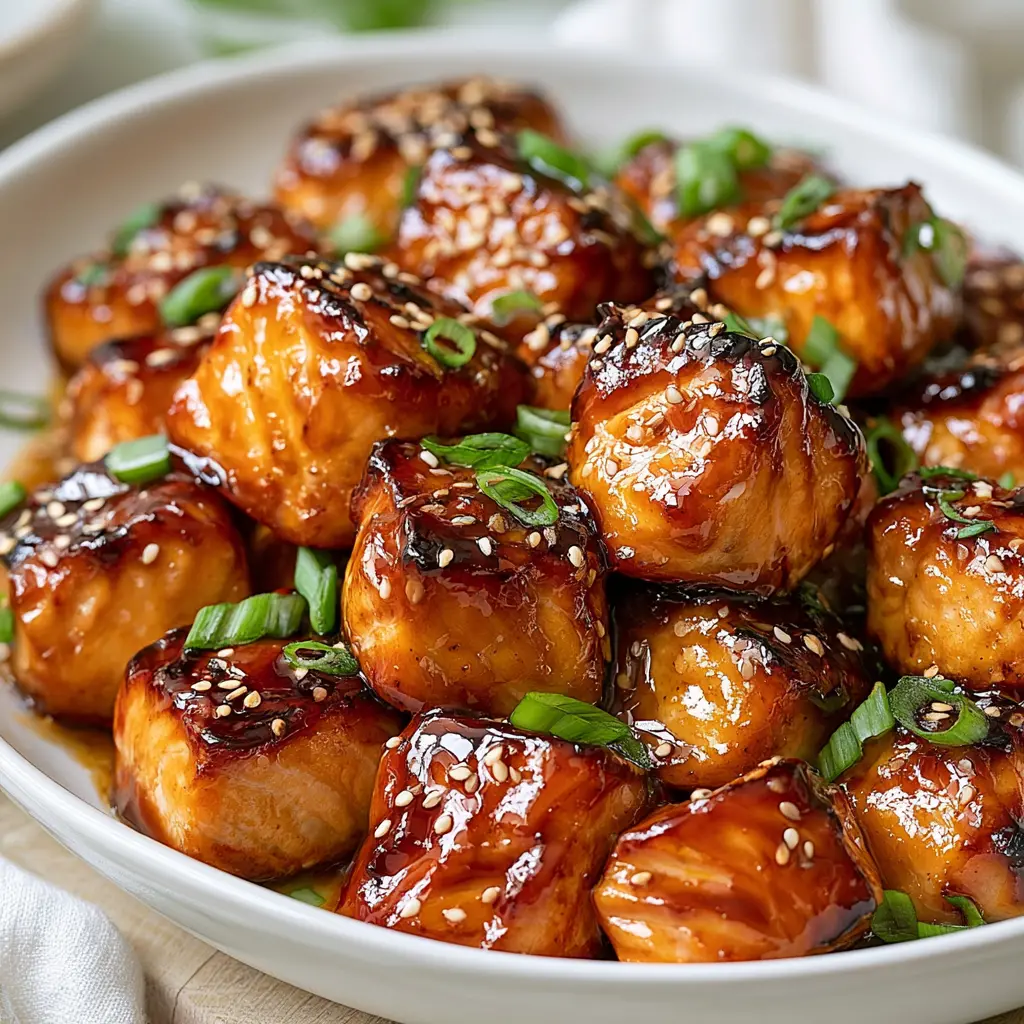
- Transfer the cooked salmon to a clean bowl. Pour the warm honey garlic glaze over the salmon and gently fold with a spatula until every cube is completely covered in the sticky sauce.
Garnish and Serve Immediately
- Pile the coated salmon bites onto a serving dish. Sprinkle with toasted sesame seeds and sliced green onions. Serve right away with Meyer lemon wedges for a bright, citrusy squeeze. This pairs beautifully with jasmine rice and steamed broccoli or roasted vegetables.
Nutrition
Notes
If your salmon is frozen, thaw it fully in the refrigerator and press it dry before cutting; extra moisture will stop the glaze from sticking.
Use tamari or coconut aminos instead of soy sauce to make this gluten-free or lower in sodium.
For a thinner glaze, omit the cornstarch slurry; the sauce will be more of a drizzle than a sticky coating.
Leftovers keep in the fridge for up to 2 days; reheat gently in a nonstick skillet over low heat, not the microwave.
To make ahead, prepare the glaze and slurry, store them separately, then cook fresh salmon when you're ready.
Don't overcook the salmon; it should be just opaque and still tender. The sauce will continue to cling as it cools.